
 By
By 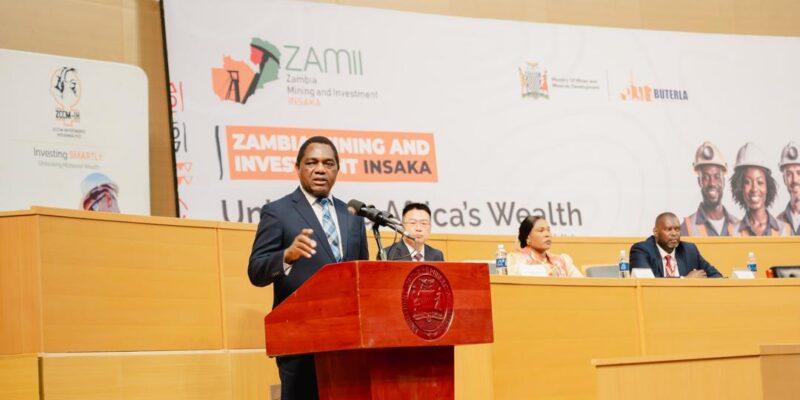
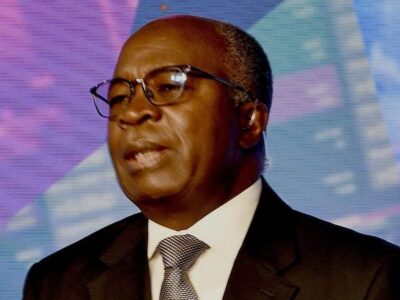
President Hakainde Hichilema says his administration has secured over US$12 billion in investment in Zambia’s mining sector over the past four years.
He made the remarks during his address at the Zambia Mining and Investment Insaka, held at the Mulungushi International Conference Center, emphasizing legal, safe, and responsible mining practices while showcasing Zambia’s growing opportunities for investment.
“We have attracted over US$12 billion in investment in Zambia’s mining sector in the last 4 years. We want more and more mines in the country,” Hichilema said.
In his address, Hichilema acknowledged government officials, local and international investors, and the event organizers.
“Zambia is a warm country, and you are invited not just once, but repeatedly, to invest and experience what we have to offer,” he said, highlighting the country’s openness to business.
Reflecting on Zambia’s progress since his government assumed office in 2021, the President noted that the country overcame major economic challenges, including drought and reduced hydroelectric capacity, by implementing reforms that unlocked opportunities in energy, mining, and agriculture.
“We injected reforms to allow independent power producers and traders to operate. These reforms are the reason energy is now flowing into our mining sector, supporting agriculture, and powering other industries,” he said.
Hichilema underscored that mining remained central to Zambia’s economic development.
While mining has sustained livelihoods for over a century, he stressed that the benefits must extend beyond traditional copper-producing regions.
Drawing lessons from countries such as Saudi Arabia, Abu Dhabi, and Qatar, he highlighted the importance of reinvesting resource wealth to drive broader economic growth and social development.
The President outlined the government’s priorities for the sector, urging stakeholders to focus on environmental protection, reducing pollution, and avoiding litigation that could slow investment.
“Our focus is on cleaning up pollution and protecting water bodies, not quarrelling. Legal, safe mining is our priority,” he said.
He detailed guiding principles for Zambia’s mining operations: legality, safety, transparency, and security.
“Mining areas must not become sources of insecurity. Resources must not be exploited to fund criminal activity or destabilize communities,” he said.
Hichilema also highlighted reforms that had transformed the mining landscape, including high-resolution geophysical mapping, the establishment of the Mines Regulation Commission, and the Mines Appeals Tribunal.
He emphasized formalizing artisanal and small-scale miners, training them to mine safely and sustainably, as a key agenda item.
On investment, the President encouraged diverse investors to bring cutting-edge technology, process minerals locally, and create value-added products such as electric cables and batteries.
He also pointed to Zambia’s integration into the African Continental Free Trade Area as a platform to grow intra-African trade and ensure responsible practices.
“Our goal is to create an environment where mining supports jobs, sustainable development, and economic growth. Together, we can achieve a sector that is legal, safe, transparent, and secure,” President Hichilema said.
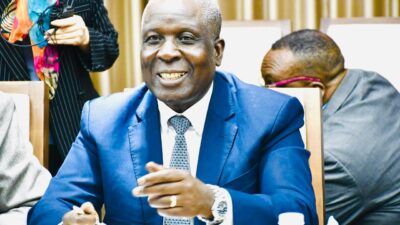
Speaking earlier, Mines and Mineral Development Minister, Paul Kabuswe, highlighted the sector’s historic growth under President Hichilema’s leadership, projecting Zambia to produce around 1 million tonnes of copper this year—a milestone never before reached in the country’s history.
“When President Hichilema took office four years ago, Zambia’s economy was contracting at negative 2.8 percent. Today, our economy is growing steadily at over 6 percent, and the mining sector is leading the turnaround,” Kabuswe said.
He noted that key mines previously embroiled in legal disputes, including Mopani and Konkola Copper Mines (KCM), were now fully operational, recording significant productivity gains.
Kabuswe said that Mopani, for example, had seen a 22 percent increase in productivity since restructuring, while First Quantum Minerals’ recently commissioned S3 expansion is expected to produce 450,000–500,000 tonnes of copper annually.
Kabuswe emphasized that the government was committed to local content development, with the Local Content Bill ensuring that mining contracts and supplies prioritize Zambian-owned companies, boosting local entrepreneurship and employment.
“Following your instructions, Mr. President, we are ready to implement the local content law. Suppliers and contractors will now have the opportunity to provide goods and services to mines, creating meaningful opportunities for local Zambians,” he said.
The Minister affirmed Zambia’s stable investment environment, noting that peace, effective leadership, and clear economic goals make the country an attractive destination for investors.
“Zambia is on an upward trajectory. The mining sector is no longer held back by disputes in court but is thriving on the mine sites. Investors can be confident that their money is safe, and the country is ready to achieve its full copper potential,” he said.
WARNING! All rights reserved. This material, and other digital content on this website, may not be reproduced, published, broadcast, rewritten or redistributed in whole or in part without prior express permission from ZAMBIA MONITOR.






Comments