
 By
By 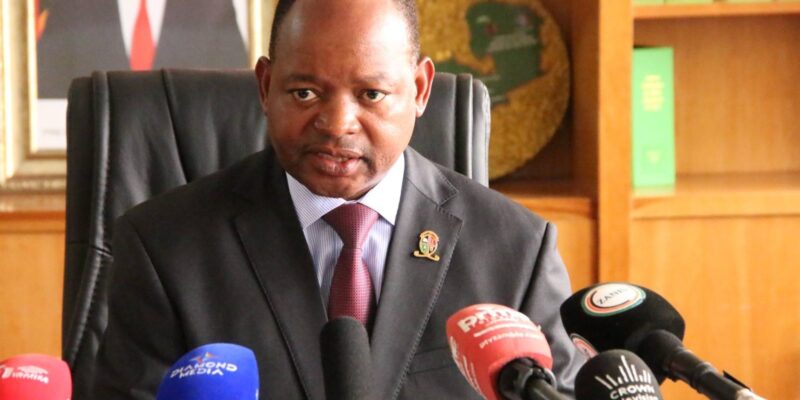
Cabinet has approved the piloting of bulk importation of petrol in a move aimed at lowering average costs per unit, improving access to better financial terms, enhancing risk management and operational efficiency, and ultimately reducing petrol pump prices.
President Hakainde Hichilema convened the final Cabinet meeting for 2025 on December 23 at State House to deliberate on policy and legislative matters intended to enhance national development for the benefit of Zambians.
According to a communiqué issued in Lusaka on Friday, Chief Government Spokesperson Cornelius Mweetwa said Cabinet resolved to introduce bulk importation of petrol on a pilot basis through limited bidding, a move expected to unlock economies of scale.
Cabinet agreed that the pilot programme would run for a period of four months.
“By aggregating demand across multiple Oil Marketing Companies (OMCs), the framework would enable the winning supplier to negotiate more favourable international purchase terms, reduce per unit import costs, and streamline distribution logistics,” Mweetwa said.
He said the economies of scale was expected not only to lower pump prices but also to assure security of supply, improve supply chain efficiency and enable full utilisation of fuel storage depots.
The meeting also approved the creation of the Constituency Energy Benefit Trust to provide a legal framework for the ownership, governance and management of equity held by the Minister of Finance and National Planning in the Zambia Energy Corporation (ZNEC) Limited on behalf of constituencies.
Mweetwa said a Special Purpose Vehicle, ZNEC, had been incorporated to implement the Presidential Constituency Energy Initiative Programme.
“Therefore, there is need to establish a comprehensive framework to provide for the ownership, governance and the management of equity held by the Minister of Finance and National Planning in the Zambia National Energy Corporation Limited on behalf of Constituencies,” he said.
He further stated that all councils would be required to pass formal resolutions authorising investment into ZNEC in line with the Constituency Development Fund framework and its objectives of promoting local economic development and infrastructure.
Mweetwa said the investment would be treated as a long-term constituency asset capable of generating dividends and sustainable revenue for local development.
Cabinet also approved the issuance of the Carbon Market Regulations, 2025, to support the implementation of the Green Economy and Climate Change Act No. 18 of 2024.
“The regulations will also provide for coordination and operationalisation of carbon markets in Zambia, unlocking green investments for achieving Zambia’s Nationally Determined Contributions (NDCs) to the Paris Agreement, protection of local communities and other stakeholders by ensuring a fair benefit-sharing mechanism in the carbon market,” Mweetwa said.
He added that the regulations would promote private sector participation in climate change activities and establish legal and institutional frameworks for monitoring, verifying, authorising and registering carbon projects.
Meanwhile, Government has taken significant steps to strengthen Zambia’s financial sector and social security framework following key approvals by Cabinet, Mweetwa announced.
Mweetwa said Cabinet had approved, in principle, the introduction of a Bill in Parliament to repeal the Securities Act No. 41 of 2016, a move aimed at strengthening the legal and regulatory framework governing Zambia’s capital markets.
He explained that repealing the Act would empower the Securities and Exchange Commission (SEC) to more effectively carry out its core mandates of investor protection and market development, while enhancing oversight and supervisory functions across the capital markets.
“The updated law will facilitate the orderly growth, integrity, and development of capital markets, boost investor confidence, and promote increased capital raising, ultimately contributing to the economic growth of Zambia,” the minister said in announcing the Cabinet resolutions.
In addition, Cabinet approved the issuance of the National Pension Scheme (Pensionable Earnings) (Amendment) Regulations, 2025, which will apply from January 1 to December 31, 2026.
The regulations, issued under Section 19(3) of the National Pension Scheme Act No. 40 of 1996, provide for the annual adjustment of pensionable earnings based on national average earnings.
The annual adjustment aligns pensionable earnings with changes in wages and wage inflation, while also setting the annual pension contribution ceiling and determining the minimum pension and funeral grant payable under the scheme.
Mweetwa said the adjustments were intended to preserve the purchasing power of benefits in line with Section 35 of the National Pension Scheme Act.
The Cabinet decisions, it is said, underscored government’s commitment to strengthening financial market integrity and ensuring the sustainability of the national pension system, both of which are critical to Zambia’s economic stability and long-term growth.
WARNING! All rights reserved. This material, and other digital content on this website, may not be reproduced, published, broadcast, rewritten or redistributed in whole or in part without prior express permission from ZAMBIA MONITOR.











Comments