
 By
By 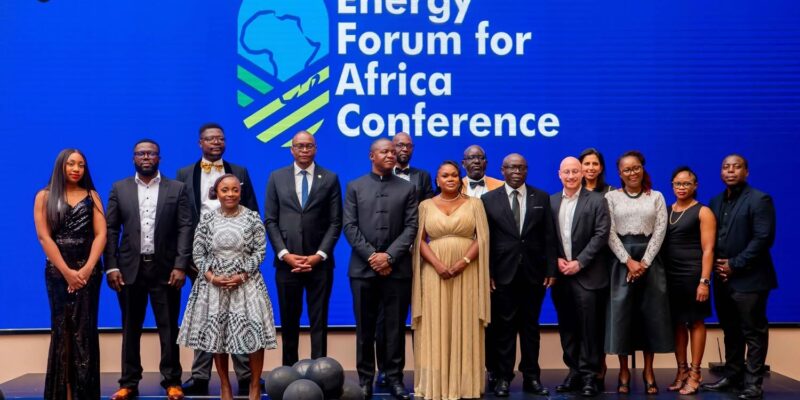
The 2025 Energy Forum for Africa Conference, which closed on Friday after opening on Wednesday in Lusaka, set the tone for stronger private sector participation in the energy sector as countries in the region grapple with a historic power supply crisis.
The gathering brought together key policymakers, industrial leaders, cooperating partners, and financiers, offering illuminating discussions on Africa’s energy future.
During the official opening, Zambia’s President Hakainde Hichilema called on African nations to accelerate the development of regional power interconnectors to achieve universal electricity access.
He stressed that energy cooperation was central to driving food security through irrigation and powering industrial growth in countries like Zambia.
Hichilema urged the dismantling of “artificial boundaries” in the power sector by investing in cross-border infrastructure that allows electricity trading across regions.
He attributed the slow pace of investment in interconnectors to policy rigidities on the continent and called on regulators to harmonise frameworks and remove barriers.
He highlighted the Zambia–Tanzania interconnector, which will link the Southern African Power Pool (SAPP) with the Eastern Africa Power Pool, as a flagship project.
“If you are profiling projects,” he said, “that interconnector is very important—not only for its return on investment but also for the size of the market and the two-way trading opportunities it offers.”
Stanbic Bank Zambia Chief Executive, Mwindwa Siakalima, disclosed that the bank had committed more than US$220 million to strategic energy projects across the country, aimed at addressing immediate shortages and bolstering long-term security.
He outlined three major financing agreements: US$55 million with Africa GreenCo to import 130 megawatts of power; US$71.5 million for a 100MW solar PV plant under ZESCO’s Kariba North Bank Power Corporation; and US$96.7 million raised through the second tranche of Copperbelt Energy Corporation (CEC) Renewables’ green bond to expand the Itimpi Solar PV Plant.
“These are tangible steps that reflect our commitment not just to Zambia but to Africa’s energy future,” Siakalima said.
Held under the theme “Investment Opportunities in the Energy Sector in Zambia and Africa”, the forum attracted government leaders, regional energy ministers, diplomats, and private sector stakeholders.
Read more: lusaka-set-to-host-2025-energy-forum-for-africa-drawing-400-delegates-video
Mimshack Engineering Consultants Limited Managing Director, and event convener, Hope Chanda, urged participants to drive Africa’s energy future through innovation and practical solutions.
She emphasised the need for homegrown solutions that place sustainability and inclusivity at the heart of the energy transition.
She cited the 100MW Chisamba solar project—commissioned in June this year by President Hichilema—as one tangible outcome of last year’s inaugural forum.
Private sector leaders also praised the government’s move to deregulate power trade through open access.
However, North Western Energy Company Chief Executive Officer, Andrew Kamanga, cautioned that more investment in transmission infrastructure was needed.

“To continue attracting new players, the power systems must be supported by Independent Power Producers (IPPs) to ensure quality transmission,” Kamanga said.
GreenCo Zambia Chief Executive Officer, Wezi Gondwe, highlighted the role of intermediaries in broadening regional and international power trade while also unlocking financing.
Stanbic Bank Zambia Head, Corporate and Investment Banking, Hellen Lubamba, explained how the Pan-African bank was leveraging the SAPP to secure loan repayments despite challenges facing Zambia’s national utility balance sheet.
She noted that Stanbic was now able to reach financial closure for energy projects in under three months to ensure supply stability during crises.
Discussions also explored how development banks were helping governments align projects with the Sustainable Development Goals (SDGs) by providing both financing and technical support.
The forum underscored the need for stronger engagement of regional and financial institutions in energy financing and advisory services to tackle the persistent supply deficits in Southern Africa.
Overall, the event showcased the region’s vast energy potential and the role of robust interconnectors in building resilience against external shocks as geopolitical tensions continue to threaten the global economy.
WARNING! All rights reserved. This material, and other digital content on this website, may not be reproduced, published, broadcast, rewritten or redistributed in whole or in part without prior express permission from ZAMBIA MONITOR.





Comments