
 By
By 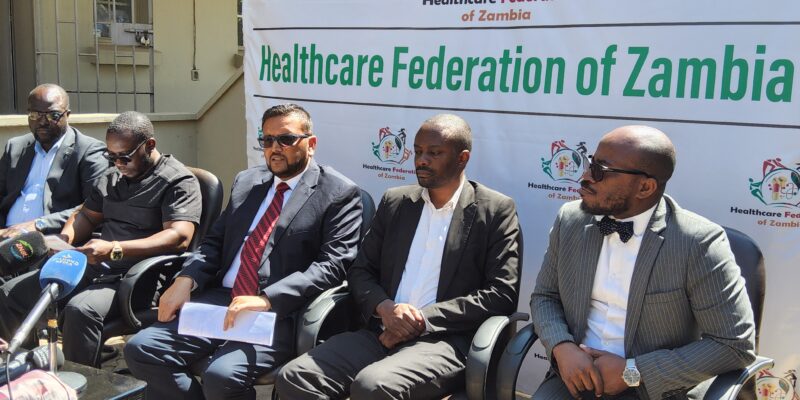
Several private health facilities are reportedly on the verge of closure following government’s failure to settle debts owed to them for the past 10 consecutive months.
According to the Health Care Federation of Zambia (HFZ), the government, through the National Health Insurance Management Authority (NHIMA), is indebted to nearly all private healthcare providers for services rendered from mid to late 2024.
Speaking during a media briefing in Lusaka on Monday at the Zambia Medical Association offices, HFZ President, Dr. Shailen Desai, said numerous engagements had been held between HFZ, individual healthcare providers, NHIMA, the Ministry of Health, and even State House officials, but that no progress had been made towards clearing the outstanding payments.
Desai revealed that NHIMA had informally indicated a policy of prioritising payments to public health facilities first, with private providers only receiving what remains.
“Off late when meetings have been held with NHIMA officials on this matter, they have clearly told the private HCPs that they have an unwritten rule to pay the public HCPs first and then whatever remains is shared with the private HCPs,” he said.
He added that NHIMA had even suggested private healthcare providers suspend services until they are paid.
Read More: Health Minister, Muchima, launches three-year roadmap to promote healthy living
Desai stressed that private providers had diligently served Zambians under the National Health Insurance Scheme (NHIS), with hundreds of thousands benefiting from their services.
He noted that while some providers had been found wanting in the past, the Federation would never shield members engaged in illegal practices.
He also argued that public sector facilities had equally faced challenges, yet private providers were often made scapegoats.
Desai emphasized that private healthcare facilities were committed to ensuring the NHIS succeeds, describing it as a “game changer” for Zambians, and demanded equal respect as partners in service delivery.
He further raised concern over the absence of tariff revisions since 2021, despite rising costs of doing business and living.
Although tariffs were adjusted in January 2025, he said the revision came alongside a reduction in citizens’ benefit packages, without consultation of private providers.
Pre-January 2025, NHIMA paid K600 for each outpatient visit, a rate Desai argued was inadequate even for basic treatment.
“The K600 was nowhere near enough to treat someone even for something as simple as a urinary infection adequately,” he said.
Despite these challenges, Desai said HFZ members had continued providing critical services “because we are partners of government and only want the programme to succeed for the benefit of Zambian people.”






Comments