
 By
By 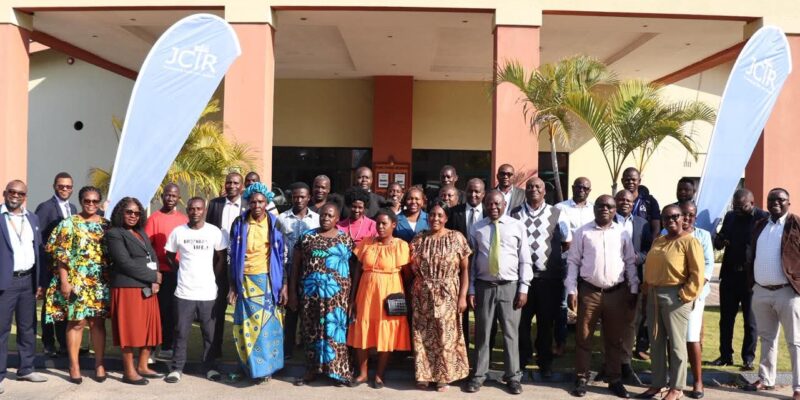
The Jesuit Centre for Theological Reflections (JCTR) has emphasized the need for the government to begin to invest in local adaptation strategies from early warning systems to climate smart agriculture in order to deal with the effects of climate change.
JCTR Executive Director, Father Daniel Mutale, noted the need to centre the voices of communities, especially youths and indigenous population in the country’s climate response.
Mutale said this during the National Summit on climate change adaptation and environmental change management held at Golf View Hotel in Lusaka on Tuesday.
The Summit was held under the theme: ” Climate action for inclusive growth: protecting Zambia’s environment, empowering people.”
He stressed the need for the country to transition to a green economy that prioritizes sustainability over short term gain.
“Climate justice is not just about protecting the environment. It is about protecting people. It is about addressing inequality,” Mutale stated.
He said in order to ensure that adaptation efforts reached the most vulnerable, there was need for collaboration between civil society organizations and the government which was essential to achieving the set out goals.
Mutale commended the Ministry of Green Economy and Environment for its leadership in spearheading climate action into national development planning.
“Climate change is no longer a distant concern in Zambia, it’s impact are deeply felt by small-scale farmers who rely on rainfall fed agriculture, by families grappling with food insecurity due to poor harvests,” he said.
Green Economy and Environment Minister, Mike Mposha, stated that the response to climate change should go beyond infrastructure and embrace climate justice, ensure that vulnerable groups especially women, youth and rural populations were empowered to adapt.
Mposha stated that Zambia like many developing countries was already experiencing the harsh impacts of climate change such as erratic rainfall patterns, prolonged droughts, flash foods, loss of biodiversity and widespread land degradation.
“These shocks are undermining agriculture, water security, public health and energy supply with the heaviest burden falling on our vulnerable communities, particularly women and the Rural poor,” he said
The Minister stated that in response that the government had taken deliberate steps to mainstream climate change adaptation and environmental protection across all sectors of development.
Mposha said the government was implementing key policy frameworks, including the national climate change policy, the national adaptation plan, and the Eighth National Development Plan, which integrates climate resilience and environmental sustainability.
He added that the government was championing initiatives in green finance, carbon markets, sustainable land management and community based natural resource governance.
Read More: Government seeks legal guidance on Kafue River pollution by Sino Leach Metals
“These initiatives are designed not only to protect our ecosystems but also to generate sustainable livelihoods and inclusive economic growth,” he stated.
Mposha said the vision of a green Economy was not simply about protecting the environment but it was about building a society and an economy that was low carbon, resource efficient, and socially inclusive.
He noted that this vision called for the expansion of investment in renewable energy, promoting climate smart agriculture, restoring degraded landscapes, and supporting green jobs, particularly for young people and women.
“Faith based institutions such as JCTR play an indispensable role in raising awareness, mobilising communities, advocating for fairness in policy actions and ensuring that the voices of the vulnerable are not drowned out,” Mposha emphasized.
WARNING! All rights reserved. This material, and other digital content on this website, may not be reproduced, published, broadcast, rewritten or redistributed in whole or in part without prior express permission from ZAMBIA MONITOR.








Comments