
 By
By 
The Zambian government has expressed concern over the spread of misinformation about science, warning that it poses a significant threat not only to public health but also to the entire innovation space.
Agriculture Minister, Reuben Mtolo, highlighted the issue during a speech read on his behalf by Zambia Agriculture Research Institute Acting Director, Dr. Dashe Kapulu, at the 6th Edition of the Africa Biennial Biosciences Communication Symposium (ABBC 2025).
The symposium, held at Intercontinental Hotel in Lusaka on Tuesday, was themed “The war on Science: how can we overcome the burden of misinformation and disinformation.”
Mtolo said Africa faces a convergence of food insecurity, disease burden, and environmental challenges, creating a complex crisis that threatens health and development.
He warned that misinformation and disinformation had undermined trust, delayed progress, and in some cases resulted in loss of lives.
“Science is at war with misinformation and disinformation emerging as one of the greatest threats,” he said, noting that the agriculture sector, which supports over 70 percent of the population, was particularly affected.
He added that intensification of agriculture, deforestation, urban expansion, and climate change further weakened ecological and epidemiological systems, worsening the spread of infectious diseases and degrading natural resources essential for food production.
Mtolo stressed that integrating solutions across interconnected domains through the One Health approach was urgent.
He urged the deployment of science-driven interventions guided by sound policy and supported by effective communication to address these challenges.
The Minister also highlighted government efforts to strengthen food security and resilience.
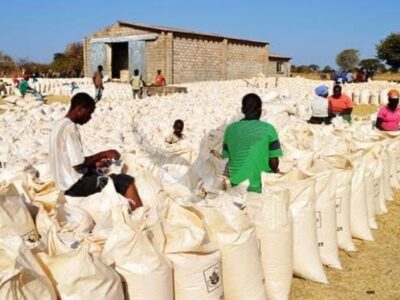
These, he said, included the development and release of drought-tolerant maize varieties, fall armyworm-tolerant crops, climate-smart crops such as sorghum, cassava, beans, pigeon peas, and millets, as well as the multiplication of fruit trees including citrus, tree nuts, avocados, improved mangoes, and bananas.
Other initiatives include enhanced pest and disease surveillance using biotechnological approaches to tackle threats such as foot-and-mouth disease and contagious bovine pleuropneumonia, and the scaling up of conservation agriculture to protect soils, conserve water, and build resilience against climate shocks.
WARNING! All rights reserved. This material, and other digital content on this website, may not be reproduced, published, broadcast, rewritten or redistributed in whole or in part without prior express permission from ZAMBIA MONITOR.









Comments