
 By
By 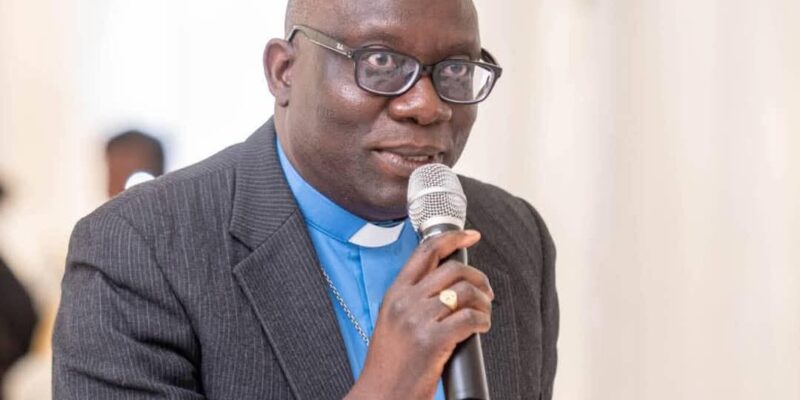
The Council of Churches in Zambia (CCZ) has expressed concern over gaps in budgeting, targeting, and transparency which, it says, risk undermining the impact of social and economic programmes despite allocations made in the 2026 National Budget amounting to K253.09 billion.
CCZ General-Secretary, Father Emmanuel Chikoya, urged the government to strengthen monitoring, audit, and beneficiary verification systems for social cash transfers and the Farmer Support Programme, and to mandate quarterly public reporting on fiscal and programme implementation.
Speaking at a media briefing in Lusaka, Father Chikoya also called on the government to publish a consolidated multi-year budget annex detailing financing for Social Cash Transfer (SCT) indexation, Farmer Support Programme expansion, and targeted public works.
He further called for the release of a comprehensive debt sustainability plan and a public debt management reform timetable, with clear rules to ensure that savings from debt restructuring are directed toward social spending.
“CCZ welcomes measures to expand the Social Cash Transfer and clear retiree arrears but urges the government to index SCT to inflation and establish explicit budget lines to guarantee timely disbursement,” he said.
Father Chikoya stated that while the Church supports progress on debt restructuring, there was a need for stronger public debt management legislation and clear frameworks to channel restructuring savings towards social and capital investments.
On the energy sector, he urged government to publish a time-bound Energy Sector Delivery Plan with dedicated maintenance funding, targeted subsidies or financing for solar solutions for poor households, and debt resolution milestones for ZESCO to help restore investor confidence.
“Furthermore, CCZ calls for a lasting solution to increased fuel prices and overall price stability,” he said.
Father Chikoya also expressed concern over proposed increases in user fees and levies—including mobile money and citizenship fees—warning that such measures may further strain low-income households.
He recommended careful impact assessments and protective measures for the poorest citizens and also proposed a targeted, time-bound PAYE threshold increase or other temporary payroll relief to boost disposable incomes for low-wage earners, supported by compensatory revenue measures.
The CCZ leader also highlighted the need for explicit multi-year funding for job creation initiatives, improved monitoring and evaluation of social protection programmes such as the SCT and Food Security Pack, and enhanced transparency in mining revenue reporting and allocation.
Father Chikoya called for a reassessment of the increased allocation to the Constituency Development Fund (CDF), saying while government’s commitment is commendable, implementation challenges and misuse have hindered the fund’s intended benefits.
Read More: Group warns 2026 budget risks deepening inequality despite economic reforms
“While we commend the government for the increased funding, the implementation of the CDF has been associated with misuse and structural challenges, which hinder its intended benefits to the community,” he said.
He cautioned that increasing allocations to a fund that has not been fully utilised raises efficiency concerns, suggesting that some of the additional resources be redirected to other critical social sectors.
Father Chikoya also urged government to define measurable youth employment targets, allocate resources to quality public works, introduce incentives for private sector hiring, and publish extractive revenue allocation frameworks to improve transparency in mineral production and revenue disclosure.
“Reassess the allocation and utilisation of the Constituency Development Fund (CDF), ensuring that future disbursements are effectively managed, accountability is enhanced, and structural challenges are addressed to maximise community benefits,” Father Chikoya concluded.
WARNING! All rights reserved. This material, and other digital content on this website, may not be reproduced, published, broadcast, rewritten or redistributed in whole or in part without prior express permission from ZAMBIA MONITOR.









Comments