
 By
By 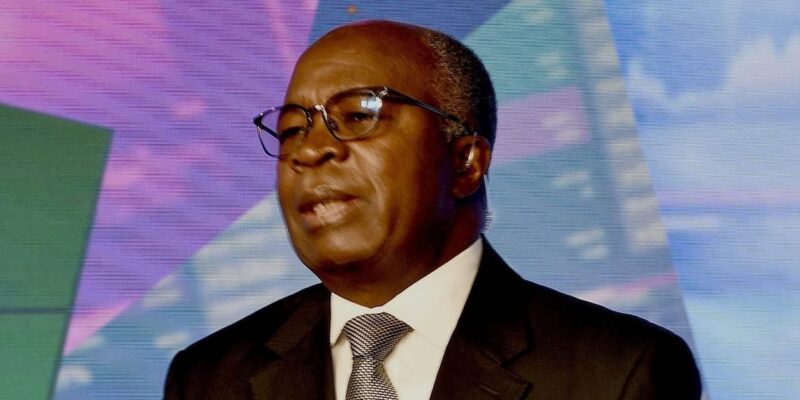
Finance and National Planning Minister, Situmbeko Musokotwane, has outlined a comprehensive, multisectoral approach to tackling poverty, saying the challenge went beyond low income and required coordinated action across agriculture, infrastructure, finance, education and social protection.
In a statement on Saturday, Musokotwane said he addressed the matter in the National Assembly of Zambia on Friday while responding to a question from Kalabo Central Member of Parliament Chinga Miyutu on what was driving poverty and how government was responding.
“Poverty is not only about low income. It is multidimensional—meaning it is shaped by a combination of factors that affect livelihoods, access to services, and the ability of households to participate in the economy,” Musokotwane said, adding that because the causes were interconnected, solutions must also be coordinated.
He cited low agricultural productivity—particularly among small-scale farmers—as a major driver, noting that maize yields in many areas remained below two metric tonnes per hectare, limiting incomes and undermining food security.
To address this, he said government was supporting farmers through the Farmer Input Support Programme (FISP) and the Food Security Pack, while expanding access to agriculture-focused financing via the Sustainable Agriculture Financing Facility (SAFF) to help households move from subsistence to surplus.
Musokotwane also pointed to historical deficits in infrastructure and connectivity, which had constrained access to electricity, health services, quality education and all-season roads.
He said the strengthened Constituency Development Fund (CDF) was bringing development closer to communities by expanding local infrastructure and providing grants and loans to resolve local constraints in a timely manner.
Limited access to affordable finance—especially in rural areas and for micro and small enterprises—was identified as another barrier.
The Minister said government was widening access to credit through community-level CDF financing and targeted agriculture finance under SAFF to ensure productive households are not blocked by lack of capital.
On human capital, Musokotwane highlighted the impact of large household sizes, low education levels and skills gaps, which could lock families into low-productivity activities.
He said the Free Education Policy and reinstated university bursaries were strengthening skills development, while expanded social protection was cushioning vulnerable households so they can invest in education and livelihoods.
The Minister said Government had increased social protection allocations in the 2026 Budget to K15.7 billion, including K1.51 billion for the Food Security Pack, K1.03 billion for Cash for Work, K4.92 billion for pension payments and K7.65 billion for the Social Cash Transfer programme targeting an estimated 8.4 million beneficiaries.
Beyond immediate support, Musokotwane said longer-term reforms were underway to reduce production costs and raise incomes, including improving efficiency in the fuel supply chain and scaling up investment in agriculture through mechanisation and irrigation to reduce reliance on rainfall.
“Under the visionary leadership and good economic governance of Hakainde Hichilema, the sustainable way to reduce poverty is to grow the economy and expand income opportunities, while protecting the vulnerable during transition,” he said.
He added that higher agricultural output would lower food costs and raise rural incomes, while increased investment in mining and other productive sectors would support jobs, household earnings and sustainable livelihoods, reaffirming government’s direction as presented to Parliament.
WARNING! All rights reserved. This material, and other digital content on this website, may not be reproduced, published, broadcast, rewritten or redistributed in whole or in part without prior express permission from ZAMBIA MONITOR.








Comments