
 By
By 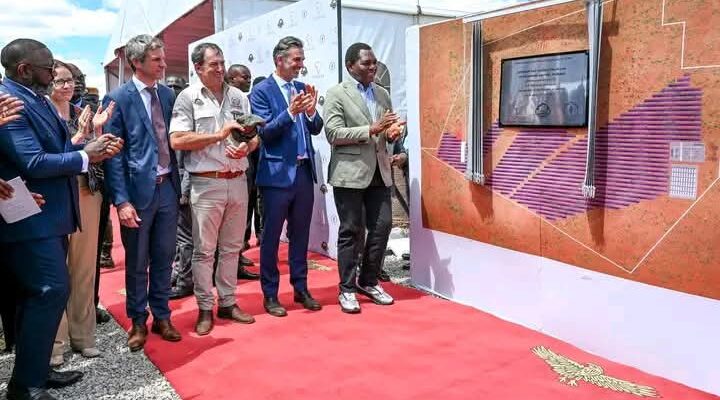
President Hakainde Hichilema has launched the construction of a 250-megawatt solar photovoltaic plant and a 150-megawatt battery energy storage system (BESS) at the Leopard Hill Solar Generation Station in Chongwe District.
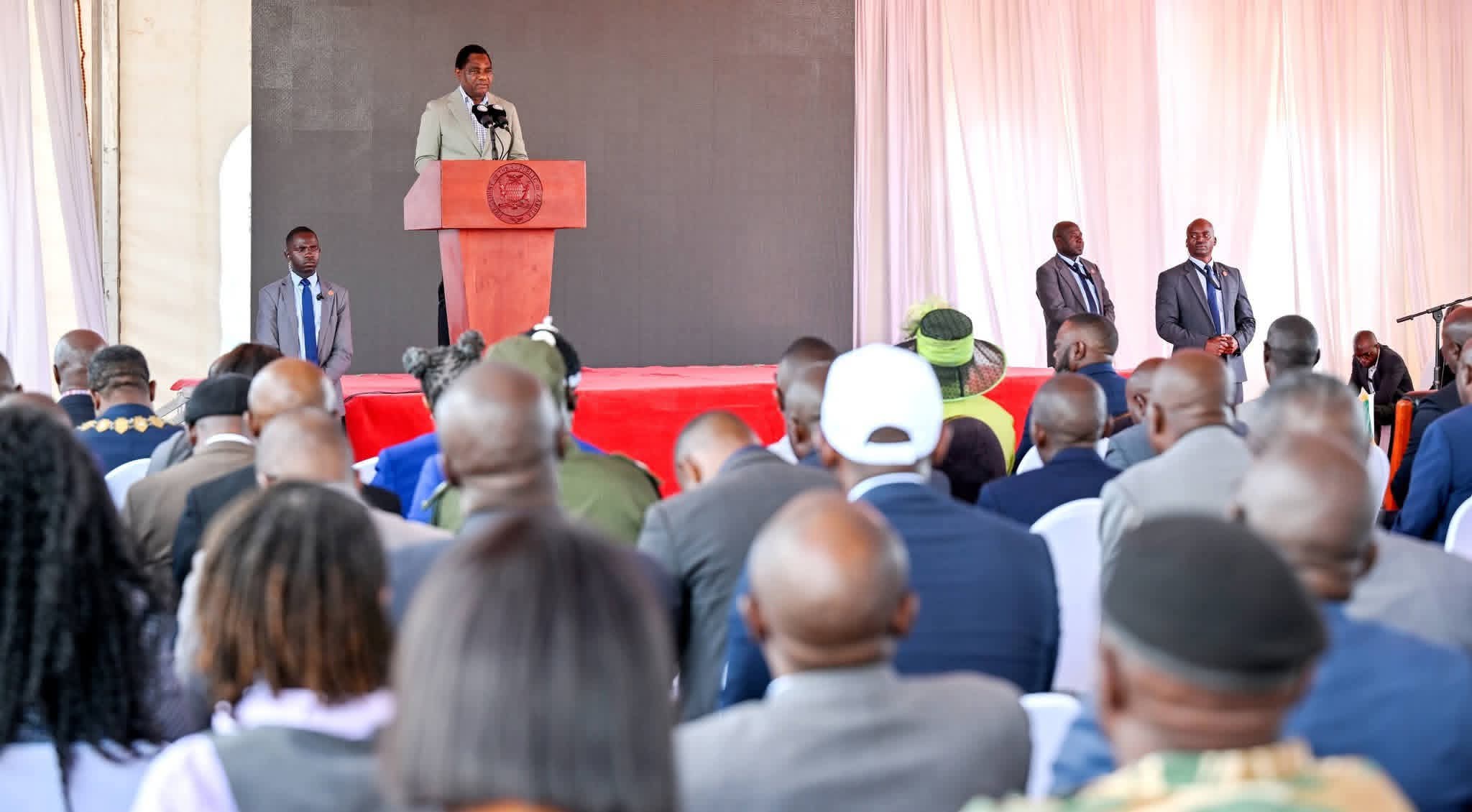
Speaking at the ceremony held off Leopards Hill Road on Tuesday, President Hichilema said the US$315 million hybrid project marks a major step toward stabilising the national grid and strengthening Zambia’s energy security.
He said the integration of large-scale solar generation with advanced battery storage would significantly enhance the reliability of electricity supply.
“The integration of 250MW of solar power and 150MW of battery storage will enhance reliability and ensure consistent supply,” President Hichilema said.
The President emphasised the need for a holistic approach to energy development, including resource-sharing and investment in a diversified energy mix.
He described the project as clear evidence that ongoing reforms in the energy sector were bearing fruit, creating an environment where private investments were viable and supportive of economic growth. He reaffirmed the Government’s commitment to sustaining and refining these reforms.
Hichilema also noted that Zambia had the potential to generate up to 1,000MW of solar energy, citing additional projects such as the 200MW Chisamba Solar Plants (Phase I and II). Combined with the Leopard Hill development, these projects are expected to add about 450MW to the national grid.
He urged Zambians to form strategic partnerships and emulate private sector players that had diversified their investments, while calling on ZESCO Limited to strengthen its balance sheet and participate more actively in commercial ventures.
Acting Minister of Energy, Rodney Sikumba, said the project reflected the positive impact of energy sector reforms, adding that Government remained committed to the timely delivery of power projects to expand electricity access nationwide.
Read More: Fresh ERB approvals estimated at K7.3 billion in investment commitments
Lusaka Province Minister, Sheal Mulyata, said the province was proud to host the facility, which she noted would create jobs and support local economic growth.
Project Chairperson, Carl Irwin, speaking on behalf of the developers, said the project had been dormant for nearly a decade but had now become viable due to improved policy and legislative conditions.
“The project, being implemented in partnership with Globeleq, Kyindu Resources Limited and ZESCO, will be one of the largest battery storage projects on the continent and is designed to provide reliable and dispatchable power,” Irwin said.
He explained that the initiative stalled for years because previous policies were not supportive of private investment in the energy sector.
ZESCO Board Chairperson, Vickson Ncube, said the project underscored Government’s consistent policy direction and the importance of efficient, sustainable power solutions.
He added that the utility was upgrading its transmission network to meet rising demand and acknowledged the crucial role Independent Power Producers had played during periods of load shedding.
Chongwe Member of Parliament and Minister of Lands Sylvia Masebo welcomed the project, saying the district had long faced electricity challenges and that the investment would significantly improve access for households.
British High Commissioner to Zambia, Rebecca Terzeon, said the project demonstrated the central role of reliable electricity in driving economic growth and regional trade.
She noted that power demand in Zambia was accelerating and that the country remained an attractive destination for investment within the global clean-energy transition.
Terzeon also announced that the United Kingdom was contributing £1.2 million to Zambia’s energy compact and supporting initiatives such as the Zambia-Tanzania interconnector—signalling a shift from aid to investment.
WARNING! All rights reserved. This material, and other digital content on this website, may not be reproduced, published, broadcast, rewritten or redistributed in whole or in part without prior express permission from ZAMBIA MONITOR.








Comments