
 By
By 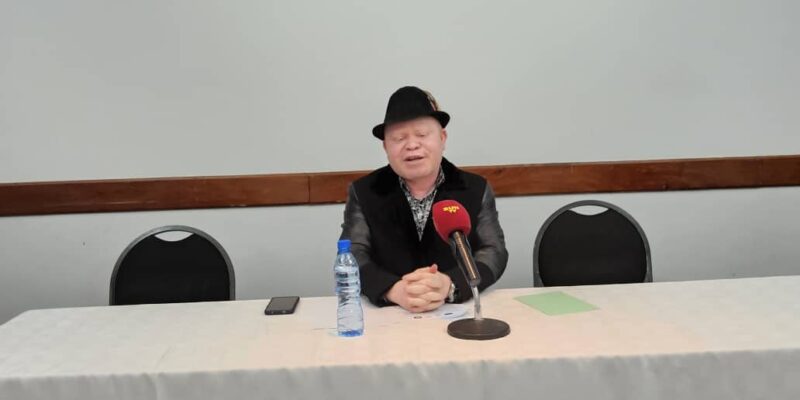
Organisations of Persons with Disabilities in Zambia will mark International Albinism Awareness Day on June 13, 2026 with a renewed call for government to ratify the African Disability Protocol without delay.
Speaking on behalf of the Organisations, Albinism Foundation of Zambia Executive Director, John Chiti, said the protocol was Africa’s own human rights instrument designed to address stigma, harmful practices against persons with Albinism, and barriers in education, health, work, justice and political participation.
Addressing Journalists during a media briefing in Lusaka on Friday, Chiti noted that the protocol complements the UN Convention on the Rights of Persons with Disabilities by tackling Africa’s specific contexts and challenges faced by persons with disabilities.
The African Disability Protocol entered into force in 2024 after 15 countries ratified it, including Angola, Kenya, Malawi, South Africa, Uganda and Zimbabwe. Zambia has neither signed nor ratified the instrument.
He said said the delay in ratification continued to prolong barriers experienced by persons with disabilities.
“For over five years, OPDs have engaged, consulted, and called for ratification. Each month of delay prolongs the barriers experienced by people with disabilities,” Chiti said.
He acknowledged government’s public commitment to complete ratification in the first quarter of 2026, as referenced during parliamentary discussions and a Private Member’s Motion raised on 25 July 2025.
Read More: Group warns Electoral Commission of Zambia over barriers facing voters with disabilities
However, Chiti said progress toward depositing the instruments of ratification with the African Union had not been evident and signing would be a promise to possibly take action, and while ratification will take it a step further into action.
He outlined that ratifying the ADP would strengthen legal protections against discrimination and harmful practices, align Zambia with continental standards, and accelerate inclusion in schools, workplaces, health services and civic life.
“Behind the policy language are real people: a child out of school because accessibility was not planned, a qualified graduate kept out of work, a voter turned away by a removable barrier,” Chiti stated.
He called on authorities responsible for social services, justice, executive coordination and the legislature to finalise the necessary papers, secure approvals and deposit the instruments with the AU immediately.
“This is not charity. This is justice. This is development. This is Zambia keeping its word. Nothing About Us Without Us,” Chiti stated.
WARNING! All rights reserved. This material, and other digital content on this website, may not be reproduced, published, broadcast, rewritten or redistributed in whole or in part without prior express permission from ZAMBIA MONITOR.








Comments