
 By
By 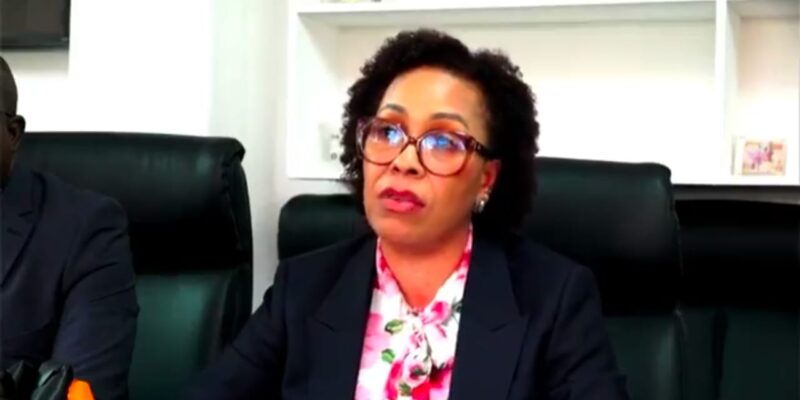
Tax Appeals Tribunal (TAT) Chairperson, Diana Bunting, has called for urgent reforms to strengthen Zambia’s tax dispute resolution system, including the appointment of additional tribunal members, increased funding and the eventual establishment of a specialised full-time tax tribunal.
Speaking during a courtesy call on the Secretary to the Treasury in Lusaka on Tuesday, Bunting said an effective and efficient Tax Appeals Tribunal was critical to protecting taxpayers’ rights, safeguarding Government revenue and boosting investor confidence.
“The Tax Appeals Tribunal performs a vital role within Zambia’s tax dispute resolution framework. It serves as the first point of external appeal that protects taxpayers’ rights by allowing an independent review of decisions made by the Zambia Revenue Authority that taxpayers believe are unfair or incorrect,” she said.
Bunting said a well-functioning tribunal encouraged voluntary tax compliance by assuring taxpayers that disputes would be resolved fairly, transparently and in accordance with the law.
She noted that prolonged delays in resolving tax disputes had significant consequences for businesses, taxpayers and Government revenue.
“It is therefore in the national interest that the Tribunal operates efficiently, professionally and without unnecessary delay,” she said.
Bunting said one of the Tribunal’s immediate priorities was addressing the existing backlog of cases.
“Justice delayed is justice denied. Our objective will be to reduce the backlog through improved case management, efficient scheduling of hearings and the timely delivery of well-reasoned decisions,” she said.
She, however, said achieving that goal required a fully constituted Tribunal, explaining that only four members had been appointed against the legally required complement of seven.
“The appointment of the remaining three members would significantly enhance the Tribunal’s capacity to hear matters expeditiously and reduce the accumulation of pending appeals,” Bunting said.
She also urged government to introduce institutional and legal reforms to ensure vacancies on the Tribunal were filled promptly whenever members’ terms expired.
Bunting observed that the Tribunal had previously remained without appointments for approximately 18 months between 2013 and 2015, and again for about 36 months between 2023 and 2026, contributing to a growing backlog of cases and delays in the administration of tax justice.
Going forward, she said, a structured succession and appointment process would improve institutional stability, strengthen service delivery and reinforce public confidence in the tax dispute resolution system.
The Chairperson further appealed for adequate and sustainable funding to enable the Tribunal to fulfil its statutory mandate.
“The Tribunal must be sufficiently resourced to conduct hearings across all Tribunal circuits, ensuring that taxpayers throughout the country have meaningful access to justice regardless of their geographical location,” she said.
Bunting said increased funding would also support improved administrative systems, continuous professional development, technological advancement and more efficient case management.
Looking to the future, she proposed the gradual transformation of the Tribunal into a specialised tax court or a specialised Tax Appeals Tribunal staffed by full-time members.
“Given the importance of tax matters to Government revenue, economic growth and investor confidence, a specialised Tribunal staffed by full-time members would enhance consistency, efficiency, institutional knowledge and the timely disposal of cases,” Bunting said.
WARNING! All rights reserved. This material, and other digital content on this website, may not be reproduced, published, broadcast, rewritten or redistributed in whole or in part without prior express permission from ZAMBIA M











Comments