
 By
By 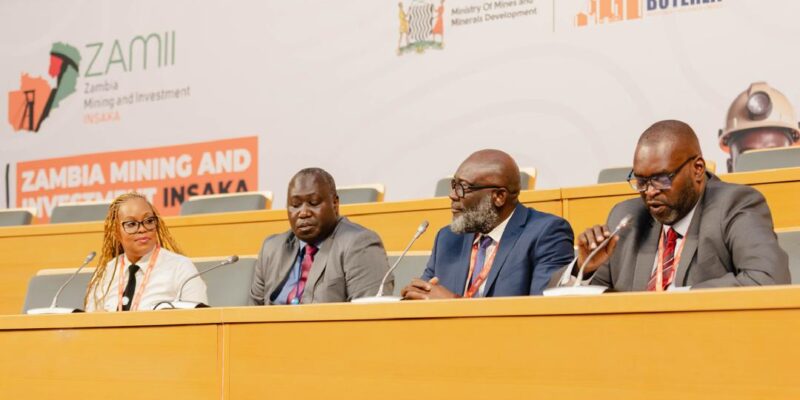
African mineral producers can secure better prices and greater value by deepening their understanding of global markets, building strong brands, and adopting responsible, sustainable practices, experts have said.
Speaking at a session on “Mineral Marketing and Trading: Seeking Innovative Ways of Maximising Value,” held at the Mulungushi International Conference Centre in Lusaka on Tuesday, ZCCM Investments Holdings (ZCCM-IH) Chief Executive Officer, Kakenenwa Muyangwa, stressed the importance of market knowledge in driving fair pricing.
“It’s so easy for us to just do business through traders, in which case we surrender our market knowledge to them. But if we go beyond the traders and engage directly with the end users of our products, that’s a good starting point,” Muyangwa said.
He explained that direct engagement allowed producers to gather feedback on product use and quality, enabling improvements that enhance competitiveness.
He cited his experience at Konkola Copper Mines (KCM), where feedback from Chinese buyers on copper cathodes’ surface finish helped improve standards.
“While it didn’t affect the quality, it mattered to the customer. That feedback helped us improve, and today our cathodes are of very high quality,” he noted.
Muyangwa also highlighted the importance of understanding commodity pricing mechanisms.
“In the case of copper, there is a reference price — the LME (London Metal Exchange) price. Some argue Zambia shouldn’t rely on that, but the question is: how else do you determine price? If you going to use something else, If you set it too low, you lose money; too high, and nobody buys,” he said.
He emphasized that transparency, premiums, discounts, and logistical costs are all critical in maximizing revenues.
Muyangwa further called for branding and international registration of minerals, which helps attract premium buyers.
“If you want to get those supply premiums that top-end customers pay, your product must be registered and traceable through recognised systems. Branding matters — just like in the gemstone industry, where a certified stone commands higher value,” Muyangwa said.
He stated that: “Understanding our markets and branding our minerals is how we move from being mere suppliers to true players in global value creation.”
Adding to the discussion, Kochiwe Mungomba stressed that responsible and sustainable sourcing (ESG practices) can be a powerful tool to capture premium pricing.
“We have to brand our minerals around ESG — Environmental, Social, and Governance — sustainability. This creates commercial leverage,” she said.
Mungomba explained that in Zambia, minerals such as copper could be branded with digital identities, tracked along the value chain using blockchain.
This ensures authenticity and traceability, giving buyers confidence in the environmental and ethical integrity of the product.
“By the time buyers receive the copper, they can verify the digital ID, confirming it comes from responsible and environmentally sound sources. This is already generating premium prices in international markets,” she said.
Mungomba highlighted that aggregating artisanal miners’ output into standardized, certified batches allowed smaller producers to access premium markets without selling individually.
“Giving minerals a story and traceability allows us to leverage commercial value and secure premium prices,” Mungomba said.
WARNING! All rights reserved. This material, and other digital content on this website, may not be reproduced, published, broadcast, rewritten or redistributed in whole or in part without prior express permission from ZAMBIA MONITOR.











Comments