
 By
By 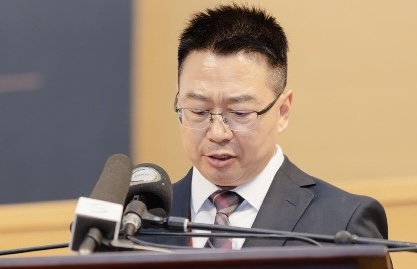
In a reaffirmation of long-term commitment to Zambia’s mining future, Wang Jingjun, Chairman of the Chinese Mining Enterprises Association in Zambia, has emphasized that achieving the country’s ambitious goal of producing three million tonnes of copper annually by 2031 required sustained investment, technological innovation, and environmental stewardship.
Speaking at the just ended 2025 Zambia Mining and Investment Conference, Wang said the planned investment reflected a shared vision for sustainable and technologically advanced mining that benefits both the economy and local communities.
He noted that in 1998, Chinese investors reopened the NFCA mine, which had been closed for 13 years at the time.
Read more: Zambia attracts over $12 billion in mining investment, as sector hits historic milestones
Since then, Wang said the enterprise had invested a total of US$1.4 billion in exploration and the construction of new mining projects.
As a result, annual copper production has increased from initial 24,000 tonnes at inception to 80,000 tonnes, while the total number of employees had grown to over 6,200.
He added that the company was implementing an expansion plan aimed at increasing annual output to more than 100,000 tonnes by 2031, in line with Zambia’s national copper production strategy.
Wang emphasized that sustainable mining required long-term investment, technological innovation, and a strong commitment to environmental protection.
He observed that traditional mining methods were often associated with inefficiency and significant safety risks.
To address these challenges, Wang said NFCA became the first mining company in Zambia to deploy automated load-haul-dump systems in its underground operations.
He said this innovation allowed operators to control loaders remotely from the surface, with just two machines capable of producing up to 800,000 tonnes of ore annually.
Wang further noted that the company had introduced the world’s most advanced Tunnel Boring Machine (TBM)technology, designed to improve excavation efficiency and safety standards in underground mining.
On environmental management, he highlighted the company’s adoption of paste backfill technology, an eco-friendly mining method that reduces waste rock generation, prevents ground subsidence, and minimizes land used for tailings storage facilities.
“In May 2024, His Excellency President Hakainde Hichilema visited and officially launched our Shaft 28 dewatering project, an area that had been flooded for more than 23 years,” he said.
“We are pleased to report that this project, made possible by a customized submersible pump, is expected to be completed before the end of this year.”
Wang also stressed the need for enhanced collaboration between government and the private sector to accelerate systematic mineral exploration and improve policies that attract both domestic and international investment.
Such efforts, he said, would secure Zambia’s long-term resource base to support higher production levels.
He underscored the importance of building local skills and technical capacity to sustain growth in the mining industry.
Wang reaffirmed the Association’s readiness to work with government and local institutions to establish mining training centres and technical bases to support Zambia’s industrialisation and job creation agenda.
He also highlighted energy as a critical pillar for achieving Zambia’s three-million-tonne production goal, noting that stable and reliable power supply was essential for sustaining mining operations.
Wang encouraged increased investment in energy infrastructure and the adoption of energy-saving technologies to enhance efficiency and promote sustainability.
WARNING! All rights reserved. This material, and other digital content on this website, may not be reproduced, published, broadcast, rewritten or redistributed in whole or in part without prior express permission from ZAMBIA MONITOR.









Comments