
 By
By 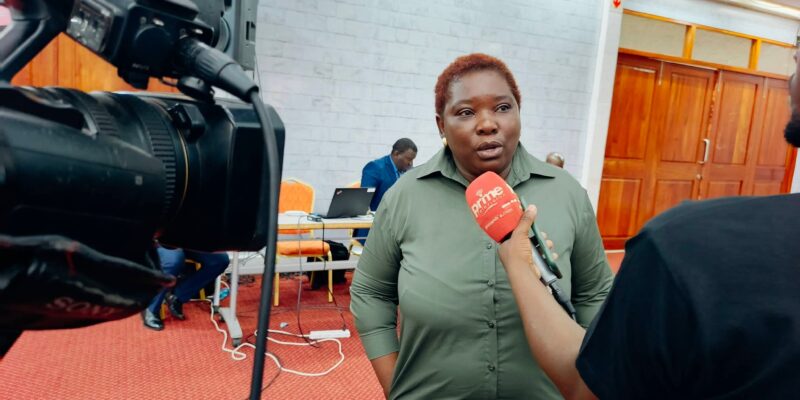
The Civil Society for Poverty Reduction (CSPR) has called for greater transparency in government dealings with oil-producing countries and welcomed the TAZAMA pipeline open-access framework as a step toward reducing Zambia’s exposure to global oil price shocks.
The government has zero-rated Value Added Tax (VAT) and suspended Excise Duty on petrol and diesel for three months, effective April 1, 2026, following a sharp surge in global oil prices triggered by the USA–Iran military conflict.
In a statement, CSPR Executive Director, Isabel Mukelabai, urged the government to disclose the performance of the Strategic Reserve Fund — the country’s fuel price stabilization mechanism — and explain how it would help cushion fiscal risks arising from the crisis.
Mukelabai said the government must publish a full fiscal impact assessment within 20 days, arguing that citizens had a right to know the total forgone VAT and Excise Duty revenue and how the revenue gap would be managed, including whether social sector spending will be affected.
“In upholding transparency, ERB must make publicly available the complete price build-up document to enable independent verification of how tax exemptions have or will impact petrol and diesel pump pricing,” she said.
Mukelabai argued that while the temporary tax relief had protected petrol and diesel consumers from a steep price increase, rural households that relied on kerosene for cooking and lighting had been left fully exposed, as no tax relief was offered on the commodity.
Kerosene prices have surged by 53.13 percent following the Energy Regulation Board (ERB)’s announcement of new pump prices effective April 1, 2026. Mukelabai said the increase — from K21.06 to K32.26 per litre — disproportionately harms the majority of Zambia’s 7.5 million people living in poverty, many of whom live in rural or peri-urban areas without access to electricity.
She contrasted this with the marginal K0.54 increase in petrol for middle-income urban consumers, calling the disparity “deeply troubling” and evidence of a tax measure that is not poverty-sensitive.
Mukelabai further warned that the tax suspensions could undermine fiscal stability. She recalled that in the 2026 national budget, the Minister of Finance highlighted the removal of fuel subsidies as key to creating fiscal space for free education, increased Social Cash Transfers, and Cash-for-Work programmes during the 2024 drought.
She said government’s classification of the three-month measure as a temporary tax suspension rather than a subsidy is “a thin distinction,” as both approaches used state revenue to suppress fuel prices.
“Even as we recognize that we face an emergency as a country, Zambia’s hard-won fiscal consolidation gains must not be quickly eroded in the name of emergency fuel-shock response measures,” she said.
Mukelabai noted that the 2026 budget allocated K7.65 billion to the Social Cash Transfer Programme, K26.2 billion to health, and K33 billion to education — all essential to poverty reduction — and warned that any decline in revenue collection threatened these allocations.
“Government must therefore be transparent about how it intends to manage this revenue gap without compromising social expenditure or diverting from the debt sustainability agenda,” she said.
WARNING! All rights reserved. This material, and other digital content on this website, may not be reproduced, published, broadcast, rewritten or redistributed in whole or in part without prior express permission from ZAMBIA MONITOR.







Comments