
 By
By 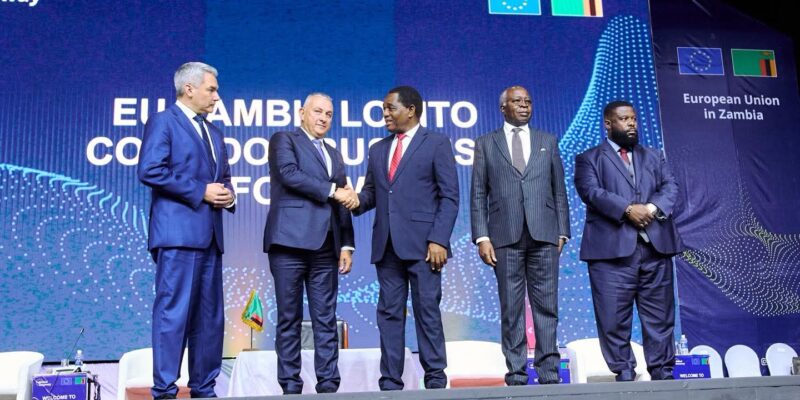
European Commissioner for International Partnerships, Jozef Síkela, has announced more than €200 million in Team Europe investments to support Zambia’s industrial growth, skills development, and sustainable transformation under the Global Gateway strategy.
The new package targets key economic sectors such as transport, energy, agriculture, education, and critical raw materials, while deepening cooperation under the EU–Zambia Memorandum of Understanding on Sustainable Raw Materials Value Chains.
Síkela made the announcement in Chongwe at Ciela Resort during the EU–Zambia Lobito Corridor Business Forum, co-opened by President Hakainde Hichilema.
The forum brought together over 700 participants from Europe, Zambia, and neighbouring countries, including government representatives, development partners, private investors, and financial institutions.
Discussions focused on transforming the Lobito Corridor into a “corridor of opportunity” linking Africa’s Copperbelt to global markets and regional value chains.
“During my mission to Zambia, I have seen the enormous potential this country and its people have. The Lobito Corridor can help unlock it.
“For Europe, it is not just an infrastructure project — it is a corridor of opportunities,” Síkela said.
He noted that the initiative would fuel development, create jobs, and build local value chains, adding that through the Global Gateway, the EU will work with Zambia to translate potential into projects that benefit communities.
Síkela explained that the funding package reflected the Global Gateway approach, which connects infrastructure with people, jobs, training, and sustainable industries.
He said the €50 million Railway Sector Support Programme will rehabilitate and modernise Zambia Railways infrastructure, improving efficiency and preparing it for integration into the Lobito Corridor and other regional routes.
He added that the €20 million Nexus Energy–Water (NEWZA 2.0) Programme would improve water management and renewable energy use in North-Western Zambia, complemented by an additional €80 million in financing from Germany and the European Investment Bank.
According to Síkela, €40 million will go towards Budget Support for Education Reforms to modernise Zambia’s education system and expand access to skills and vocational training.
He also revealed that €36 million under ENTERPRISE Zambia 2.0 will support smallholder farmers with sustainable agriculture, market access, and job creation, co-financed with €8 million from Germany.
Read More: European Union grants €50 million to revive Zambia railways
In addition, €9.8 million will be channelled towards the Artisanal Mining Programme to train and formalise artisanal miners, promoting safer practices and sustainable employment.
Another €1.6 million under GREENTech4CE will provide grants for green, circular, and digital SMEs, strengthening Zambia’s private sector.
Síkela said €30 million had been allocated under the EIB–ZICB Financing Agreement to boost lending for agribusinesses and women-led SMEs in climate-resilient value chains.
Furthermore, the Ilute Solar Project received €3.5 million under ElectriFi, marking one of the first private solar investments under Zambia’s new open-access energy framework.
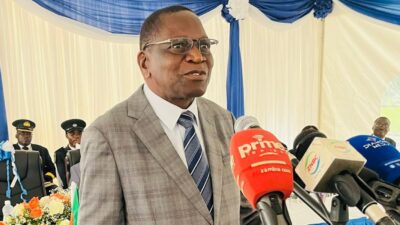
In his remarks, President Hichilema urged the EU and its partners to increase investment in Zambia and across Africa, stressing the continent’s readiness for sustainable partnerships and inclusive growth.
WARNING! All rights reserved. This material, and other digital content on this website, may not be reproduced, published, broadcast, rewritten or redistributed in whole or in part without prior express permission from ZAMBIA MONITOR.






Comments