
 By
By 
Government has launched the US$33 million Zambia Water Supply and Sanitation Services in Growth Centres Programme for Results, describing it as a major step towards expanding access to safe, reliable and climate-resilient water and sanitation services.
Speaking at the launch in Lusaka on Tuesday, Minister of Water Development and Sanitation, Collins Nzovu, said access to clean water and adequate sanitation remained a fundamental human right and a prerequisite for public health, economic productivity and human dignity.
Nzovu noted that despite progress, access to basic water supply in Zambia stood at about 62 percent, while access to basic sanitation was approximately 37 percent — levels he said were still far below national and global aspirations.
He said the newly launched programme marked a shift from input-driven approaches to a results-focused model aimed at strengthening efficiency, accountability and sustainability in the water sector.
“It will focus on two key result areas: sector governance reforms to strengthen accountability and financial transparency in commercial utilities, and service performance improvement to incentivise modern systems and technologies,” he said.
Nzovu said particular focus would be placed on rural growth centres, with investments in climate-resilient systems — including solar-powered water infrastructure, reduced non-revenue water, and expanded access to safe, reliable supply.
He said the programme will benefit communities served by Kafubu, Luapula, North-Western and Western Water Supply and Sanitation Companies.
More than 99,000 people are expected to benefit directly, with an estimated 1.7 million benefiting indirectly.
Nzovu also thanked the World Bank for approving the US$33 million financing package, comprising US$27 million under the Programme for Results and US$6 million for Investment Project Financing for capacity building and technical support.
He said the programme aligned with Zambia’s Vision 2030 target of universal access to water and sanitation and contributes directly to Sustainable Development Goal No. 6.
Read More: Govt urges water utilities to improve efficiency, cut losses
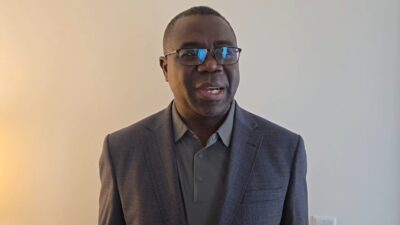
Earlier, World Bank Country Director, Dr. Firas Raad, said the programme responded to fundamental development challenges by reinforcing Zambia’s commitment to guaranteeing clean water and dignified sanitation for all citizens.
Raad noted that although Zambia held more than 45 percent of Southern Africa’s surface water, urban water coverage had fallen to 81.7 percent by 2025, while urban sanitation stood at 68.5 percent.
Poor sanitation alone, he said, continued to drain resources needed for growth.
He cited the 2024 drought—described as the worst in four decades—and recurring cholera outbreaks as reminders that water insecurity is a crisis of dignity, health and lost economic potential.
Raad said the supported utilities suffered high non-revenue water losses of between 46 percent and 62 percent, nearly double global benchmarks, while tariffs had remained unchanged since 2019 despite rising production costs.
Since the programme became effective in September 2025, he said, implementation units had been staffed, annual work plans and procurement plans approved, and boards appointed for all four utilities.
The programme forms part of the government’s broader US$5.75 billion Zambia Water Investment Programme and aligned with WASH Compact commitments for 2026–2030.
However, Raad warned that the compact still faced a US$1.27 billion financing gap.
“The gap will only close if Zambia commits to cost-reflective tariffs and regulatory independence, utility accountability through performance, and coordinated partner investment including the private sector,” he said.
WARNING! All rights reserved. This material, and other digital content on this website, may not be reproduced, published, broadcast, rewritten or redistributed in whole or in part without prior express permission from ZAMBIA MONITOR.






Comments