
 By
By 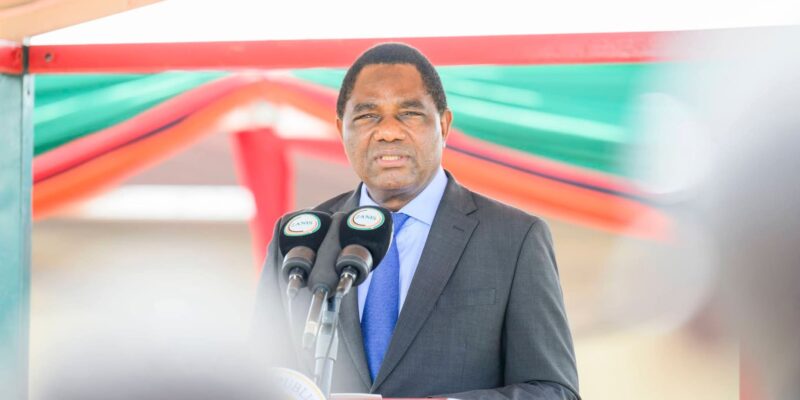
President Hakainde Hichilema says access to reliable, diverse and independent information is essential to shaping a peaceful, just and resilient future, as Zambia hosts the 2026 World Press Freedom Day Global Conference.
Hichilema said peace is not accidental but is nurtured through trust, accountability and openness, adding that journalism, when allowed to flourish freely, strengthens democratic institutions.
The president was speaking during the official opening of the two-day conference in Lusaka on Monday, held from May 4 to 5 in a speech read for him by Information and Media Minister, Cornelius Mweetwa.
He told delegates that the theme, “Shaping a Future at Peace”, highlights the connection between information, dialogue and stability.
Hichilema added that digital transformation and artificial intelligence present both opportunities and responsibilities.
“Ensuring information integrity in this evolving landscape demands collaboration between governments, media, technologists, and civil society,” he said.
He urged delegates to examine how weakened independent journalism increases vulnerability to conflict and disinformation, the risks of algorithmic amplification and AI-generated misinformation, and the economic fragility of media outlets.
The president outlined Zambia’s recent legal and policy reforms aimed at strengthening media freedom and governance.
“The Government has repealed the Zambia National Broadcasting Corporation Act to transform ZNBC into an independent public service broadcaster. Amendments to the Independent Broadcasting Authority Act have also extended IBA oversight to the national broadcaster,” Hichilema said.
He said Zambia has also enacted the Access to Information Act and repealed Section 69 of the Penal Code, which provided for defamation of the President.
The president added that reforms to the Cyber Security and Cyber Crimes Act were undertaken to balance national security concerns with the protection of human rights.
Hichilema said Zambia’s media sector has grown significantly since 2020, with the total number of radio and television stations rising from 199 to 259.
He said radio stations increased from 147 to 201, while community radio stations grew from 67 to 110. Television stations increased from 52 to 58, including 12 community and religious broadcasters.
“As we embark on this important gathering, may it inspire renewed commitment, practical solutions, and lasting cooperation,” he said.
The conference will focus on three areas: the role of press freedom in peace and development, governance of digital transformation and AI, and the future viability and inclusiveness of media systems.
Earlier, UNESCO said the integrity of journalists and freedom of expression are essential guarantees for peaceful and sustainable development, warning of a structural deterioration in global information ecosystems.
UNESCO Assistant Director-General for Communication and Information, Mariya Gabriel, said the erosion was reflected in the 2022–2025 World Trends Report published in December.
“Particularly worrying is the 10% decline in global freedom of expression since 2012 – a setback comparable to major periods of instability in the twentieth century, such as the two World Wars and the Cold War,” she said.
Gabriel noted a 48 pu increase in attempts to control or restrict the media and a 63 percent rise in self-censorship driven by threats, economic pressure, legal actions and online harassment.
She said online attacks disproportionately affect women journalists.
Citing a 2025 study by the International Center for Journalists for UN Women, in partnership with UNESCO, she said 75 percent of women journalists reported experiencing online violence.
“Even more alarming, at least 42 percent of women journalists said in 2025 that these online attacks had led to offline abuse, threats, or violence- compared to 20 percent in 2020,” she said.
According to UNESCO, 93 journalists were killed in 2025, the highest number since 2018, with 60 killed in conflict zones where journalists faced new forms of attack, including drone strikes.
WARNING! All rights reserved. This material, and other digital content on this website, may not be reproduced, published, broadcast, rewritten or redistributed in whole or in part without prior express permission from ZAMBIA MONITOR.





Comments