
 By
By 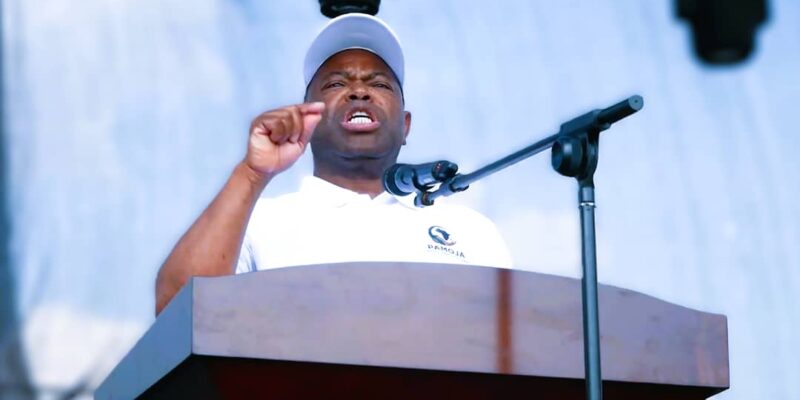
Southern Africa Resource Watch (SARW) has expressed concern over the country’s energy inequality, stating that it was difficult to speak of justice when nearly half of Zambia’s population remained without electricity.
SARW Executive Director, Claude Kabemba, revealed that about 8.5 million Zambians — representing almost half the population — still lacked access to electricity.
He said this situation continued to undermine social and economic development, with millions of citizens unable to light their homes, power schools, or run health facilities.
“Only 53.6 percent of Zambian households have electricity despite the nation’s vast renewable energy potential in sunshine, wind, and rivers,” Kabemba said.
He noted that Zambia remained one of the most peaceful countries in Africa and is richly endowed with natural resources such as copper, cobalt, manganese, gold, nickel, uranium, and gemstones.
Read more: SADC, UNAIDS raise the alarm over rising HIV infection among youths, cite low condom use
Yet, he lamented, the country’s wealth had not translated into improved living standards for ordinary citizens.
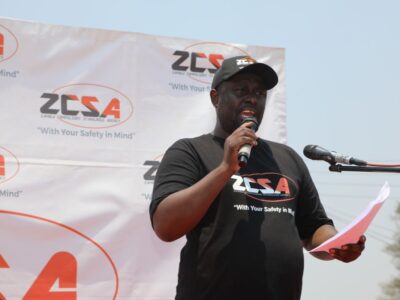
Kabemba made these remarks during the 2025 Climate and Environment Justice Rally held at Woodlands Stadium in Lusaka on Saturday under the theme “Justice Has No Borders: United for a Greener Tomorrow.”
The event was supported by the European Union, Danish Church Aid, Norwegian Church Aid, Carter Centre, Environment Africa, Hivos, Civil Society for Poverty Reduction (CSPR), ActionAid, Family Development Initiatives, the Ministry of Green Economy and Environment, and the Ministry of Local Government and Rural Development.
“These resources should be ending hunger, creating jobs, and building equal communities,” he said, adding, “The world is rushing to Zambia for copper, lithium, graphite, and cobalt — minerals vital for solar panels, electric vehicles, and wind turbines — but the benefits are not reaching the people.”
Kabemba highlighted the environmental costs of unregulated mining, citing manganese mining in Serenje that had reportedly brought new diseases, dust pollution in Solwezi affecting crops and homes, and acid contamination in Kafue River that had poisoned fish and livelihoods.
He stressed that climate change and environmental degradation transcended borders, adding: “Climate change knows no borders — justice must know no borders.”
Meanwhile, Centre for Environment Justice (CEJ) Executive Director Maggie Mapalo Mwape commended the diverse turnout — including government officials, traditional leaders, civil society organisations, and youth — for championing the call for environmental justice.
Mwape underscored the urgency of collective action to address extractive pressures, climate shocks, and water insecurity. She said Zambia’s path to sustainability must be anchored in justice, equity, and rights-based approaches that “leave no community behind.”
She outlined CEJ’s five strategic pillars: extractive industry governance, climate resilience, environmental justice, sustainable agriculture and energy, and water security.
Mwape further called on corporate partners to balance profit with responsibility and applauded traditional and faith leaders for their role in promoting environmental stewardship.
She also warned against governance lapses and unchecked extractivism, urging transparency, accountability, and community participation in resource management.
Earlier, CEJ Board Chairperson Vincent Ziba described the rally as timely, coming ahead of the global climate conference in Brazil this November.
Ziba said the event served as a platform for uniting environmental justice voices and mobilising action across continents.
WARNING! All rights reserved. This material, and other digital content on this website, may not be reproduced, published, broadcast, rewritten or redistributed in whole or in part without prior express permission from ZAMBIA MONITOR.




Comments