
 By
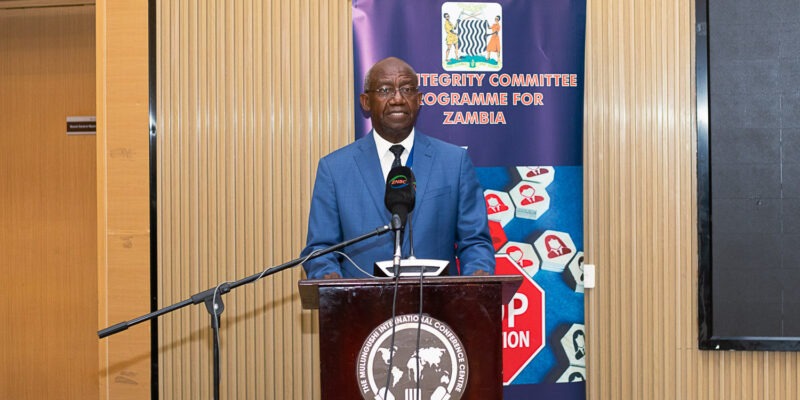
Secretary to the Cabinet, Patrick Kangwa, has directed all public institutions to approve and implement whistle-blower protection policies by March 31, 2027, warning that employees who report wrongdoing remain vulnerable to retaliation.
Kangwa said Cabinet Office shared concerns raised by the Anti-Corruption Commission (ACC) over the lack of approved whistle-blower protection guidelines in many public institutions.
He said outstanding commitments made during last year’s forum also required attention and follow-through.
The Secretary to the Cabinet was speaking in Lusaka on Friday during the 2026 Integrity Committee Chief Executive Officers’ Forum, held at the Mulungushi International Conference Centre under the theme, “Promoting a Speak-up Culture: The Role of the CEO in Advancing Whistle-blower Protection.”
He illustrated the importance of whistle-blower protection by referring to an officer who discovers that medicines paid for have not reached a health facility or that a supplier has been paid for goods that were never delivered.
Such an officer, he said, should not have to choose between reporting wrongdoing and risking retaliation or remaining silent while public resources are lost.
“Employees take their cue from what leaders do, noting that they notice whether concerns receive attention, whether confidentiality is respected and, above all, what happens to a colleague who speaks out,” Kangwa stated.
He said employees would be discouraged from reporting wrongdoing if colleagues who raised concerns were isolated, transferred or denied career opportunities.
Kangwa directed that every public institution should approve, publish and disseminate an institutional whistle-blower protection policy by March 31, 2027, in line with the Public Interest Disclosure (Protection of Whistle-blowers) Act No. 4 of 2010 and the Handbook for Integrity Committees.
“Public confidence is built through everyday encounters with our institutions. A citizen who receives a service fairly and on time gains confidence in Government,” he said.
He said Cabinet Office would formally engage public institutions that had not established functional Integrity Committees or submitted the required action plans and quarterly progress reports.
Kangwa warned that continued non-compliance would be addressed through applicable administrative and disciplinary procedures.
Read More: Anti-Corruption Commission condemns former Health Minister’s remarks on gifts
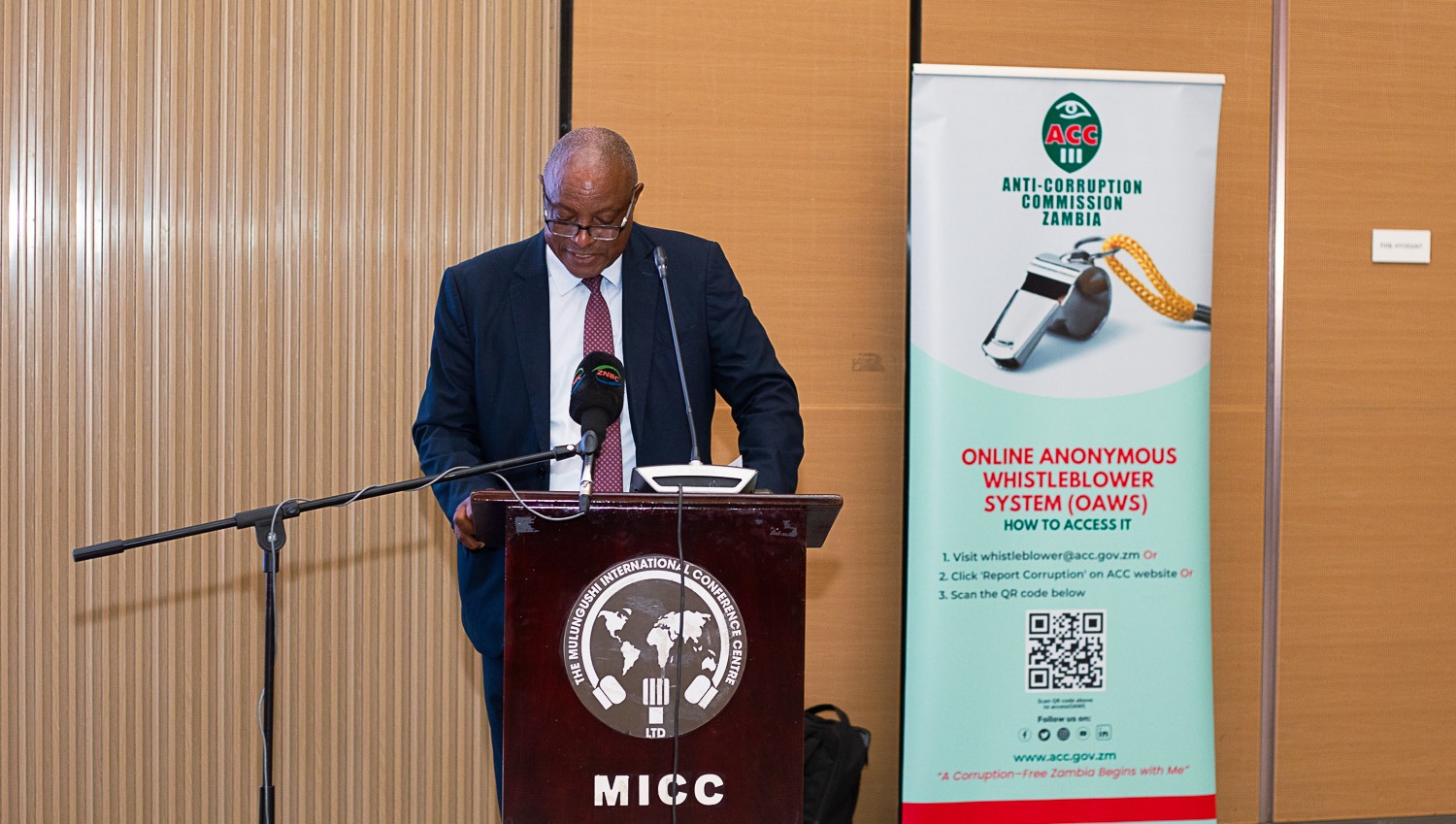
Meanwhile, ACC Board Chairperson, Justice Evans Hamaundu, urged public institutions to prioritise the development and implementation of whistle-blower protection policies, saying legislation alone was insufficient without practical workplace measures.
Hamaundu said this year’s theme challenged institutional leaders to translate their commitment to integrity into the everyday experiences of employees.
“The Integrity Committee Programme is a key component of the National Policy on Anti-Corruption of 2023 and supports the Eighth National Development Plan’s objective of promoting good governance by strengthening corruption prevention where decisions are made and public services are delivered,” he said.
He said the Anti-Corruption Act and the Public Interest Disclosure (Protection of Whistle-blowers) Act No. 4 of 2010 provided the legal framework for corruption prevention, reporting and whistle-blower protection.
However, institutions needed to translate these legal provisions into practical measures through approved institutional policies.
“The Commission’s Handbook for Integrity Committees recognises whistle-blower protection policies as an essential best practice. I therefore urge all institutions to prioritise their development and implementation,” he said.
Hamaundu said 379 delegates who attended the December 2025 forum had committed to timely submission of action plans and quarterly progress reports, automation of reporting, adequate funding for Integrity Committee activities and progress towards establishing the Ethics Officer position.
He said progress against those commitments needed to be evaluated.
“Employees who report wrongdoing must be protected against victimisation and retaliation. Our commitment to integrity is measured not by the policies we develop, but by how we respond when employees raise concerns,” he said.
Hamaundu said 289 institutions had established Integrity Committees by the third quarter of 2026.
During the reporting period, the Commission established 23 new committees, trained 28 newly established and existing committees, supported 13 institutions in developing policies and conducted 23 ethical awareness programmes.
Despite the progress, he said challenges remained, including inadequate funding, frequent reconstitution of committees, limited secretariat support and weak monitoring mechanisms.
Hamaundu urged Chief Executive Officers to ensure Integrity Committees were adequately funded, had stable membership and received sufficient management support.
WARNING! All rights reserved. This material, and other digital content on this website, may not be reproduced, published, broadcast, rewritten or redistributed in whole or in part without prior express permission from ZAMBIA MONITOR.










Comments