
 By
By 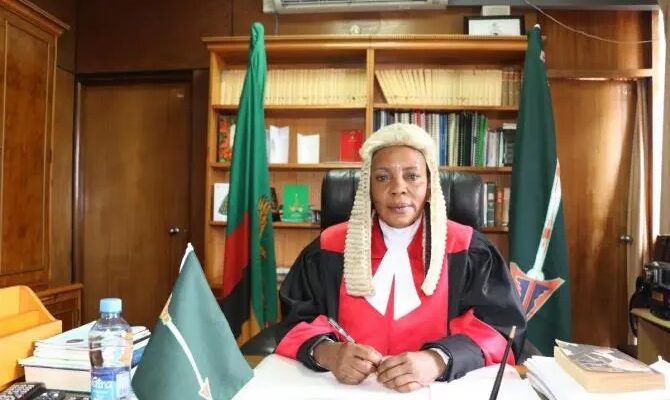
Speaker of the National Assembly Nelly Mutti has declared that no court of law is permitted to interfere with the internal processes of the National Assembly, saying Parliament enjoys exclusive cognizance in accordance with Article 76 of the Constitution of Zambia.
Mutti told Parliament on Thursday that Members of Parliament were protected from external influence while exercising any powers conferred on or vested in the Assembly.
She explained that the doctrine of exclusive cognizance is a core parliamentary privilege, which grants each legislative house the inherent right to be the sole judge of its internal affairs, procedures and the conduct of its members, without interference—particularly from the courts.
“It ensures legislative independence by preventing courts from questioning internal decisions like the legislative process, voting, procedures of the House, or upholding internal rules,” Mutti said.
She added that the doctrine was crucial for safeguarding the separation of powers between the legislature and judiciary.
Mutti further noted that Parliament did not debate or interfere in matters that were before the courts until they are fully concluded.
“Similarly, the courts are not allowed to interfere with any process that is already underway in the National Assembly,” she said.
She clarified that courts only have jurisdiction to review a final decision of the House when an aggrieved party challenges that decision.
The Speaker delivered the ruling in response to a Point of Order raised by Home Affairs and Internal Security Minister Jack Mwiimbu. The matter related to whether petitioners in the case of Celestine Mukandila and Munir Zulu versus the Attorney General were in order to commence contempt proceedings against Parliament.
Mwiimbu, who is also Monze Central UPND MP, raised the issue on the basis of Parliament’s exclusive cognizance in handling its internal affairs.
Mutti cited Article 76 of the Constitution, which guarantees freedom of speech and debate for lawmakers and prohibits such freedom from being questioned by any court or tribunal.
She also referred to Article 77(1), which provides that the National Assembly shall regulate its own procedures and make Standing Orders for the conduct of its business.
Additionally, she highlighted Section 34 of the National Assembly (Powers and Privileges) Act, which states that neither the Assembly, the Speaker nor any officer shall be subject to the jurisdiction of any court regarding the exercise of powers vested in them under the Constitution, Standing Orders or the Act.
Mutti noted that the Constitutional Court had, on Tuesday, 9 December 2025, dismissed the matter that formed the basis of Mwiimbu’s Point of Order, finding it misconceived and lacking merit.
She concluded that the Point of Order had since been overtaken by events.
WARNING! All rights reserved. This material, and other digital content on this website, may not be reproduced, published, broadcast, rewritten or redistributed in whole or in part without prior express permission from ZAMBIA MONITOR.











Comments