
 By
By 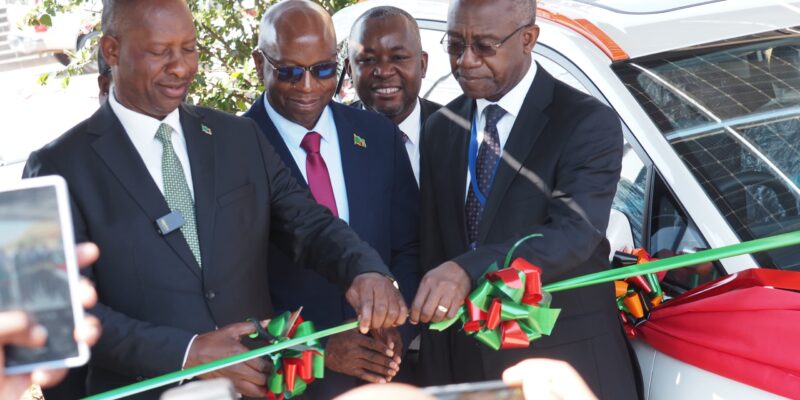
The Zambian government has urged financial institutions to innovate around green asset financing, electric vehicle (EV) leasing, and climate-aligned credit lines as the country positions itself as a hub for sustainable investment.
Green Economy and Environment Minister, Mike Mposha, emphasized that the future of finance is green, and that Zambia was ready to serve as a laboratory for innovation.
He made the remarks during the inaugural Chief Executives’ Forum for the EV Ambassador Zambia initiative, held at the Ministry in Lusaka on Wednesday.
“To the insurance and pension sectors, I say align your portfolios with climate-aligned investments. Let us begin to see long-term capital flowing into renewable energy, green transport, and low-emission infrastructure,” Mposha said.
He reaffirmed that Zambia provided one of Africa’s most stable macroeconomic and policy environments for blended finance.
The government is seeking partnerships to deploy concessional finance and de-risk early-stage investments in EV supply chains, charging infrastructure, and local assembly.
“The Government, through the Ministry of Green Economy and Environment, stands ready to co-create investable projects and mobilize international climate finance from facilities such as the Green Climate Fund, the Climate Investment Funds, and other global platforms,” Mposha stated.
He added that Zambia was being repositioned as a regional climate investment hub, where economic transformation is driven by clean technology, renewable energy, and sustainable finance.
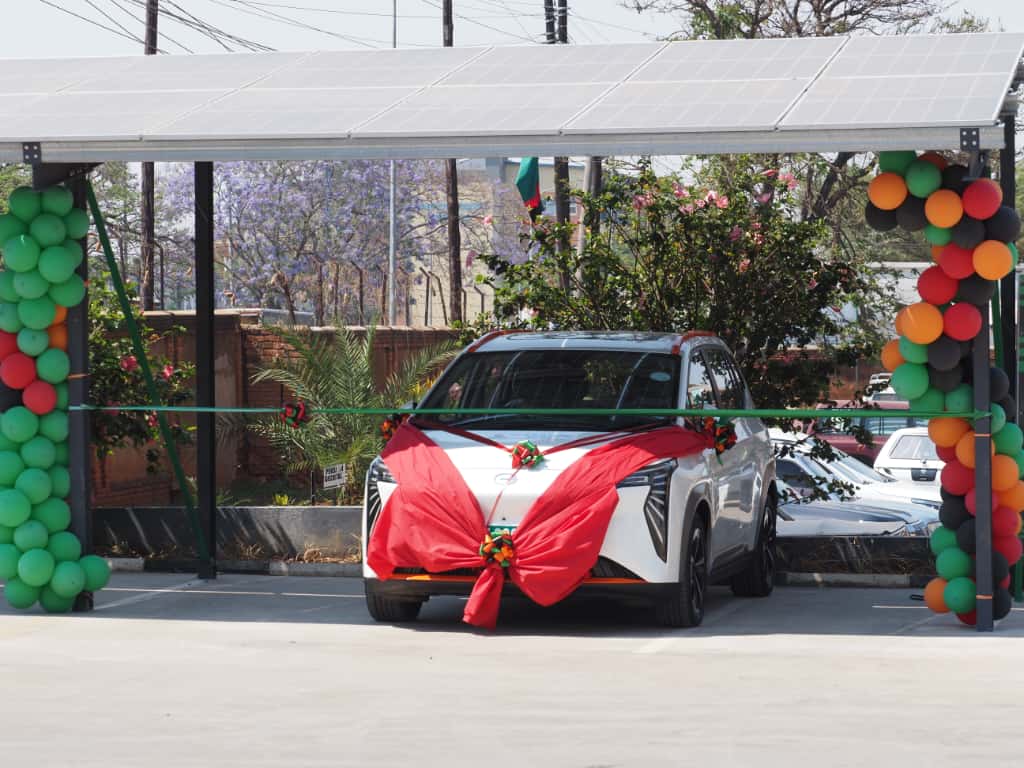
“This is the political and economic context within which we gather today to explore the business case for e-mobility and the catalytic role it plays in attracting green capital,” the Minister said.
Mposha noted that the transport sector was one of the largest emitters of greenhouse gases globally, contributing roughly 23 percent of total energy-related CO₂ emissions. For Zambia, he said, it represented both a climate challenge and an economic opportunity.
He highlighted that the government had adopted a whole-of-government approach to green mobility anchored on the Eighth National Development Plan (8NDP), the Nationally Determined Contribution (NDC), and the Green Growth Strategy.
“We have taken deliberate measures to de-risk private investment and accelerate technology adoption. Tax incentives: All import duties except VAT have been removed on imported EVs; VAT itself has been waived for locally produced units,” Mposha said.
Read More: Zambia reviews Electric Vehicle industry regulations to leverage Lobito corridor
The Minister also noted that the Energy Regulation Board (ERB) had established licensing standards for EV charging stations, ensuring both safety and regulatory clarity.
A dedicated Multi-Facility Economic Zone in the Copperbelt Province, strategically located near the Democratic Republic of Congo, has been earmarked for EV component and battery manufacturing.
“These measures create a coherent ecosystem for investors combining policy certainty, incentive clarity, and regional market access,” he said.
Mposha stressed that Zambia stood at the epicenter of Africa’s EV mineral economy, possessing abundant reserves of copper, cobalt, manganese, and nickel – essential minerals for battery production.
Secretary to the Cabinet, Patrick Kangwa, said the launch reinforced government’s commitment under President Hakainde Hichilema to embed sustainability and innovation at the core of national transformation.
“Electric mobility is not simply a technology transition; it is a symbol of Zambia’s economic transformation. Our Vision 2030 defines prosperity through sustainable growth. The Eighth National Development Plan identifies Green Growth and Industrialisation as strategic pillars of inclusive development,” Kangwa said.
WARNING! All rights reserved. This material, and other digital content on this website, may not be reproduced, published, broadcast, rewritten or redistributed in whole or in part without prior express permission from ZAMBIA MONITOR.












Comments