
 By
By 
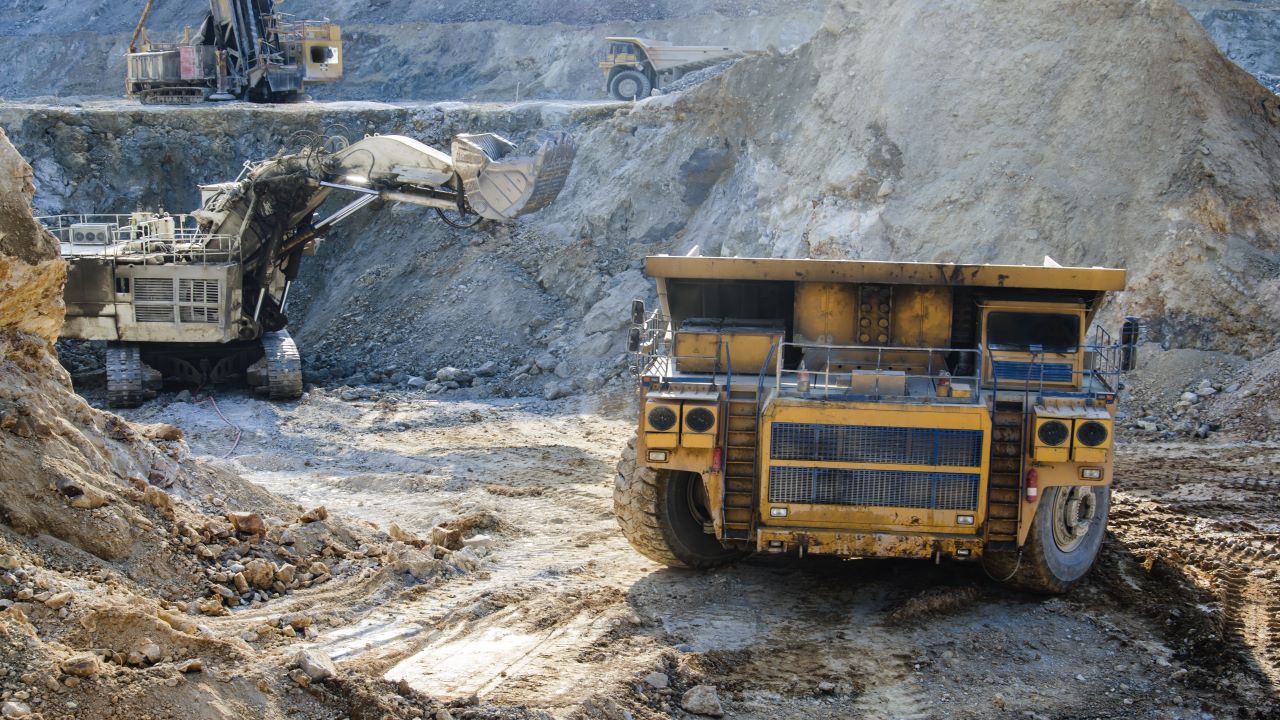
Zambia recorded an eight percent increase in copper production in 2025, rising to 890,345.79 tonnes from 825,513.01 tonnes in 2024.
The Ministry of Mines attributed the growth mainly to improved output at Konkola Copper Mine (KCM), Mopani Copper Mine, Kansanshi, and Lubambe Mine.
Speaking during a press briefing in Kasama on Tuesday, Mines and Mineral Development Minister Paul Kabuswe said the rise in output demonstrated that government policies under President Hakainde Hichilema were bearing fruit.
Kabuswe revealed that KCM production surged by 366.58 percent, increasing from 17,192.20 tonnes in 2024 to 80,215.33 tonnes in 2025.
“Mopani production on the other hand continued to increase in 2025 compared to 2024 with its production increasing by 40.27 percent in 2025. As you may be aware, Sino-Metals Leach halted operations in February 2025 following a dam failure that occurred at its tailings storage facility,” he said.
He noted that Sino-Metals Leach accounted for 1.5 percent of Zambia’s total copper output in 2024, stressing that with the national target of three million tonnes annually by 2031, every tonne lost was significant.
“I therefore wish to encourage Sino Metals Mine to expedite its environmental remediation works as guided by stakeholders so that it resumes production in the shortest possible time,” he added.
Kabuswe further disclosed that FQM Trident Mine affected the push toward the one-million-tonne production target for 2025, producing 189,577.44 tonnes in 2024 compared to 231,284.34 tonnes in 2023, a negative variance of 18 percent.
Read more: Govt blames incomplete geological mapping for worsening illegal mining activities in Zambia
Turning to mining rights, the minister announced that the Mining Licensing Committee granted 2,375 licences in 2025, up from 2,175 in 2024, representing a 9.20 percent increase.
“The number of Artisanal Mining Rights (AMR) granted in 2025 was 1,068 compared to 680 in 2024 representing an increase of 57.06 percent. Other licences that require Zambian shareholding are Small-scale Exploration Licences and Small-Scale Mining Licences, 527 Small-scale Exploration Licences and 71 Small-Scale Mining Licences were granted in 2025,” he said.
Of the total licences issued, 1,666 involved Zambian citizen participation.
Kabuswe also updated the nation on the Country-Wide Geophysical Airborne Survey, saying it had reached 52.8 percent completion, with current work underway in Sub-Blocks B6 and B8 of Zone B.
Sub-Block B6 covers parts of Kasempa and Solwezi, while Sub-Block B8 includes Namwala, Zimba, Kalomo, and Choma.
He added that the August 2025 completion of Sub-Blocks B3 (Ikeleng’i and Mwinilunga) and B4 (Manyinga, Kabompo, Mufumbwe, and Kaoma) concluded Zone A, which commenced in 2024.
The 2025 target was to reach 70 percent coverage of the Countrywide High Resolution Aerial Geophysical Survey (CHRAGS).
“However, as at 31st December 2025 coverage stood at 51.7 percent. The ultimate target for the CHRAGS is to attain 100 percent coverage by July 2026. Once completed, available updated geological information on mineralization of the country will facilitate an increase in both green and brown field investment,” Kabuswe said.
WARNING! All rights reserved. This material, and other digital content on this website, may not be reproduced, published, broadcast, rewritten or redistributed in whole or in part without prior express permission from ZAMBIA MONITOR.








Comments