
 By
By 
Zambia’s top government officials, financial regulators, and banking executives have issued strong calls for tighter data protection measures as a cornerstone for public trust, sector resilience, and sustainable digital transformation.
Speaking at the third Banking Industry Symposium held in Lusaka on Monday, Minister of Technology and Science, Felix Mutati, said Zambia’s financial inclusion and economic stability could collapse without proper data governance and consumer trust.
“We are not here today to talk about compliance or technology. We are here to protect trust. If we don’t protect data, the financial sector is gone,” Mutati said.
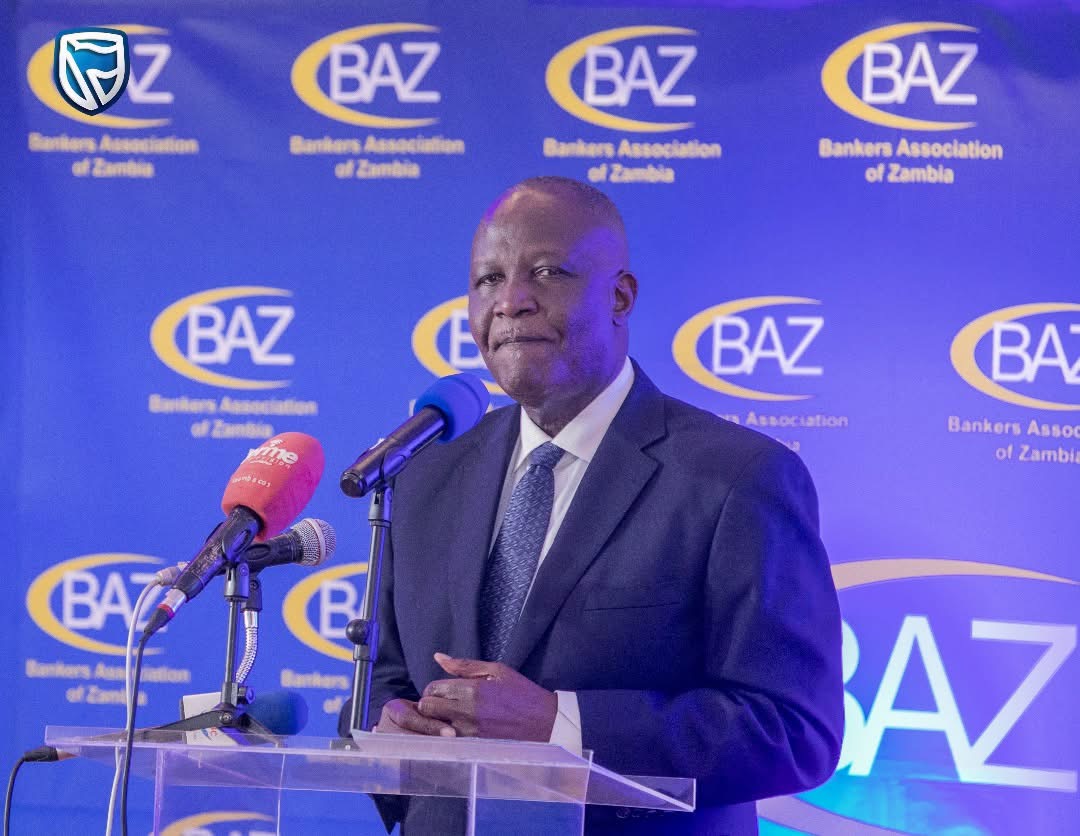
He warned that the industry could afford to treat data privacy as a regulatory checkbox. Instead, it must be seen as a national responsibility and moral obligation.
“Trust Is the currency,” Mutati said.
Read more: Govt proposes separation of cyber crimes, cyber security oversight in new legislation
He outlined five foundational building blocks the government considered vital to building a secure financial ecosystem.
Mutati mentioned legal and regulatory frameworks, including the Data Protection Act and the Cyber Security and Cyber Crimes Act, robust digital infrastructure, including energy and telecom investments targeting 96 percent national connectivity by 2026 and improved investment climate and rule of law, with Zambia’s credit upgrade driving over $7.5 billion in mining investments and liquidity.
Others he noted are local innovation and tech talent, with a planned start-up fund to support Zambian-led solutions in cybersecurity and data integrity, as well as partnerships and collaboration across sectors, borders, and regulatory domains.
“Cybersecurity is not a cost—it is an enabler of economic growth. When we protect data, we protect trust. When we protect trust, we build an inclusive economy,” Mutati said.
Bank of Zambia Governor, Dr. Denny Kalyalya, reinforced the minister’s message, saying the central bank views data privacy as a pillar of operational integrity and financial inclusion.
“Every swipe of a credit card, mobile transaction, or digital query generates data. If responsibly harnessed, it can fuel innovation. If mishandled, it becomes a liability,” Kalyalya said in a speech read on his behalf by Director, Supervision Lyness Mambo.
He warned that a single breach could result in reputational damage, financial instability, and erosion of public confidence.
Kalyalya detailed the Bank of Zambia’s ongoing efforts, including stricter data governance through licensing, supervision, and compliance audits, development of a centralized Know Your Customer (e-KYC) system, establishment of a Financial Sector Cyber Response Team (FS-CRT), and enforcement of updated directives on electronic money issuance and cyber risk management.
“Zambia’s financial future is digital—but it must also be secure, ethical, and inclusive. Data privacy is not just a box to tick. It is the foundation of trust,” he said.
Cyber Security Agency Director General, Dr. Schimdt Chintu, warned that rising threats, including AI-powered phishing and ransomware, were growing in complexity and could trigger systemic panic if not preemptively addressed.
“Cybersecurity is no longer just an ICT issue. It is a boardroom issue. The cost of a breach isn’t just monetary—it’s the collapse of public confidence,” he said.
He reaffirmed the importance of Zambia’s Data Protection Act No. 3 of 2021 and the Cyber Security and Cyber Crimes Act No. 4 of 2021, while clarifying that data localization requirements were meant to secure national control—not to deter international partnerships.
“Localization ensures that sensitive data stays within legal jurisdictions where our courts can act. It’s about accountability,” Chintu said.
Stanbic Bank Zambia Chief Executive, Mwindwa Siakalima, emphasized the urgent need for financial institutions to strengthen data governance and privacy compliance in line with the Data Protection Act of 2021.

“This year’s theme, ‘The Impact of Data Privacy on the Financial Sector’, reflects the growing importance of protecting personal information in a digitizing economy,” he said.
Siakalima said Stanbic’s progress under the Standard Bank Group, included appointment of data protection officers, implementing breach response protocols, embedding data protection by design in products and services.
“Poor privacy practices erode consumer trust and damage institutional reputations. When we respect privacy, we promote digital adoption. Trust is the foundation of financial inclusion,” he said.
Siakalima also welcomed the involvement of the Cyber Security Agency, citing the strong link between data privacy and cybersecurity in a threat environment that is increasingly complex.
He acknowledged challenges such as limited digital literacy, rural infrastructure gaps, and regulatory inconsistencies across African markets, urging stronger public-private collaboration to overcome them.
“We must strike the right balance between innovation and privacy compliance. Only then can we achieve a safe, trusted, and resilient financial system,” he said.
Bankers Association of Zambia Chairperson, Lowani Chibesakunda, called on banks and fintechs to prioritize data protection as a strategic business necessity rather than a mere legal requirement.
“As our reliance on digital platforms grows, the integrity of data operations must become a top priority,” she said.
Referring to the Data Protection Act, she urged all stakeholders to comply with its requirements on consent, transparency, and technical safeguards, while praising BoZ for issuing stronger cybersecurity guidelines.
“This symposium is an opportunity to learn from one another and return next year with clear results,”Chibesakunda said.
The symposium, themed “The Impact of Data Privacy on the Financial Sector,” was organized by Stanbic Bank Zambia in collaboration with the Bankers Association of Zambia.
It drew participation from: Regulators across Southern Africa, Cybersecurity officials, Financial institutions, Data privacy experts from the Standard Bank Group and Commissioners from Zimbabwe, Tanzania, Eswatini, and Zambia.
WARNING! All rights reserved. This material, and other digital content on this website, may not be reproduced, published, broadcast, rewritten or redistributed in whole or in part without prior express permission from ZAMBIA MONITOR.










Comments