
 By
By 
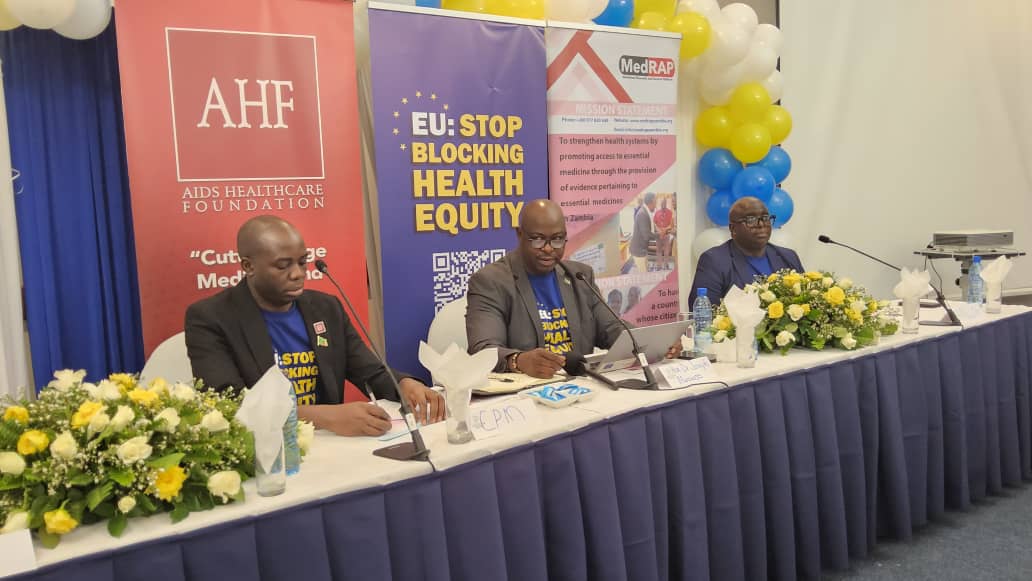
The Parliamentary Caucus on Sexual Reproductive Health Rights, the AIDS Healthcare Foundation (AHF) Zambia and the Medicines Research and Access Platform (MedRAP) are urging the European Union (EU) to ensure that developing countries gain equitable access to vaccines, therapeutics and diagnostics.
Chairperson of the Parliamentary Caucus on Sexual Reproductive Health Rights, Dr. Joseph Munsanje, noted that during COVID-19, many African countries faced severe delays in accessing vaccines, diagnostics and treatments, while wealthier nations secured supplies early.
Speaking on Monday at the Mkango Cresta Golfview Hotel, Munsanje said the delays placed intense pressure on health systems and resulted in preventable loss of life.
He added that ongoing negotiations surrounding the Pathogen Access and Benefit Sharing (PABS) Annex carry significant implications for Zambia’s health security and for other countries across the Global South.
Although discussions are taking place in Geneva, he said their outcomes would have direct consequences for how nations prepare for and respond to future pandemics.
“As parliamentarians, our responsibility is to provide oversight, ensure accountability, and strengthen the policies that protect the health and well-being of our citizens,” Munsanje said.
He explained that the PABS Annex aimed to address global health inequities by linking pathogen-sharing with fair and binding benefit-sharing obligations. Developing countries, he said, were advocating for mandatory equity provisions to guarantee access to vaccines, diagnostics and treatments during global health emergencies.
Key priorities outlined include equitable access to health technologies, technology transfer, non-exclusive licensing to boost regional manufacturing capacity, mandatory financial contributions from companies that benefit from pathogen data and mandatory user registration to ensure accountability.
“These measures are critical not only for strengthening global preparedness but also for supporting Africa’s efforts to expand regional pharmaceutical and vaccine manufacturing,” he said.
Munsanje also highlighted the influential role of the EU in the negotiations, urging its member states to support an agreement that reflected lessons learned from the COVID-19 crisis. “If the PABS Annex is weakened, the world risks repeating the same inequities that undermined the pandemic response,” he warned.
Read More: Parliamentary Caucus on Sexual Reproductive Health Rights hails Swedish support to Zambia
MedRAP Executive Director, Liyoka Liyoka, stressed the need for manufacturers to contribute to a global pool, with benefits shared fairly among countries. He called on the EU to promote open access to pathogen data and research findings ahead of negotiations on the PABS Annex to the World Health Organization (WHO) Pandemic Agreement.
He further urged the African Union (AU) to adopt a unified Africa First position that strengthened the continent’s negotiating power in global health governance.
“Zambia needs to add her voice to approximately 100 low- and middle-income countries in the Global South that have called for mandatory benefit-sharing, including guaranteed access to vaccines, therapeutics and diagnostics as the price of their rapid sharing of information on novel pathogens that might pose a pandemic risk,” Liyoka said.
He noted that Zambia’s landlocked status and its borders with eight countries heightened the need for strong public health security.
“Hence, there is a dire need to position health as a critical security and economic issue for the country and the continent in the global context to ensure health sovereignty,” he stated.
Similarly, Dr. Webster Chewe, Country Program Manager for AHF Zambia, emphasized that global health policies must guarantee equitable access to life-saving medicines and vaccines, particularly for communities in developing countries that suffered most during health crises.
He reminded stakeholders of the vaccine delays experienced by many African nations during the COVID-19 pandemic. “For communities like the ones we serve, voluntary commitments are not enough. We have seen what happens when access to medicines and vaccines depends on voluntary goodwill. Equity gets delayed—and delays cost lives,” he said.
Chewe urged the EU to demonstrate constructive leadership in the final negotiations, noting that the bloc’s influence would determine whether the agreement was strong and effective or weakened by compromise.
WARNING! All rights reserved. This material, and other digital content on this website, may not be reproduced, published, broadcast, rewritten or redistributed in whole or in part without prior express permission from ZAMBIA MONITOR.









Comments