
 By
By 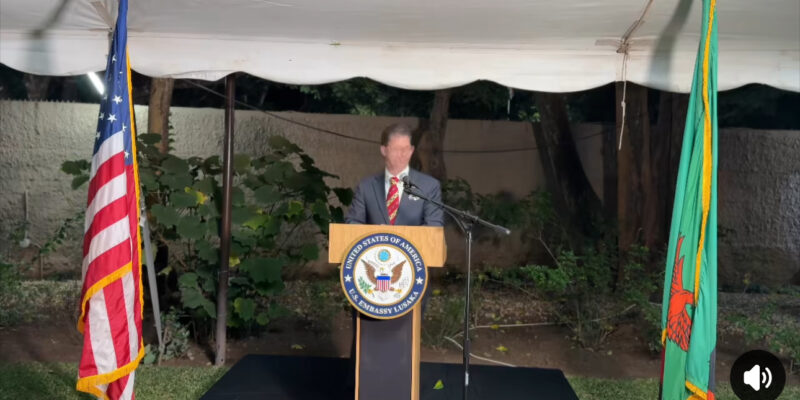
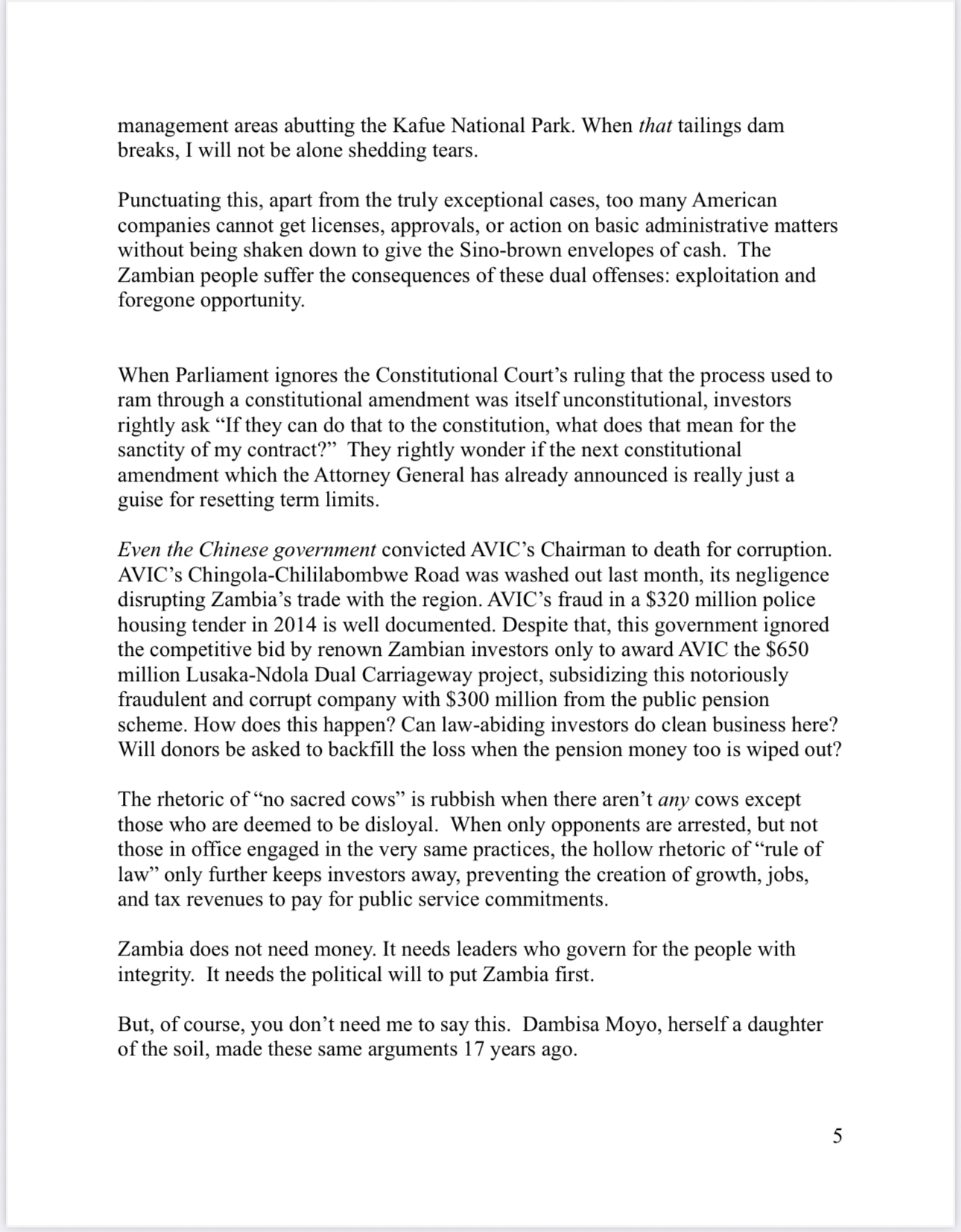
The outgoing United States Ambassador to Zambia, Michael Gonzalez, has issued a blistering assessment of the U.S.–Zambia relationship, accusing successive Zambian governments of corruption, aid dependency, and an abdication of responsibility.
Gonzalez warned that Washington could no longer justify massive aid budgets without fundamental change.
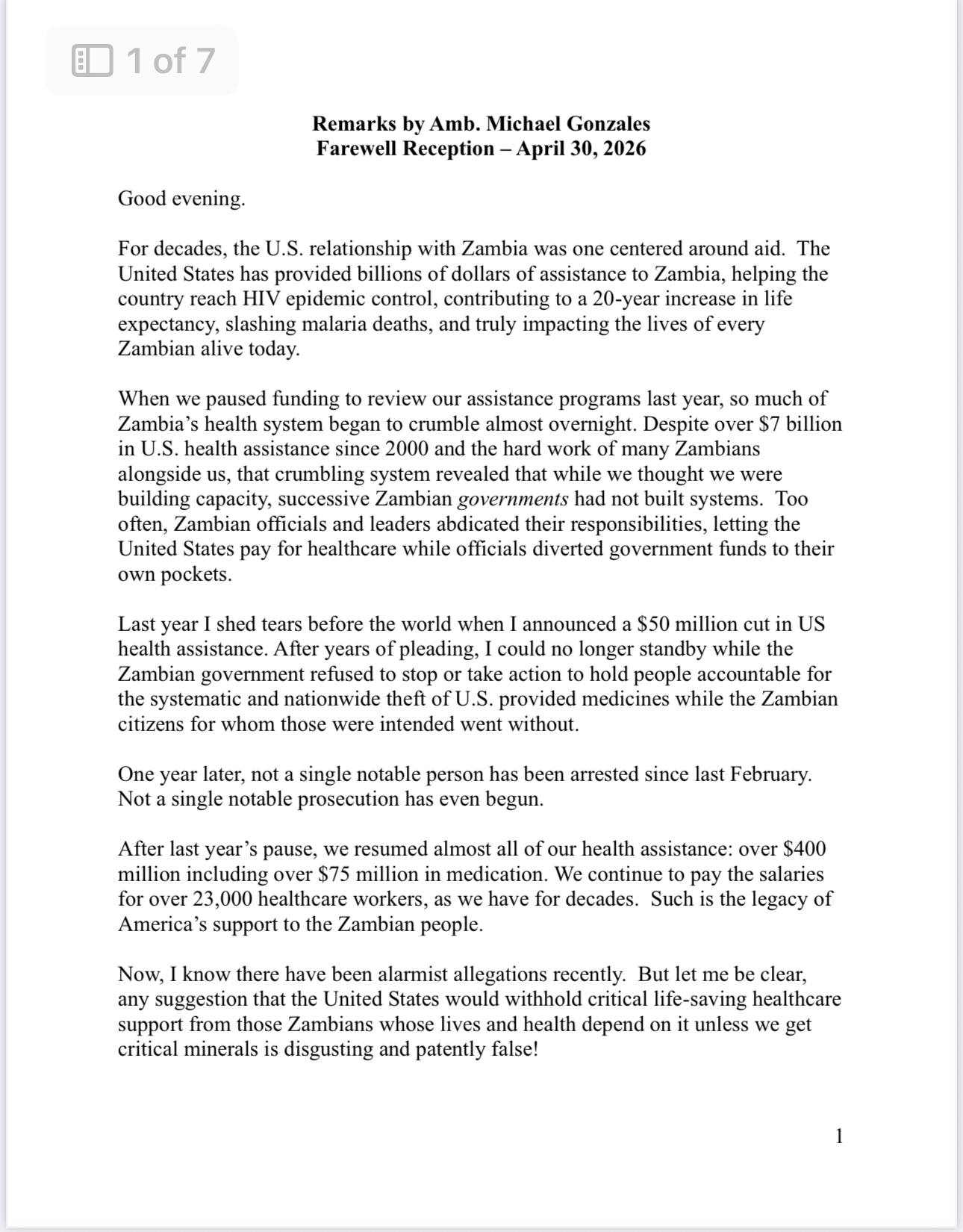
In farewell remarks delivered Thursday evening, the Ambassador said decades of American assistance had delivered measurable gains, including HIV epidemic control, a 20-year increase in life expectancy, and sharply reduced malaria deaths.
But he argued that systemic theft and government inaction had undermined those investments.
Gonzalez said the fragility of Zambia’s health system was exposed last year when the U.S. paused funding to review assistance programs.
“Despite over $7 billion in U.S. health assistance since 2000 and the hard work of many Zambians alongside us, that crumbling system revealed that while we thought we were building capacity, successive Zambian governments had not built systems,” he said.
The Ambassador accused Zambian officials of diverting government funds “to their own pockets” while “letting the United States pay for healthcare.”
Last year, the U.S. cut $50 million in health assistance after what Gonzalez described as “years of pleading” over the “systematic and nationwide theft of U.S.-provided medicines” while Zambian citizens went without.
“After years of pleading, I could no longer stand by while the Zambian government refused to stop or take action to hold people accountable for the systematic and nationwide theft of U.S.-provided medicines while the Zambian citizens for whom those were intended went without,” Gonzalez said.
He noted that one year on, “not a single notable person has been arrested” and “not a single notable prosecution has even begun.”
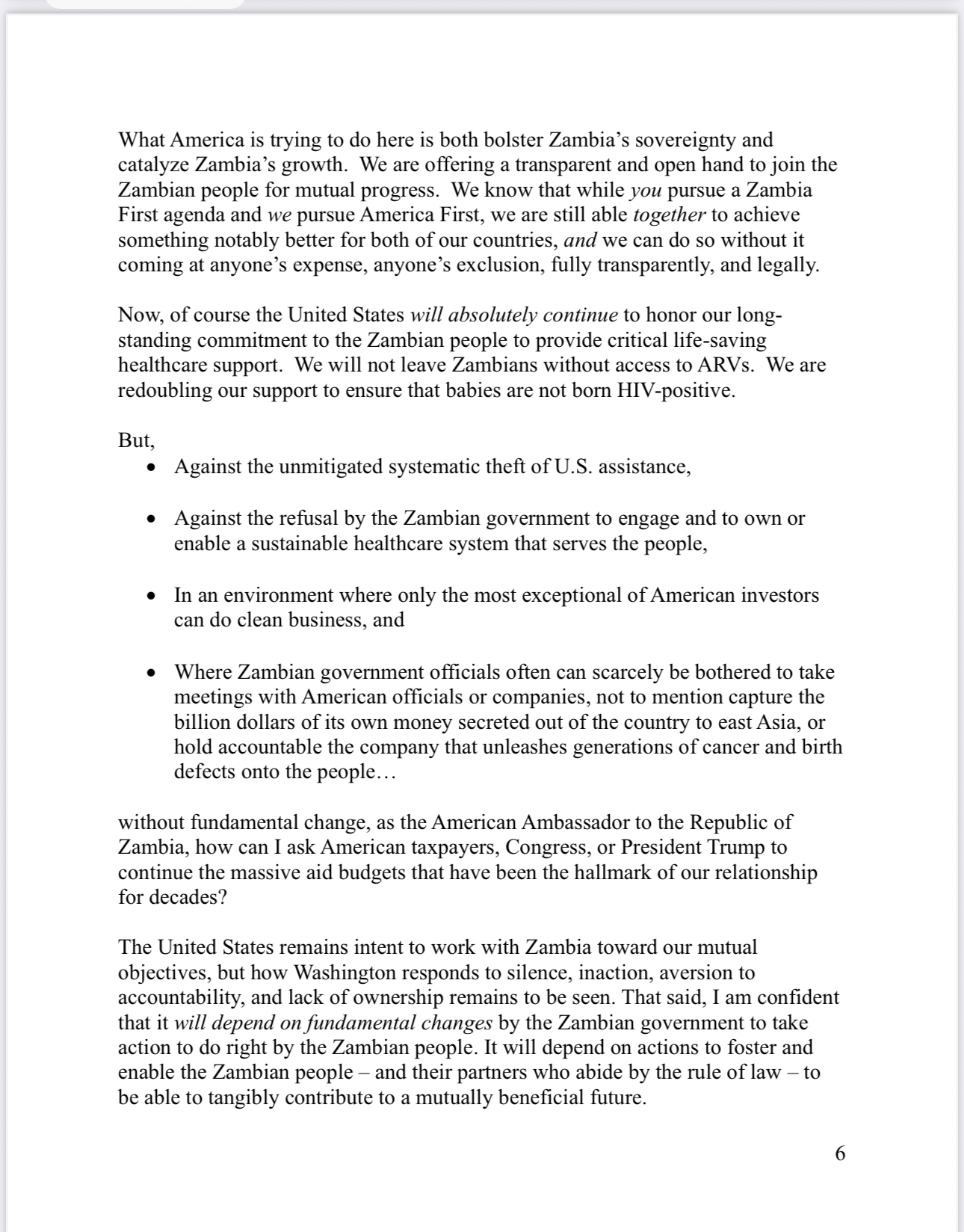
The Ambassador also dismissed recent “alarmist allegations” that Washington would withhold life-saving healthcare support in exchange for critical minerals, calling the suggestion “disgusting and patently false.”
He said the U.S. had resumed over $400 million in health assistance, including $75 million in medication, and continues to pay salaries for more than 23,000 healthcare workers.
“Now, I know there have been alarmist allegations recently. But let me be clear: any suggestion that the United States would withhold critical life-saving healthcare support from those Zambians whose lives and health depend on it unless we get critical minerals is disgusting and patently false,” Gonzalez said.
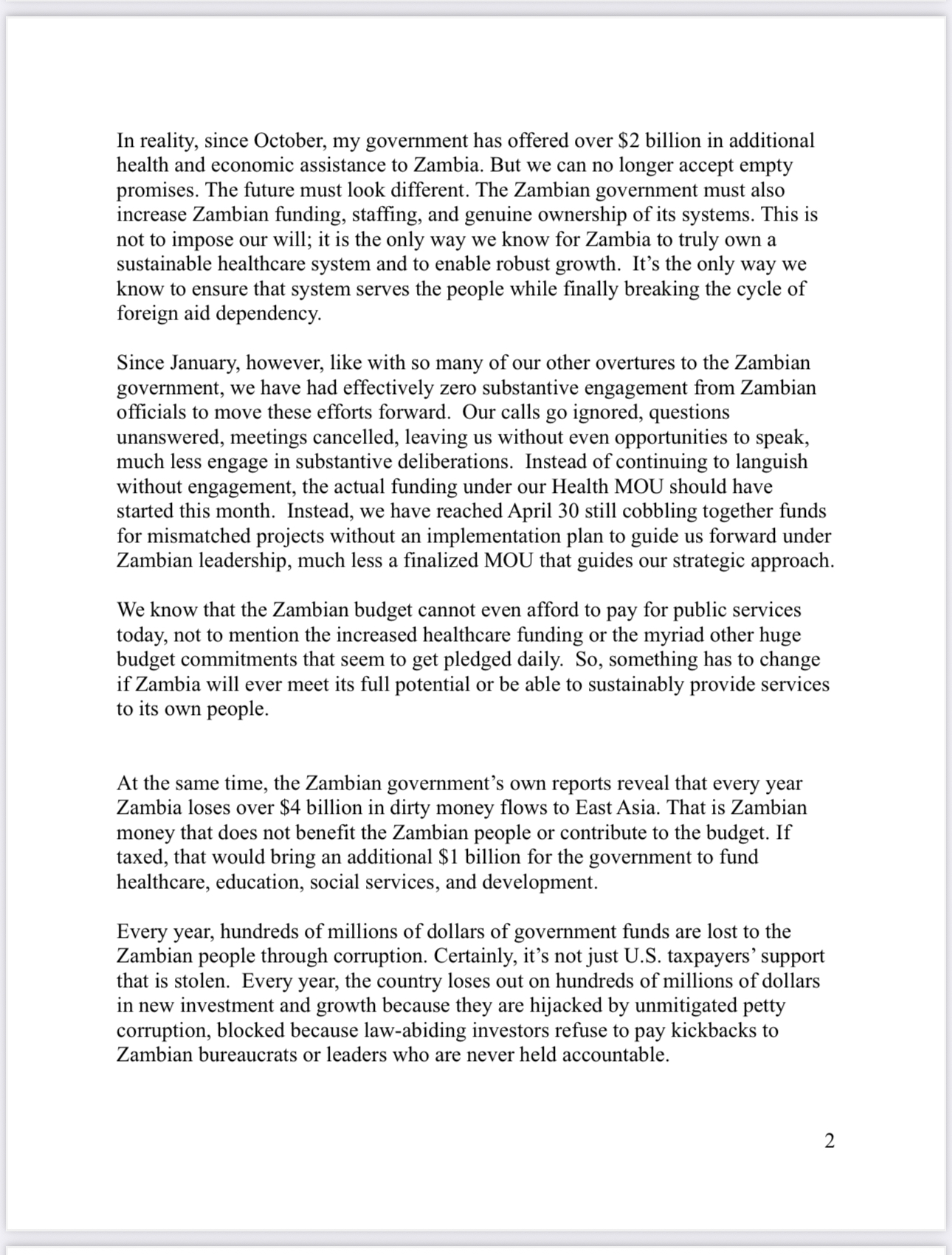
Despite offering over $2 billion in additional health and economic assistance since October, the Ambassador said engagement from Zambian officials had been “effectively zero,” with calls ignored, meetings cancelled, and no implementation plan for a Health MOU that should have begun funding this month.
He cited Zambian government reports that the country loses over $4 billion annually in “dirty money flows to East Asia” and hundreds of millions more to corruption, undermining investment and public services.
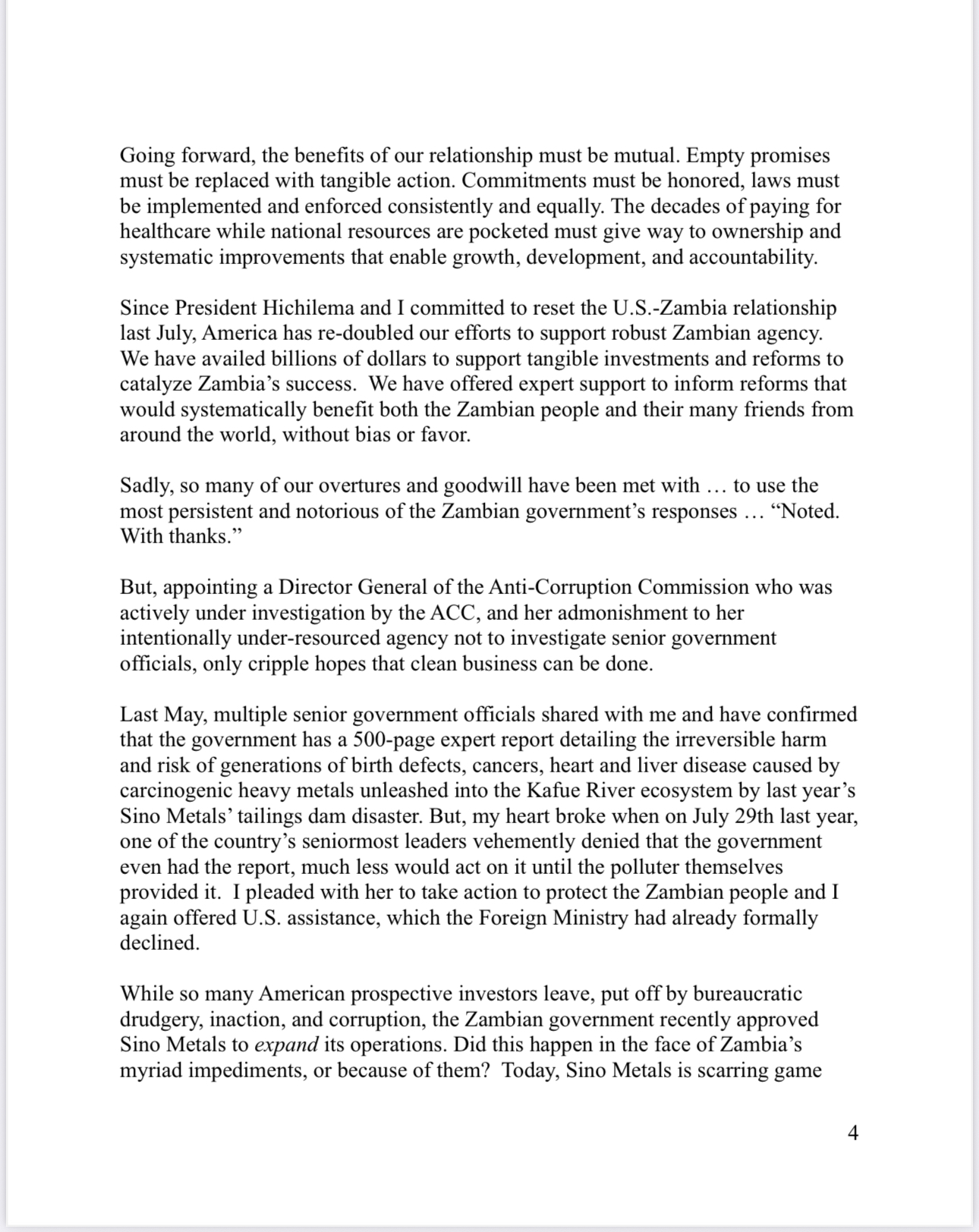
“Zambia does not need money. It needs leaders who govern for the people with integrity. It needs the political will to put Zambia first,” Gonzalez said.
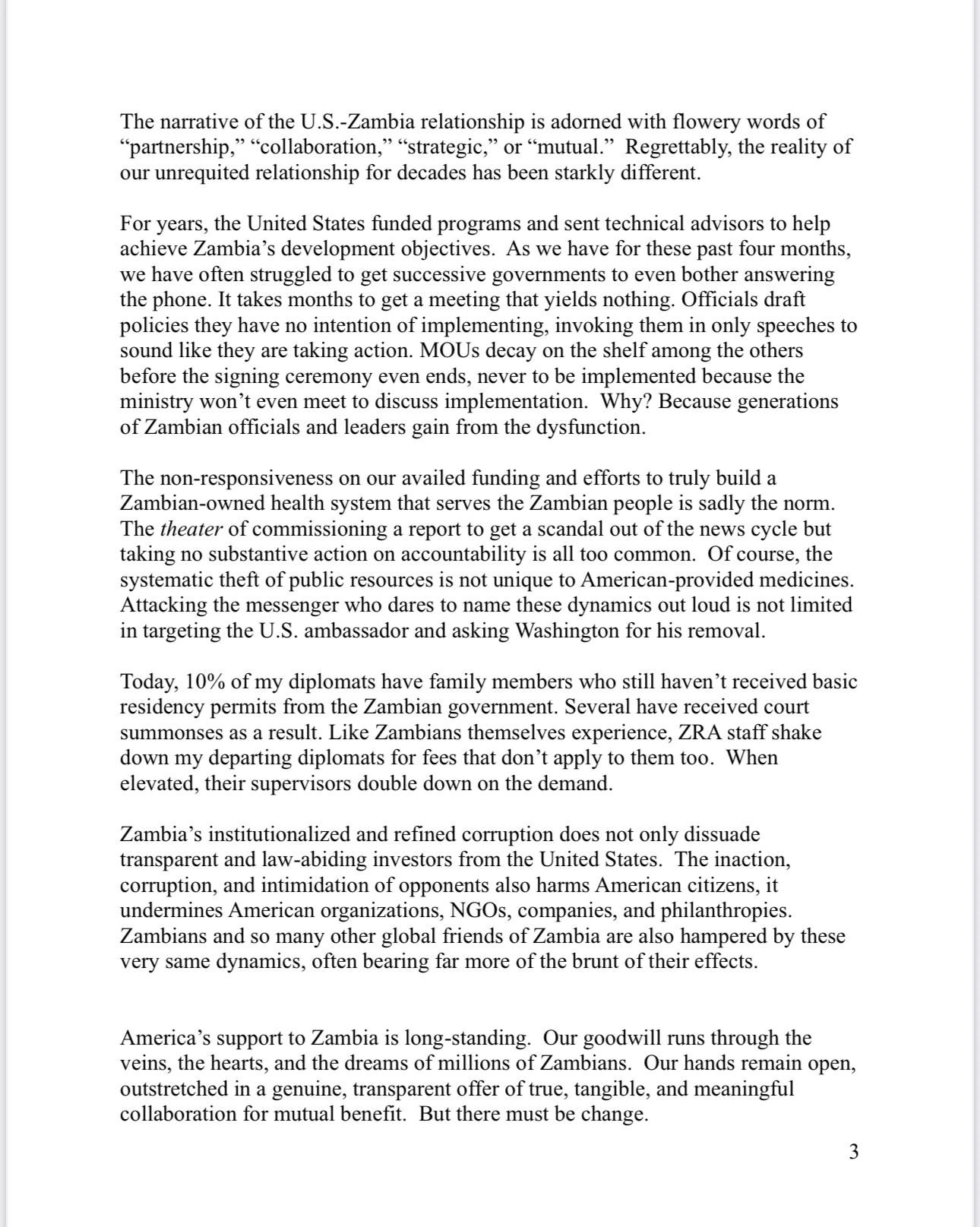
He criticized the appointment of an Anti-Corruption Commission Director General who was under investigation by the ACC, the government’s handling of the Sino Metals’ Kafue River tailings dam disaster, and the award of the $650 million Lusaka–Ndola Dual Carriageway project to AVIC despite its history of fraud.
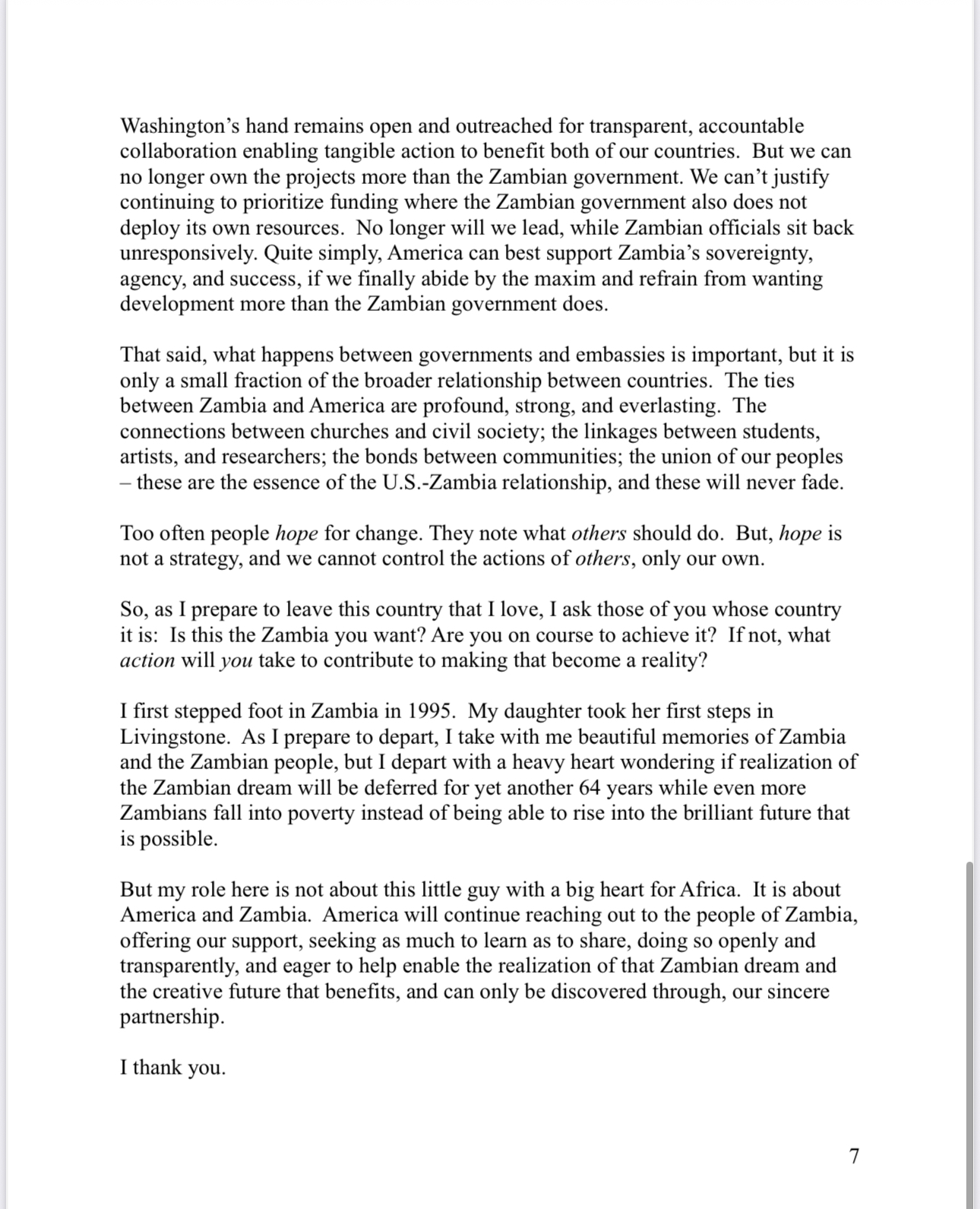
While affirming that the U.S. will “absolutely continue to honor” its commitment to provide critical life-saving healthcare, including ARVs, the Ambassador said future aid levels were in doubt without accountability and strong Zambian ownership.
“Without fundamental change, as the American Ambassador to the Republic of Zambia, how can I ask American taxpayers, Congress, or President Trump to continue the massive aid budgets that have been the hallmark of our relationship for decades?” he said.
WARNING! All rights reserved. This material, and other digital content on this website, may not be reproduced, published, broadcast, rewritten or redistributed in whole or in part without prior express permission from ZAMBIA MONITOR





Comments