
 By
By 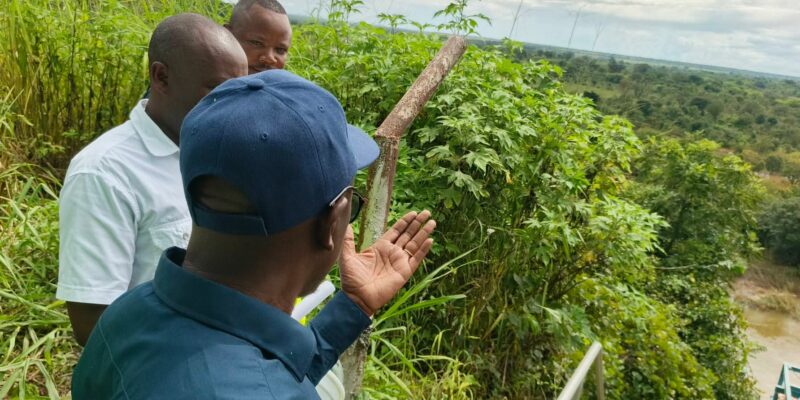
The Government of Zambia has launched a major pollution clean-up programme at Sino-Metals Leach Limited, following last year’s collapse of Tailings Dam Number 15, which contaminated several key waterways.
Water and Sanitation Development Minister Collins Nzovu officiated at the launch on Saturday in Chambishi, warning that the exercise must not be treated as a routine corporate requirement, but as a critical effort to protect the country’s water resources and the health of surrounding communities.
The programme follows recommendations from a technical consultant after the 18 February 2025 tailings failure, which discharged highly acidic waste into the Chambeshi Stream, the Mwambashi River and ultimately the Kafue River.
“This should not be taken as a routine exercise but as a means of securing livelihoods and preserving the well-being of our people,” Nzovu said, noting that the impact of the spillage had been extensive.
In response to the incident, the government deployed a coordinated, science-driven assessment led by the Zambia Environmental Management Agency, the Water Resources Management Authority and the Minerals Regulation Commission, with support from independent experts.
On 19 December 2025, ZEMA received a comprehensive Environmental and Social Impact Assessment conducted by Applied Science and Technology Associates Limited.
The report confirmed that uranium levels posed no radiological threat but identified localised pollution, including contaminated agricultural produce in hotspot areas, significant heavy-metal pollution in water, soils and sediments, and severe ecological damage to aquatic life and riparian vegetation.
It recommended urgent remediation measures such as dredging, soil stabilisation and ecosystem restoration.
Nzovu said Sino-Metals had already implemented several emergency measures ahead of the rainy season under ZEMA’s directive.
These included constructing catch drains and silt traps, stabilising the damaged tailings dam, installing real-time monitoring systems and desludging the Mwambashi Stream.
The company also limed affected crop fields and planted trees to curb erosion, alongside introducing the neutralisation of acidic tailings as required by the Minerals Regulation Commission.
“These early actions, complemented by ongoing scientific assessments and stakeholder engagement, helped reduce immediate risks and set the foundation for the comprehensive clean-up we are launching today,” Nzovu said.
He added that the spillage resulted in severe environmental and social damage.
Heavy-metal concentrations in water remained above safe standards; sediments and agricultural soils had accumulated high pollution levels; fish populations and biodiversity had been disrupted; and communities, particularly in Kalusale, had lost crops, fishing grounds and access to safe water.
Speaking earlier, Sino-Metals Leach Zambia chairman, Wang Jingjun, said the company had worked to comply with all government directives since the incident.
“This event reinforces our commitment to complete the restoration and remediation of this environment,” he said, adding that the clean-up would follow the independent assessment’s recommendations, which now form the scientific and regulatory basis for the restoration programme.
WARNING! All rights reserved. This material, and other digital content on this website, may not be reproduced, published, broadcast, rewritten or redistributed in whole or in part without prior express permission from ZAMBIA MONITOR.








Comments