
 By
By 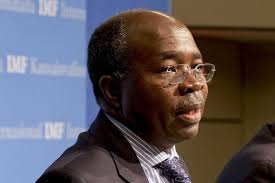
Italy has elevated Zambia to priority bilateral development partner status in Africa and committed US$270 million to the Lobito Corridor Development Project through the Africa Finance Corporation, while also signaling openness to mobilizing additional support.
Finance and National Planning Minister, Dr. Situmbeko Musokotwane, welcomed the deepening relations with Italy, noting that the engagement aligned with Zambia’s broader objective of transforming macroeconomic stability into increased investment, higher productivity, job creation, and sustainable growth.
The engagement took place during a high-level meeting between Musokotwane and Lorenzo Ortona, Deputy Head of the Mattei Plan Task Force at the Italian Prime Minister’s Office, held on the margins of the Spring Meetings of the International Monetary Fund (IMF) and the World Bank Group.
The discussions focused on Italy’s Mattei Plan for Africa, as well as broader cooperation in infrastructure, energy, economic development, the Lobito Corridor, and critical raw materials.
The Mattei Plan is Italy’s flagship Africa strategy, centered on partnership-driven development with a strong emphasis on infrastructure, energy, human capital, and productive investment.
According to a statement from the Ministry, Zambia’s engagement with Italy at the Spring Meetings reflects “an emerging relationship that is becoming more strategic, structured, and aligned to the wider economic transformation underway across parts of Africa.”
The Ministry further noted that Italy’s decision to elevate Zambia to priority development partner status was not merely symbolic, but reflected growing confidence in Zambia’s reform agenda, investment environment, and its potential role in regional production, logistics, and value-chain integration.
It added that Zambia was increasingly being viewed not only as an economy emerging from a difficult adjustment period, but as a country with the policy credibility and strategic relevance to attract long-term investment and deeper international partnerships, supported by the leadership of President Hakainde Hichilema.
The Ministry said the Lobito Corridor remained central to the evolving partnership, noting that its importance now extended beyond transport infrastructure to a broader development platform linking rail, logistics, industrial processing, trade expansion, and regional value chains.
Musokotwane said Italy’s integration of the corridor into its Mattei Plan gave additional international weight to Zambia’s vision of the corridor as a catalyst for reshaping regional economic connectivity.
“As Zambia, this strengthens our case for emerging as a regional logistics and export hub while improving the credibility and bankability of corridor-linked investments in rail, energy, and trade-supporting infrastructure,” he said.
He added that the focus on critical raw materials was equally significant, as it aligned with Zambia’s ambition to move beyond raw commodity exports toward value addition, industrial upgrading, and participation in advanced global supply chains.
Read More: Sub-Saharan Africa sinking into mounting fiscal pressure from Gulf crisis, IMF warns
“At a time when copper and other transition minerals are becoming increasingly central to the global economy, linking mineral resources to infrastructure, financing, industrial capacity, and international partnerships is critical,” he said.
Musokotwane said the engagement aligned with Zambia’s broader effort to position mining within a framework of beneficiation, technology transfer, and economic transformation.
He further noted that the discussions built on earlier engagements with the Italian private sector in Rome in 2025, Zambia’s critical minerals roadmap launched the previous year, and the wider G7 RISE Partnership framework.
He emphasized that continuity in international partnerships was essential, as meaningful cooperation depends on sustained engagement, implementation, and clear links between dialogue and delivery.
“Zambia’s ability to remain part of that conversation, and to do so with increasing strategic clarity, is itself a signal to investors and development partners,” he said.
WARNING! All rights reserved. This material, and other digital content on this website, may not be reproduced, published, broadcast, rewritten or redistributed in whole or in part without prior express permission from ZAMBIA MONITOR.









Comments