
 By
By 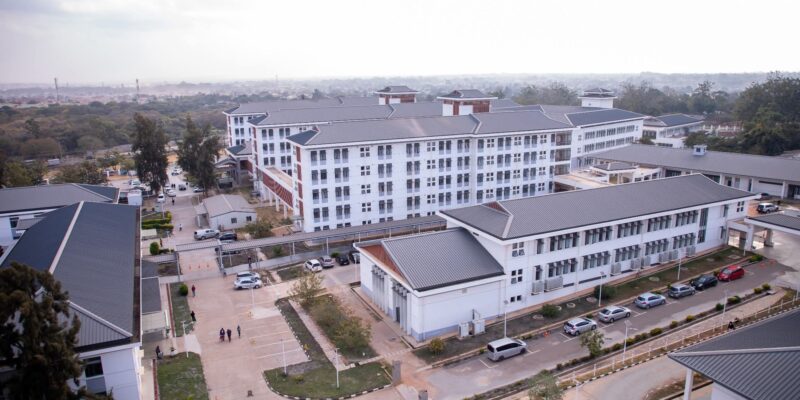
The Medical for Quality Healthcare in Zambia (MQHZ) has raised concern over the concentration of highly specialised health services, saying it has created serious inequalities in access to advanced healthcare services across the country.
MQHZ Director General Dr. Quincy Mwabu called for the immediate establishment of provincial specialist hospitals to address what it described as a structurally unequal health system.
In a media statement issued Wednesday in Lusaka, Mwabu raised concern over the continued centralisation of highly specialised referral, teaching, and research hospital services in only a few urban centres, mainly Lusaka and the Copperbelt.
According to Mwabu, Zambia’s specialist healthcare system remains heavily concentrated around a few institutions.
“These facilities continue to bear the national burden of specialist care, training, research, and referrals, while most provinces lack equivalent capacity, resulting in a structurally unequal health system,” he said.
Mwabu named the University Teaching Hospital, Levy Mwanawasa University Teaching Hospital, Ndola Teaching Hospital, and Kitwe Teaching Hospital as the main institutions carrying the national burden.
He said the imbalance had led to overwhelming patient inflows at major referral hospitals.
Mwabu noted that facilities in Lusaka and the Copperbelt were receiving cases far beyond their intended capacity, while provinces such as Luapula, Northern, Muchinga, Western, North-Western, Eastern, Southern, and Central continued to depend on long-distance referrals for advanced care.
“This imbalance has led to overwhelming patient inflows at major referral hospitals, with facilities in Lusaka and the Copperbelt receiving cases far beyond their intended capacity,” he stated.
Mwabu said the situation resulted in delays in treatment, increased household costs, congestion at tertiary facilities, and avoidable deterioration in patient outcomes.
Read More: Comprehensive approach needed for urban health services, says Ministry of Health
He added that the problem was worsened by shortages of specialist health personnel outside major urban centres and the long distances many citizens must travel to access tertiary healthcare.
“In many rural communities, patients are forced to travel several hours, and in some cases more than a day, to reach referral hospitals. No Zambian should lose their life,” Mwabu stated.
MQHZ is calling on government to immediately commence the establishment of fully equipped provincial specialist hospitals through a phased national programme from 2026 to 2035.
The organisation said the intervention would decentralise specialised care, strengthen provincial health systems, reduce pressure on central hospitals, improve emergency response capacity, and ensure equitable access for all citizens regardless of geographic location.
MQHZ further urged government to prioritise the reform within national health sector planning frameworks and successive national budgets, stressing that equitable access to specialised healthcare is a fundamental pillar of a fair and resilient health system.
WARNING! All rights reserved. This material, and other digital content on this website, may not be reproduced, published, broadcast, rewritten or redistributed in whole or in part without prior express permission from ZAMBIA MONITOR.









Comments