
 By
By 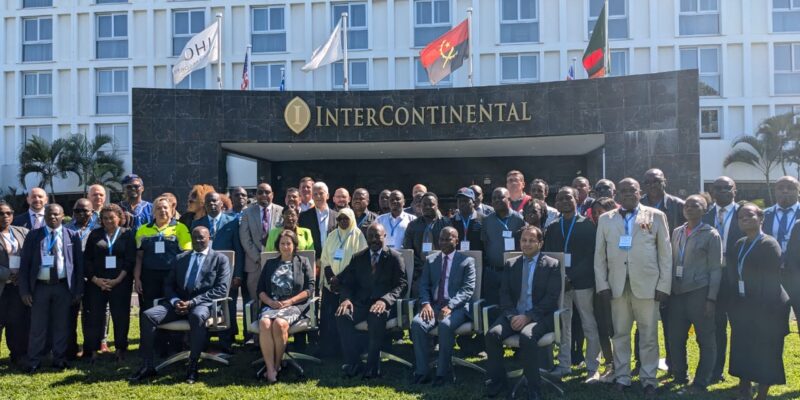
The Ministry of Defence has officially opened a regional field situation exercise in Lusaka designed to test preparedness for biological threats at border crossing points.
The exercise simulates an incident involving the accidental leakage of a biological toxin, ABRIN, and assesses practical preparedness, containment, decontamination and coordination across participating agencies.
Ministry of Defence Permanent Secretary, Maambo Hamaundu, officially launched the exercise in Lusaka on Tuesday during an event held at Intercontinental Hotel.
Hamaundu emphasized that as the region confronts the current Ebola situation, the collective ability to detect, contain and manage biological threats is of immediate national and regional importance.
“This two‑phase activity intensive preparatory training from May 20 to May 21st and the field exercise from May 25th to May 26th directly addresses critical capacities: inter‑agency coordination, personal protective procedures, and detection,” he said.
Additionally, sampling, crime scene protocols, containment, decontamination and coordinated operational response to incidents involving biological dual‑use agents.
Haamaundu said the scenario was designed to test systems under realistic and high-pressure conditions and the timing of the exercise could not be more appropriate given current health challenges in the region.
“The timing of this exercise could not be more appropriate. As we confront the current Ebola situation in the region, our collective ability to detect, contain and manage biological threats whether natural, accidental or deliberate is of immediate national and regional importance,” he said.
Haamaundu noted that cross-border movement, porous boundaries and high levels of trade and travel meant that an incident in one country could rapidly affect neighbouring states.
“Our shared goals are clear: protect public health, secure our borders, uphold safety and human dignity, and preserve socio‑economic stability,” Hamaundu said.
He added that achieving those goals required continuous strengthening of biosafety and biosecurity practices, clear lines of communication, well‑rehearsed protocols, and institutional relationships that endure beyond drills and deployments.
“I therefore welcome the practical, hands‑on nature of this exercise and encourage all participants to engage fully: ask questions, test assumptions, share lessons, and treat simulated failures as invaluable opportunities for improvement,” Haamaundu said.
WARNING! All rights reserved.This material, and other digital content on this website, may not be reproduced, published, broadcast, rewritten or redistributed in whole or in part without prior express permission from ZAMBIA MONITOR.










Comments