
 By
By 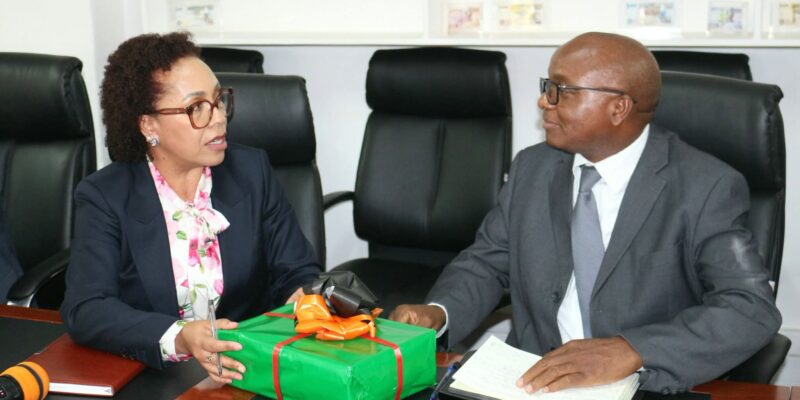
Zambia expects approximately 82 percent of resources supporting the 2026 National Budget to be mobilized domestically through tax and non-tax revenue, up from 55.2 percent in 2021, the Ministry of Finance and National Planning has said.
Secretary to the Treasury, Felix Nkulukusa, said the increase reflected Zambia’s transition from reliance on borrowing and external financing toward stronger domestic resource mobilization.
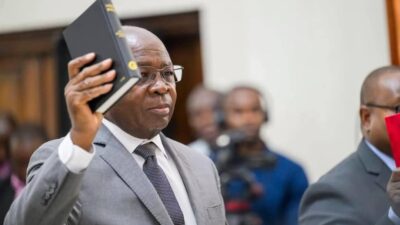
Nkulukusa said this when newly sworn-in Tax Appeals Tribunal Chairperson, Diana Bunting, and members of the Tribunal paid a courtesy call to the Ministry of Finance and National Planning after taking their oaths of office before the Court of Appeal.
The other members of the Tax Appeals Tribunal are Danmore Mulima, Moono Simatyaba and David Chisupa.
“This marks significant progress toward fiscal self-reliance, reduced dependence on borrowing and greater national control over development financing,” Nkulukusa said.
He said the projected rise from 55.2 percent in 2021 to 82 percent in 2026 represented an increase of 26.8 percentage points, equivalent to approximately 48.6 percent relative growth in the share of the National Budget supported by domestically mobilized resources.
Nkulukusa said an independent and efficient tax appeals system was critical to achieving the domestic revenue targets through strengthened taxpayer confidence, voluntary compliance promotion and ensuring the timely resolution of disputes.
“When tax disputes remain unresolved, taxpayers continue accumulating penalties, businesses operate under uncertainty and the Government does not receive revenue on time. In the end, everyone loses,” he said.
Nkulukusa said taxpayers were more likely to meet their obligations when confident that disputed tax administration decisions could be reviewed fairly, independently and expeditiously.
Following substantial progress in Zambia’s debt restructuring process, Nkulukusa said Government’s focus was now firmly on attracting investment, expanding economic activity and increasing the domestic revenue base.
“Ongoing tax reforms are making the system simpler, more equitable and supportive of enterprise while preserving taxpayers’ right to seek redress where they believe they have been treated incorrectly or unfairly,” he said.
Nkulukusa reaffirmed Government’s commitment to protecting the Tribunal’s independence and providing the administrative and financial environment required for it to operate effectively.
“Our role is not to direct the Tribunal, but to support it so that it can discharge its mandate efficiently, impartially and independently,” he said.
He added that the Ministry was currently liaising with the Tribunal Secretariate on administrative matters and would continue reviewing its funding and operational requirements within the context of the national fiscal health.

Nkulukusa stated thst the Ministry would also assess proposals for full-time Tribunal membership as the volume and complexity of tax disputes increases.
Speaking earlier, Tax Appeals Tribunal Chairperson Bunting said reducing the backlog of unresolved cases would be an immediate priority.
“Justice delayed is justice denied. Prolonged delays create uncertainty for taxpayers and have significant implications for government revenue,” Bunting saif
She said the Tribunal will work on strengthening case management, improving the scheduling of hearings and ensuring the timely delivery of well-reasoned decisions.
The Tax Appeals Tribunal Chairperson through Bunting also proposed a structured succession process for the Tribunal to prevent future institutional gaps.
She also called for enhanced funding to support circuit hearings, digital case-management systems, continuous professional development and improved access to tax justice across the country.
Bunting advocated the gradual transformation of the institution into a specialized Tax Court or tribunal with full-time members.
WARNING! All rights reserved. This material, and other digital content on this website, may not be reproduced, published, broadcast, rewritten or redistributed in whole or in part without prior express permission from ZAMBIA MONITOR.










Comments