
 By
By 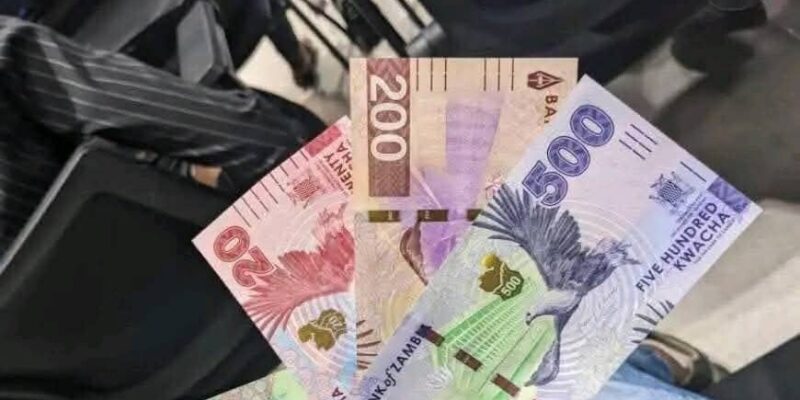
The Kwacha weakened for a third consecutive trading session yesterday, extending its month-long decline against the US dollar as demand for foreign currency remained elevated ahead of next month’s general election.
According to Bloomberg market data, the local currency depreciated by about 0.14 percent to trade above K18.80 per US dollar, taking its losses for July to nearly four percent.
“The latest decline makes the Kwacha the worst-performing African currency tracked by Bloomberg on a month-to-date basis, reflecting persistent pressure from rising demand for the US dollar and heightened market caution ahead of the August 13 general election,” the date showed.
Analysts say the local currency’s recent weakness has largely been driven by increased demand for dollars from businesses and importers, compounded by uncertainty surrounding the election period.
Read more: Kwacha emerges Africa’s best performing currency
On global currency markets, however, the US dollar remained under pressure after the US Federal Reserve left interest rates unchanged, a decision that investors interpreted as less hawkish than expected despite three policymakers voting in favour of a rate hike.
The Fed’s decision prompted traders to push back expectations of further monetary tightening, weighing on the greenback even as short-term US Treasury yields stabilised.
The dollar also lost some support as international oil prices eased following recent gains, reducing demand for the traditional safe-haven currency. Market attention has now shifted to upcoming US inflation and labour market data, which are expected to provide fresh clues on the future path of interest rates.
Meanwhile, the South African rand recovered modestly against the US dollar, with the USD/ZAR exchange rate trading near 16.66 after the dollar weakened in global markets.
Analysts cautioned, however, that the rand remained exposed to risks including South Africa’s dependence on imported oil, softer commodity prices and domestic fiscal pressures.
They expect the USD/ZAR pair to trade within a range of 16.5550 and 16.9170 in the near term, with developments in US economic data and geopolitical tensions in the Middle East likely to influence market direction.
WARNING! All rights reserved. This material, and other digital content on this website, may not be reproduced, published, broadcast, rewritten or redistributed in whole or in part without prior express permission from ZAMBIA MONITOR.









[…] Read more: Kwacha extends losses, ranks worst-performing African currency in July […]