
 By
By 
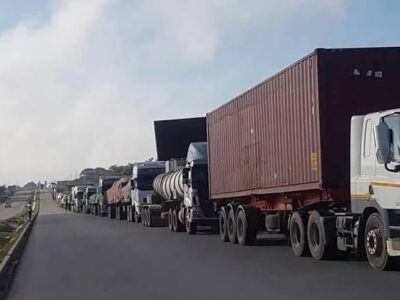
The Lobito Corridor has the potential to unlock over US$28 billion in private-sector investment opportunities, with mining, energy, agribusiness and logistics identified among the sectors offering the biggest opportunities, the World Bank has said.
Speaking at the Lobito Corridor Coordination meeting in Lusaka on Monday, World Bank Managing Director, Anna Bjerde, said the International Finance Corporation (IFC) had identified 118 potential anchor investments that could help turn the Lobito Corridor from a transport route into a major economic hub linking Zambia, the Democratic Republic of Congo (DRC) and Angola.
Bjerde said the opportunities covered mining and related investments, energy, agribusiness and logistics, while forestry had also emerged as a potential area for investment.
“The IFC has undertaken diagnostics that identifies 118 anchor investment opportunities for the private sector worth over US$28 billion across mining, auxiliary investments, energy, agribusiness, logistics and I will add forestry,” she said.
Read more: Why Lobito Corridor is key to Zambia’s economy —Govt
She added that the scale of the opportunities demonstrated that the corridor could attract significant private investment beyond the development of railway and road infrastructure.
Bjerde said, however, that unlocking the investment opportunities would require the three countries to coordinate infrastructure development with investments in skills, power, water, land and the growth of secondary cities.
She warned that focusing only on railway infrastructure could limit the economic benefits of the corridor.
“If we coordinate only on rail, we will have built a very expensive conveyor belt,” Bjerde said.
She said reliable power would be particularly important because mining, mineral processing and industrial investments expected along the corridor would depend on adequate and dependable electricity supply.
Finance and National Planning Minister, Situmbeko Musokotwane, said Zambia wanted the private sector to be involved from the planning stage because the country’s development agenda was intended to be private-sector led.
He said the viability of the railway would depend on increasing production of copper and other minerals, agricultural products and other goods that could be transported through the corridor.
“Increased production would, in turn, require investment in roads, warehouses and other logistics infrastructure to support efficient movement of goods,” Musokotwane said.
WARNING! All rights reserved. This material, and other digital content on this website, may not be reproduced, published, broadcast, rewritten or redistributed in whole or in part without prior express permission from ZAMBIA MONITOR.











Comments