
 By
By 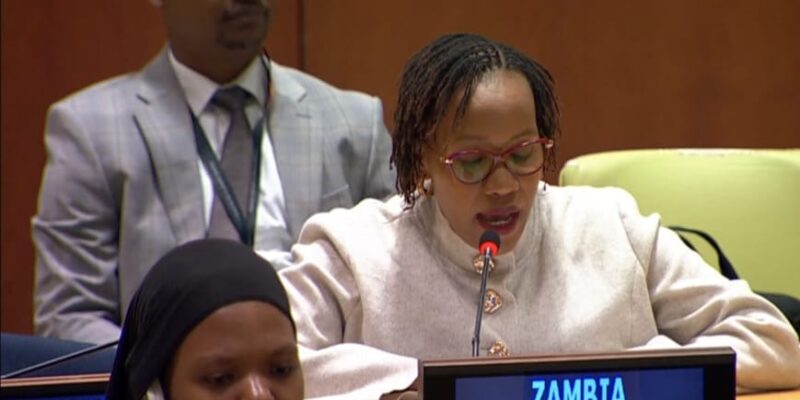
Zambia has reaffirmed its commitment to upholding the rule of law at national and international levels, highlighting judicial reforms and efforts to improve access to justice.
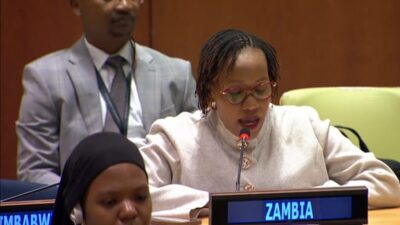
Ministry of Justice Permanent Secretary for Legal Affairs Mwenya Kaela Bwalya delivered Zambia’s national statement before the Sixth Committee of the 81st United Nations General Assembly on October 10, 2026.
Speaking under Agenda Item 84, which focuses on the rule of law at national and international levels, Bwalya said the principle was essential to preserving international peace and security and achieving sustainable development.
She welcomed the UN Secretary-General’s report on Strengthening and Coordinating United Nations Rule of Law Activities and acknowledged the work of the International Law Commission.
Bwalya stressed that the international rule of law could not be fully realised without the meaningful participation of developing countries in treaty-making processes, adding that inclusive participation was critical to legitimacy.
Read More: ‘My five years plan,’ Hichilema makes promises as 14th National Assembly declared open
“The rule of law at the national and international levels serves as the foundational bedrock of collective multilateral architecture, indispensable for the preservation of international peace and security, and the realisation of sustainable development,” Bwalya said.
She said Zambia had undertaken significant structural reforms under the Eighth National Development Plan, particularly Development Outcome Two, which targets improvements in the rule of law, human rights and constitutionalism.
The reforms included the recent appointment of judges to the Superior Courts, construction of nine new courts, modifications to court infrastructure to improve accessibility and the use of specialised judicial bodies.
“Zambia, under the Eighth National Development Plan specifically Development Outcome two targeting improved rule of law, human rights, and constitutionalism, has undertaken significant structural overhauls, including the recent appointment of judges of the Superior courts and the construction of nine new courts,” Bwalya said.
WARNING! All rights reserved. This material, and other digital content on this website, may not be reproduced, published, broadcast, rewritten or redistributed in whole or in part without prior express permission from ZAMBIA MONITOR.







Comments