
 By
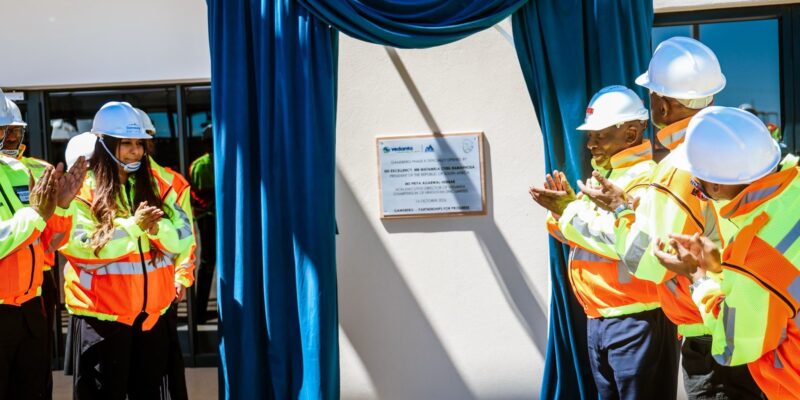
On 16 October 2026, in Aggeneys, a mining town in South Africa’s Northern Cape, President Cyril Ramaphosa pressed a button and inaugurated the Gamsberg Phase II mining operation.
With that, one of the largest mining investments in South Africa has moved from construction into production.
Gamsberg is run by the Vedanta group, which also manages Konkola Copper Mines on the Copperbelt.
The numbers are big. Vedanta put close to US$600 million into Phase II, which doubles its zinc output to around 500,000 tonnes a year.
Read more: KCM copper production rises 21% as Zambia’s national output holds steady
That puts it among the largest zinc operations in the world. More than 1,500 people worked on the build, between 800 and 1,000 jobs will be sustained now that it is running, and the whole expansion was completed without a single fatality.
What stood out most was the President’s own explanation of why the project happened at all. Speaking about the difficult conditions South African mining has come through, he told the audience that “Vedanta did not wait for every challenge to be resolved before investing.”
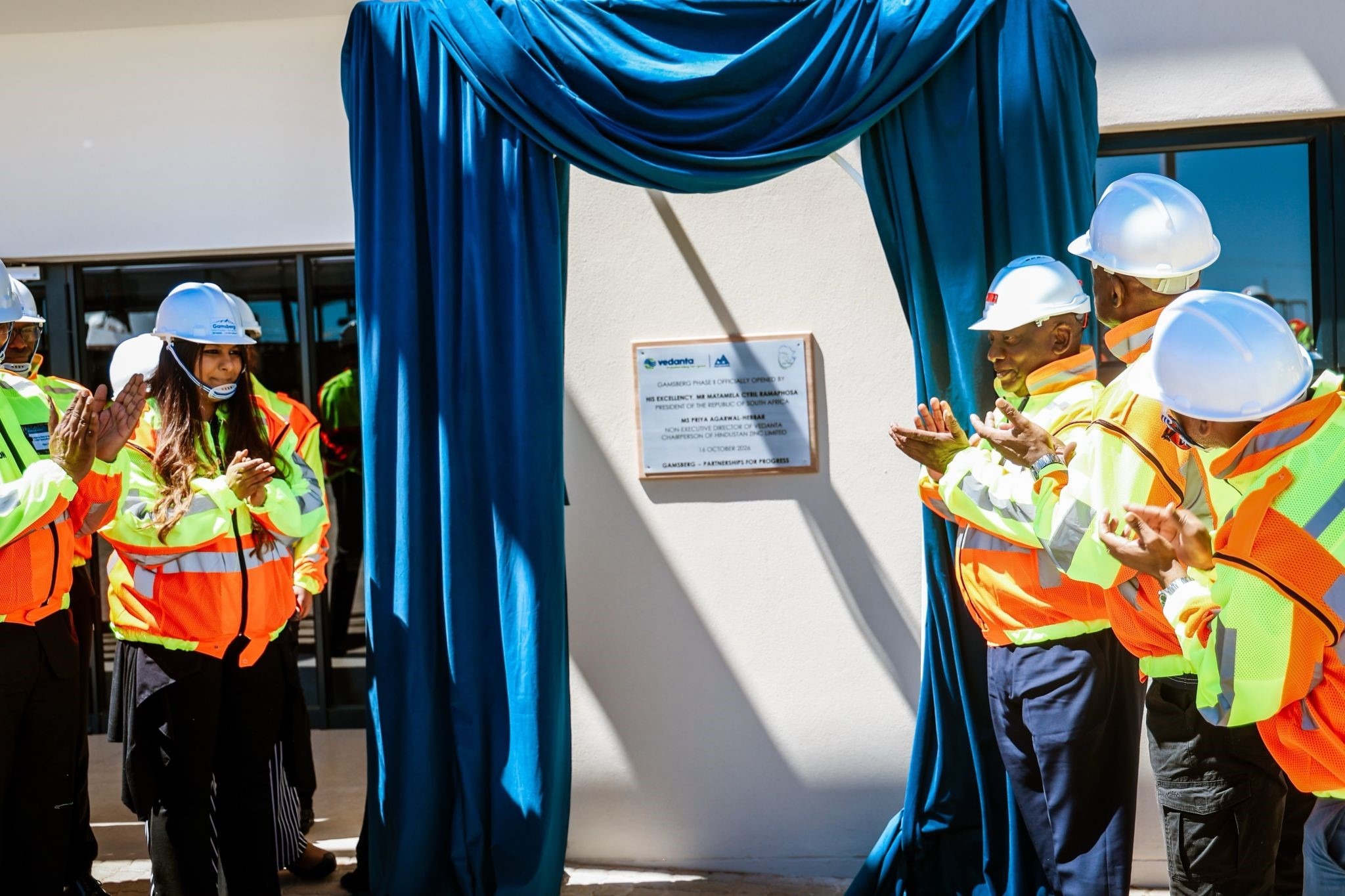
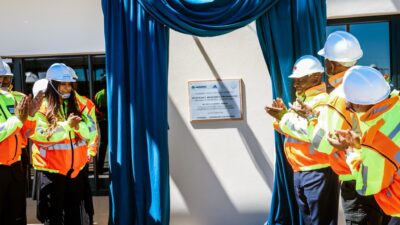
President Cyril Ramaphosa and Vedanta Non Executive Director Priya Agarwal Hebbar unveil the plaque marking the official opening of Gamsberg Phase II in Aggeneys, Northern Cape, on 16 October 2026.
Priya Agarwal Hebbar, Non Executive Director of Vedanta Limited and Chairperson of Hindustan Zinc, opened the plant alongside the President.
She described the expansion as more than a business decision. “It is a commitment to South Africa’s future,” she said, adding that the group’s ambition is to build a globally significant zinc and industrial hub in the region.
Zambians have already seen what that kind of commitment looks like. Since Vedanta was reinstated at KCM, it has invested US$705 million in the company, with every dollar remitted into Zambia.
That is more than the group spent on the expansion Ramaphosa opened in Aggeneys.
The results are showing underground. Mine development at Konkola has gone from 0.2 kilometres a month to more than 2 kilometres, the fastest pace in a decade. KCM’s total copper production rose from 45,000 tonnes in FY2025 to 129,000 tonnes in FY2026.
The target for FY2027 is 185,000 tonnes, on the way to 500,000 tonnes a year by 2030, and every one of those tonnes counts towards Zambia’s national goal of 3 million tonnes of copper a year.
The people on the ground have felt it too. KCM now employs more than 14,500 people, up from about 11,500, with a further 1,200 jobs created through its business partners.
Salaries have risen 35 percent across two increases since July 2024.
The company has paid around US$180 million to government in PAYE, withholding tax, royalties and VAT. And through its independent Community Trust, US$20 million has reached roughly 100,000 people through malaria programmes, scholarships, youth skills training and road works in Chingola, Chililabombwe and Nampundwe.
KCM Board Chairperson Dr. Moses Banda said the Gamsberg launch should give Zambians confidence in what lies ahead.
“What happened in Aggeneys on 16 October is what a long term shareholder looks like. Gamsberg was built in a tough environment and it was delivered safely. KCM has that same shareholder behind it, and the US$705 million already invested here shows it. Our job now is to turn that investment into tonnes, jobs and business opportunities for Zambians.”
WARNING! All rights reserved. This material, and other digital content on this website, may not be reproduced, published, broadcast, rewritten or redistributed in whole or in part without prior express permission from ZAMBIA MONITOR.






Comments