
 By
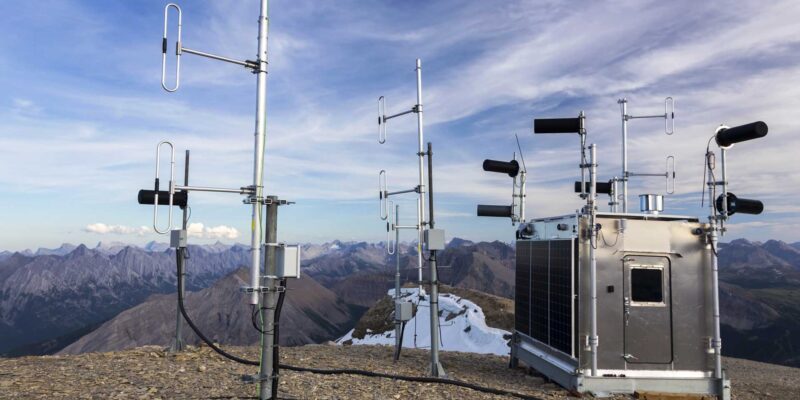
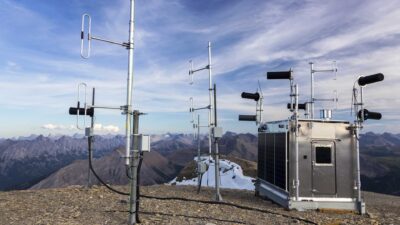
Zambia has secured a US$3.6 million grant from the Systematic Observation Financing Facility (SOFF) to upgrade the country’s automatic weather and rainfall monitoring stations to meet the World Meteorological Organization’s (WMO) global basic standards.
Minister of Green Economy and Environment, Dr Gilbert Siame, said in addition to the grant launched in May 2026, the Government was procuring a national lightning detection network with financing from the World Bank to improve warnings for severe storms.
Siame told Parliament in Lusaka on Friday that the country was also strengthening multi-hazard monitoring and introducing modern technologies, including Artificial Intelligence (AI), to improve forecasting accuracy and extend weather warning lead times.
He was delivering a ministerial statement on the 2026/2027 National Seasonal Rainfall and Temperature Forecast and Outlook, warning that the season was developing under the influence of El Niño, reinforced by a positive Indian Ocean Dipole.
He said the two climate phenomena increased the likelihood of a drier and hotter-than-normal season across much of the country, characterised by reduced rainfall, a delayed and uneven onset of the rainy season, and higher-than-usual temperatures.
“The 2026/2027 rainy season is developing under El Niño in the tropical Pacific, reinforced by a positive Indian Ocean Dipole. Together these tilt the odds firmly towards a drier and hotter than normal season across much of the country,” Siame said.
He said the National Seasonal Rainfall and Temperature Forecast was launched by Secretary to the Cabinet Patrick Kangwa on Friday, September 11, 2026, after the Zambia Meteorological Department downscaled the consensus forecast from the 33rd Southern African Regional Climate Outlook Forum.
“Rainfall is more than weather: the rains of December to February alone account for about 65 percent of our annual total, so a single season weighs heavily on our agriculture, hydropower, water supply and public health,” he said.
Siame said the southern belt, covering Southern and Western provinces, was expected to receive below-normal rainfall, with a delayed onset of the rainy season, making it the area of greatest concern.
The central transition zone, covering Copperbelt, Central and Eastern provinces, was expected to experience variable rainfall, with an elevated risk of prolonged dry spells.
“The highest likelihood of below-normal rainfall, a late onset and prolonged dry spells lies in the South and West of the country. Districts such as Sinazongwe, Gwembe, Siavonga, Choma, Kazungula and Livingstone in Southern Province, and Senanga, Shang’ombo, Sesheke and Kalabo in Western Province, are expected to be among the driest,” he said.
He said the northern belt, covering Northern, Muchinga, Luapula and North-Western provinces, was expected to receive normal-to-above-normal rainfall, offering more favourable prospects for rain-fed agricultural production.
However, he warned that localised flooding remained a risk, including flash floods in the Barotse Plains and built-up areas such as Lusaka.
Siame said above-normal temperatures were expected across almost the entire country for much of the season, with the greatest temperature increases likely in the already drier southern region.
He warned that sustained high temperatures would increase evapotranspiration, worsen the effects of rainfall deficits and elevate the risk of weather-related fires.
Read More: Govt raises concern over plastic waste as Zambia generates 3.7m tonnes annually
He added that the Government was expanding access to digital climate advisory services, targeting more than one million farmers during the 2026/2027 season, with plans to increase coverage to four million farmers by 2029.
The services would provide advisories in Bemba, Nyanja, Tonga and English.
Siame said the Government was also introducing an agrometeorological voice service in collaboration with the Zambia Information and Communications Technology Authority (ZICTA) and mobile network operators to improve farmers’ access to weather information.
He said Cabinet had approved the National Policy on Meteorology, while the Meteorological Services Bill was at an advanced stage, with plans to table it before Parliament by the end of 2026.
The proposed legislation seeks to establish the Zambia Meteorological Authority and a Weather and Climate Fund.
Siame appealed to lawmakers to support the Bill, saying stronger meteorological services would help the country translate early warnings into timely action.
WARNING! All rights reserved. This material, and other digital content on this website, may not be reproduced, published, broadcast, rewritten or redistributed in whole or in part without prior express permission from ZAMBIA MONITOR.




Comments