
 By
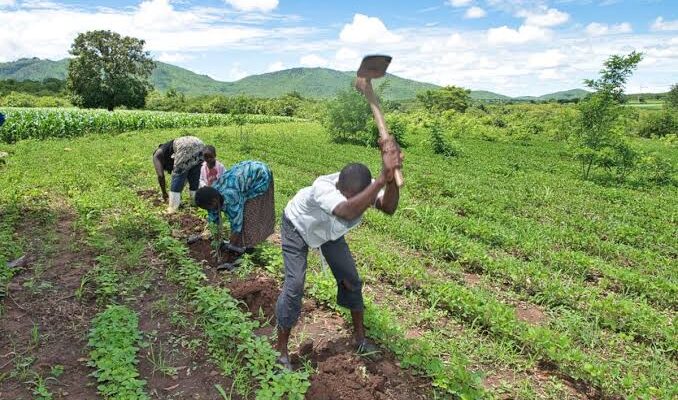
The Zambia Meteorological Department (ZMD) has advised farmers in northern Zambia to begin planting with the next good rainfall, while those in Southern, Lusaka and most parts of Central and Eastern provinces should hold off as the 2026/27 rainy season gets off to an uneven start.
In its first Agrometeorological Bulletin for the 2026/27 season, covering November 13 to 26, 2026, the department placed the country under Yellow Advisory Level – Get Ready – warning that while the rainy season has commenced in the north, much of the south, centre and east is still awaiting adequate rainfall.
The onset of the rainy season has been established in 33 districts across Northern, Luapula, Copperbelt and parts of North-Western provinces, while it has just been triggered in another 14 districts, mostly in Muchinga Province.
Rainfall recorded since October 1 is above the 1991–2020 average in Luapula and Northern provinces, at 110 percent and 125 percent respectively.
However, rainfall remains below normal on the Copperbelt at 72 percent, Central at 52 percent, Lusaka at 53 percent and Southern Province at 63 percent.
The department said soils remained dry in almost all areas, with only six districts in the north recording moist soil as of November 10.
It cautioned farmers against rushing into planting following isolated heavy showers, advising them to wait until sufficient moisture has accumulated.
According to ZMD, farmers should only plant when three conditions are met: cumulative rainfall of at least 40mm over the preceding one to two weeks; soil moisture reaching approximately 15cm deep; and a two-week forecast indicating no dry spell lasting more than 10 days.
Ten districts have been advised to plant now or with the next rainfall. These are Chiengi, Chipili, Kawambwa, Mwansabombwe and Nchelenge in Luapula; Kaputa, Lunte and Mporokoso in Northern; and Ikelenge and Mwinilunga in North-Western Province.
Another 16 districts have been advised to plant after the next good rainfall. They include Mansa, Mwense, Chembe, Chifunabuli and Milenge in Luapula; Kasama, Mbala, Mpulungu, Luwingu, Chilubi, Lupososhi, Nsama and Senga Hill in Northern; Kasempa and Manyinga in North-Western; and Kanchibiya in Muchinga.
On the Copperbelt, seven districts – Chililabombwe, Chingola, Kitwe, Luanshya, Masaiti, Mufulira and Ndola – have been advised to wait for two good rainfall events before planting, with the appropriate window expected around November 20 to 26.
The department said only 9mm to 13mm of rain had been recorded in the seven districts between November 1 and 10, leaving soils too dry for planting.
Ten other districts have been placed under the Get Ready advisory. These include Chinsali, Isoka, Mafinga, Mpika, Nakonde and Shiwang’andu in Muchinga; Mungwi in Northern; and Nalolo, Shangombo and Sikongo in Western Province.
Although rainfall onset has been triggered in these areas, soil moisture remains inadequate.
A further 27 districts have been advised to complete land preparation, prepare planting basins and ensure seed is available, but not to plant before November 20.
Four districts – Kabwe, Chama, Chasefu and Mongu – have also been advised against planting for now because, despite receiving onset rainfall, a dry spell is likely.
Read More: Zambia issues weather alert as sporadic rains expected in southern half
Meanwhile, 42 districts have been placed under the Wait advisory, including all districts in Lusaka and Southern provinces, most of Central and Eastern provinces, as well as Mwandi and Sesheke in Western Province.
ZMD said little rainfall was expected in these areas up to November 26, with soil moisture levels remaining very low.
The department further warned that 15 districts, mostly in Southern and Lusaka provinces, experienced a false start in early October, when initial rainfall was followed by a dry spell lasting more than 10 days.
Farmers who planted during that period have been advised against replanting after the next isolated shower, and should instead wait until their respective districts reach Plant status.
With the El Niño-influenced season expected to be shorter in Southern Province, Lusaka and the valley areas, potentially lasting 90 days or less, ZMD has urged farmers to consider drought-tolerant crops such as sorghum, pearl millet and cowpeas.
It has also advised farmers to restrict maize cultivation to a small area using extra-early-maturing varieties and stagger planting into two or three batches, spaced a week apart, to spread the risk.
The bulletin also warns of extreme temperatures, with afternoon highs of between 39 and 41 degrees Celsius expected in the Zambezi and Luangwa valleys and around 38 degrees across southern Zambia.
Temperatures in Southern, Lusaka, Western and Central provinces are forecast to be 3 to 5 degrees above normal, potentially increasing evaporation, bushfire risks and heat stress among people and livestock.
WARNING! All rights reserved. This material, and other digital content on this website, may not be reproduced, published, broadcast, rewritten or redistributed in whole or in part without prior express permission from ZAMBIA MONITOR.











Comments