
 By
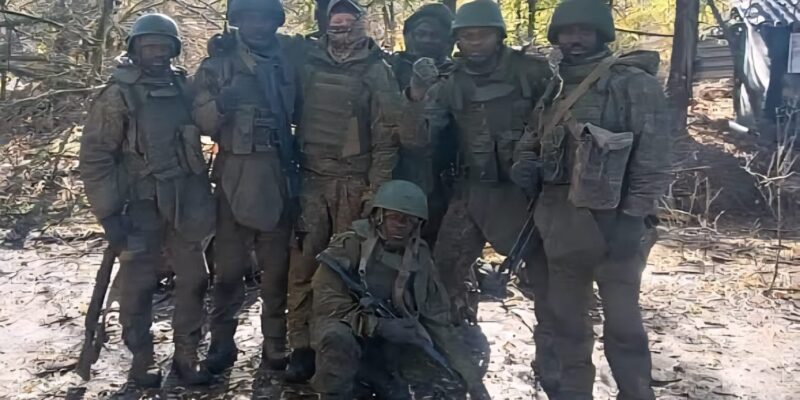
Joe Mwape was 27. Chongo Choma was 30. Both left Zambia for opportunities abroad, but their names have since appeared in an international database of foreign nationals reportedly killed while fighting in Russia’s war against Ukraine.
Choma’s death was recorded on October 31, 2024, while Mwape’s was recorded on December 5, 2025.
Two young Zambians, two different dates and a conflict thousands of kilometres from home. Yet the circumstances that led them to the battlefield, and the events surrounding their reported deaths, remain unclear.
For their families, the tragedy goes beyond the loss of their loved ones. There are unanswered questions about how the two men became involved in the conflict, whether they understood the risks of military service and whether their deaths could have been prevented.
For Choma’s family, the news has been particularly difficult to process.
A relative, whom we shall refer to as Patrick to protect his identity, described the family’s pain and uncertainty following reports of Choma’s death.
“We are still trying to process everything,” Patrick said.
“Chongo went abroad to study and build something of his own. To suddenly hear that his name is on a casualty list in a war zone is something no family is ever prepared for. We don’t even know who to turn to or how he got there. Right now, we are just grieving in silence because the pain is too much to bear.”
Efforts to obtain a comment from Joe Mwape’s family were unsuccessful. A family member said, after consulting other relatives, that they were not prepared to discuss the matter publicly at this stage but could consider an interview later.
For families dealing with the reported death of a relative in a foreign country, establishing exactly what happened can be a difficult process involving authorities, official documentation and, in some cases, limited access to information.
In Choma’s case, information gathered indicates that he had previously been connected to student circles in Russia, including reported links to Nizhny Novgorod State University of Architecture and Civil Engineering.
However, the circumstances under which he may have entered military service remain unclear.
Was joining the Russian military a decision he made voluntarily, or were there other circumstances that influenced his involvement in the conflict?
There are currently no independently verified answers to these questions.
The vulnerability of foreign nationals
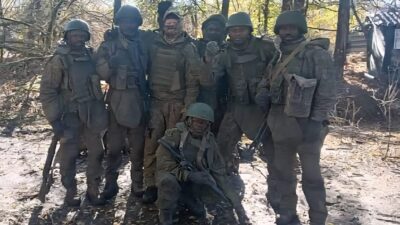
The circumstances surrounding the two Zambians raise wider concerns about the recruitment of foreign nationals into Russia’s military amid the ongoing war against Ukraine.
Investigations by international journalists and human rights organisations have documented cases involving foreigners recruited into the Russian military under circumstances that have raised questions about deception, coercion and exploitation.
Some accounts involve young people who travelled abroad in search of employment and better economic opportunities. Others concern foreigners who encountered legal difficulties and were subsequently offered military contracts.
There have also been allegations of individuals being pressured into signing agreements they did not fully understand.
One recruitment practice that has attracted particular attention involves foreign prisoners reportedly being offered freedom, financial incentives or relief from legal consequences in exchange for military service.
For young people living far from home, with limited financial resources and little access to reliable assistance, such offers could create situations of extreme vulnerability.
However, there is no independently verified information establishing that either Mwape or Choma was recruited from prison, deceived into joining the Russian military or forced to fight.
A source familiar with student networks abroad described how quickly circumstances can change for young people who encounter difficulties in foreign countries.
“You go thinking you are protected because you left for a better life or an education,” the source said.
“Then a single mistake turns into a prison cell, and suddenly someone is offering you freedom if you take a rifle into a war zone.”
The accounts emerging from Russia raise important questions about the safety of young Africans who travel abroad in pursuit of education, employment and other opportunities.
What happens when a promising job offer turns out to be something entirely different? Who can students turn to when they encounter difficulties in foreign countries? And how quickly can their governments intervene when their citizens face potential exploitation?
Zambia’s diplomatic responsibility
For Zambia, the reported deaths of Mwape and Choma raise questions about the protection of nationals living and studying abroad, as well as the country’s diplomatic engagement with Russia.
Last week, Zambia participated in the Third Russia-Africa Summit in Moscow, where Foreign Affairs and International Cooperation Minister Mulambo Haimbe represented President Hakainde Hichilema.
In a statement outlining Zambia’s priorities, the Ministry of Foreign Affairs confirmed that Haimbe would hold engagements concerning the welfare of Zambian nationals living in Russia.
However, details of those discussions have not been made public, and it remains unclear whether the reported recruitment of foreign nationals into the Russian military was raised.
The diplomatic engagements present an opportunity to seek clarification on the circumstances surrounding the reported deaths of Mwape and Choma and explore measures to protect other Zambians from possible deceptive recruitment and exploitation.
Will the Government seek formal explanations from Russian authorities about how the two young men became involved in the conflict?
Can diplomatic engagements help establish whether other Zambians may have been recruited into the Russian military?
And what safeguards can be put in place to ensure that Zambians travelling abroad for education and employment are not exposed to recruitment practices that could put their lives at risk?
Read More: Police advise civil society against planned November 25 term limits protest
The Ministry has not indicated whether the two cases will be raised during Haimbe’s engagements.
Meanwhile, governance commentator Brebner Changala has questioned the Government’s communication on matters of national importance, arguing that citizens deserve timely information on issues affecting the country rather than being left to speculate.
Speaking on the matter, Changala said limited public information on issues of national interest could leave citizens making what he described as “assumptions.”
His concerns bring renewed attention to the lack of publicly available information about the reported deaths of Mwape and Choma.
If the names of two Zambians can appear in international casualty records without a publicly available official account of the circumstances surrounding their deaths, questions inevitably arise about what is known regarding other nationals who may have become involved in the conflict.
For the families, however, these are not simply questions of foreign policy or diplomatic relations.
They are about two young men who left home in pursuit of opportunities and reportedly lost their lives in circumstances their families are still struggling to understand.
The Russia-Africa Summit may have provided an opportunity for Zambia to strengthen diplomatic engagement on the welfare of its citizens abroad. But the more immediate responsibility is to establish what happened to Mwape and Choma and provide their families with answers.
Their reported deaths also raise a troubling possibility: could there be other Zambians who have lost their lives in the Russia-Ukraine war whose circumstances remain unknown to their families and the nation?
WARNING! All rights reserved. This material, and other digital content on this website, may not be reproduced, published, broadcast, rewritten or redistributed in whole or in part without prior express permission from ZAMBIA MONITOR.





Comments