
 By
By 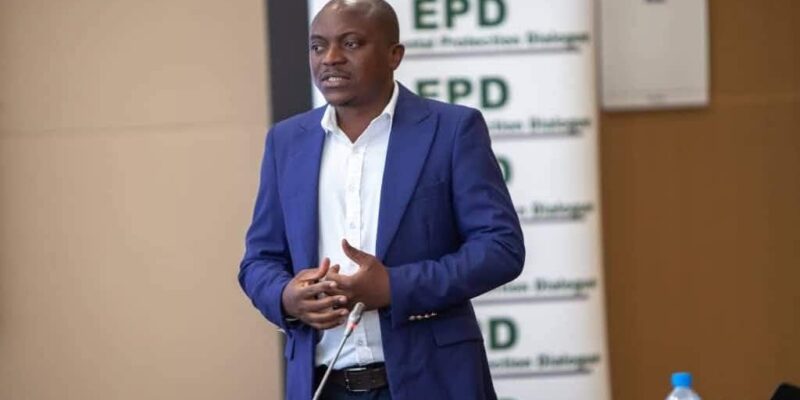
The Disability Rights Watch (DRW) has appealed to the Technical Committee on Constitution Amendments to ensure meaningful engagement with persons with disabilities and make its terms of reference available in accessible formats.
The organisation has also urged persons with disabilities and their representative bodies to continue advocating for a constitution that protects their rights and interests, regardless of the government in power.
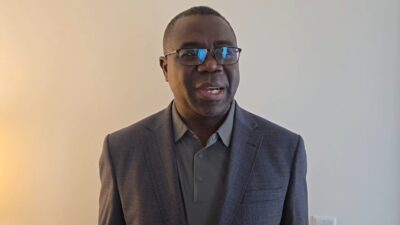
In a statement issued in Lusaka on Monday, DRW Programmes Coordinator Bruce Chooma said the organisation recognized both the inadequacies of existing constitutional provisions and the concerns surrounding their implementation.
Chooma noted that the enforcement of the current provisions has been “erratic and poor,” stressing the need for clear constitutional clauses to guarantee an inclusive electoral system.
“We as Disability Rights Watch have noted with interest the commencement of provincial consultations by the technical committee appointed to receive submissions on the review of the Constitution of Zambia,” he said.
Chooma encouraged persons with disabilities and other stakeholders to use the consultation process to push for action on their long-standing demand for self-representation in governance structures.
He also emphasized that persons with disabilities must have their voices heard and respected within the country’s governance framework.
He recalled that in 2021, the Mixed Member Electoral System (MMES) Coalition—comprising the Centre for Young Leaders in Africa (CYLA), the Zambia Federation of Disability Organisations (ZAFOD), and the Zambia National Women’s Lobby (ZNWL)—developed a proposal on how an ideal mixed electoral system could be structured.
“The proposal included the need to have at least 10 seats in Parliament reserved for persons with disabilities using a proportional representation approach, targeting a balance across disability types and provincial representation,” Chooma stated.
He added that the coalition advocated for an electoral system that ensured increased participation and representation of marginalised groups in decision-making and policy formulation.
“Persons with disabilities, in their communique to the President in October 2024, indicated the urgent need to nominate persons with disabilities to the National Assembly for possible appointment to Cabinet,” he said.
Read More: Govt procures over 1,500 assistive devices for persons with disabilities
Chooma explained that such appointments would fulfil the constitutional requirement for underrepresented groups to occupy key decision-making positions, utilising the President’s prerogative to nominate persons with disabilities to Parliament and Cabinet.
However, he noted that this provision in the 2016 Constitution had not been realised, underscoring the need for an electoral system that allowed persons with disabilities to have quota representation in Parliament.
“It is a fact that generally, women, youth, and persons with disabilities have been excluded from political leadership in Zambia,” Chooma said.
He observed that this exclusion from political decision-making and policy processes had resulted in the misrepresentation and underrepresentation of marginalised groups.
“This misrepresentation and/or underrepresentation impacts negatively not only on the political participation of the marginalised groups but also on the quality of their livelihoods. It is also a negation of democracy generally,” he said.
Chooma reminded the government that, as a state party to the United Nations Convention on the Rights of Persons with Disabilities (CRPD), Zambia was obliged to implement measures that ensured the meaningful participation of persons with disabilities in public and political life.
“We will continue to collaborate with other civil society organisations and interest groups to ensure that a credible constitutional amendment process is realised for the betterment of our great nation — Zambia,” he assured.
WARNING! All rights reserved. This material, and other digital content on this website, may not be reproduced, published, broadcast, rewritten or redistributed in whole or in part without prior express permission from ZAMBIA MONITOR.



Comments