
 By
By 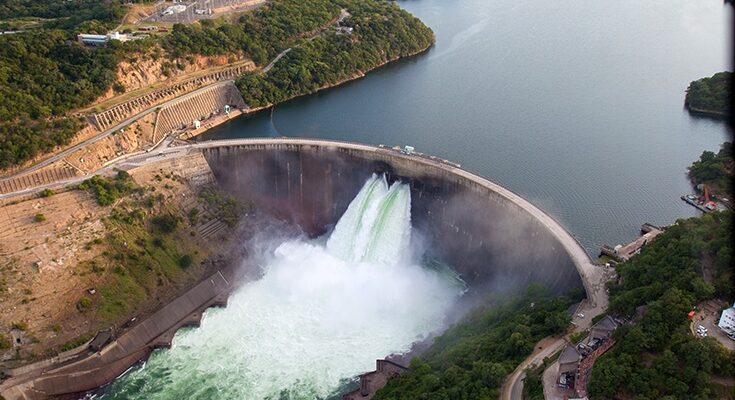
The Zambezi River Authority (ZRA) has reduced water allocation for power generation at Kariba Dam from 36 billion cubic metres (BCM) this year to 23 BCM in 2027, citing forecasts of strong El Niño conditions and below-normal rainfall.
ZRA acting chief executive officer, Peter Kapinga, said the allocation would be shared equally between Zambia’s ZESCO Limited and Zimbabwe Power Company (ZPC), with each utility receiving 11.5 BCM.
In a statement issued on Thursday, Kapinga said the decision was based on forecasts for the 2026/2027 rainfall season, including projections from the 33rd Southern African Regional Climate Outlook Forum (SARCOF-33), meteorological agencies in both countries and the authority’s own inflow assessments.
“Usable water in Lake Kariba was projected to decline to 5.83 BCM by December 31, 2027, representing about nine percent of the reservoir’s live storage,” he said.
Read more: ‘Electricity supply stable,’ ZESCO rules out nationwide load shedding
The lake is expected to begin 2027 with 16.24 BCM of usable water, equivalent to 25.10 percent of its live storage, following improved inflows during the 2025/2026 rainfall season.
The 2027 allocation is lower than the 36 BCM approved for 2026, which was increased from an initial 30 BCM. Under the current allocation, ZESCO and ZPC each received 18 BCM.
As of October 14, ZESCO’s Kariba North Bank Power Station had 3.53 BCM remaining from its allocation, representing 19.66 percent, while ZPC’s Kariba South Bank Power Station had 6.13 BCM, or 34.09 percent, remaining.
Despite improved water levels compared with the same period last year, the authority warned that the outlook for the coming rainfall season could put renewed pressure on the reservoir.
On October 14, 2026, Lake Kariba stood at 480.65 metres above sea level, with 23.77 BCM of usable water, representing 36.68 percent of live storage.
On the same date in 2025, the lake level stood at 477.34 metres, with usable water at 8.25 BCM, or 12.75 percent of live storage.
Kapinga said SARCOF-33, held in Swakopmund, Namibia, from August 25 to 28, indicated an increased likelihood of drought across much of central and southern Africa.
“Below-normal rainfall was expected in southern Zambia and much of Zimbabwe during the early part of the season, with the conditions likely to extend across most areas of both countries between January and March 2027,” he said.
Kapinga said ZRA would monitor water use daily and coordinate with the two power utilities through joint technical committee meetings to ensure compliance with the approved allocations.
WARNING! All rights reserved. This material, and other digital content on this website, may not be reproduced, published, broadcast, rewritten or redistributed in whole or in part without prior express permission from ZAMBIA MONITOR.









Comments