
 By
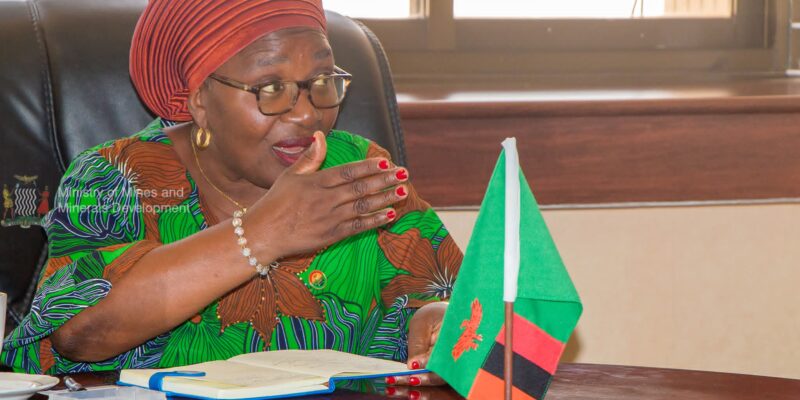
Government has called for the long-term sustainability and expansion of a mine-water management project being implemented by Copperbelt University (CBU) in partnership with the Czech Republic, saying its benefits should extend beyond the project’s current funding period.
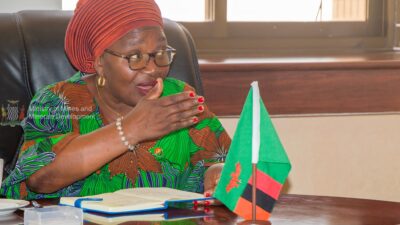
Minister of Mines and Minerals Development, Brenda Tambatamba, said the initiative offered an opportunity to generate knowledge and develop practical solutions to challenges facing the mining industry, particularly mine-water management, mine closure and community participation in the mining value chain.
Tambatamba said this on Thursday when she met CBU Vice Chancellor Professor Imasiku Nyambe and representatives of the Czech Republic, who paid a courtesy call at her office in Lusaka.
“Universities should play a greater role in national development by going beyond classroom teaching to conducting research, generating knowledge and working with Government and industry to translate research findings into practical solutions,” she said.
She commended CBU and the Czech Republic for the partnership, saying such collaborations were important in addressing challenges associated with mining while supporting Government’s Grow Zambia Agenda.
Tambatamba said the project had the potential to turn mining-related environmental challenges into opportunities for community development through the treatment and productive use of mine water.
“Lessons from the project should not be confined to the Copperbelt but should be replicated in other mining areas as the sector continues to expand into provinces such as North-Western and Central,” she said.
She said the mine-water atlas being developed under the initiative could also strengthen mine-closure planning, emphasising that closure considerations should be integrated into mining operations from the outset rather than addressed only when mines approach the end of their lifespan.
Tambatamba called for greater involvement of the Minerals Regulation Commission to ensure that knowledge, guidelines and practices generated through the project were institutionalised and adopted across the mining industry.
She also supported calls to consider extending the project beyond its current funding period, saying continuity would be critical in sustaining the infrastructure and knowledge developed through the initiative.
Meanwhile, Ministry of Mines and Minerals Development Permanent Secretary, Dr Hapenga Kabeta, said the project demonstrated the importance of collaboration between Government, academia, development partners and the mining industry in addressing challenges affecting the sector.
“The Ministry has provided technical and institutional support to the project through the Mines Safety Department, including the participation of ministry personnel in the initiative,” Kabeta said.
He said the Ministry was exploring ways of sustaining the project beyond 2027 to ensure that the water treatment facility, demonstration farm and other interventions continued benefiting communities.
CBU Vice Chancellor Professor, Imasiku Nyambe, said the university was ready to deepen its collaboration with the Ministry in research, training, innovation and technical support for the mining sector.
Read More: Women in mining warn higher licence fees could undermine tax relief
“CBU is particularly interested in critical minerals, critical raw materials, mineral value addition, manufacturing and research and development,” Nyambe said.
He said the project aimed to establish an online mine-water atlas to map and assess water from mining areas, identifying sources that were clean, polluted or potentially suitable for agricultural and drinking purposes after appropriate treatment.
Nyambe said the initiative would also train at least four master’s students and deliver a practical solution through the construction of a prototype mine-water treatment plant.
“The project has brought together stakeholders including the Ministry’s Mines Safety Department, Kitwe City Council, ZESCO, ZEMA, Nkana Water, Mopani and CBU,” he said.
He said the treatment plant and demonstration farm would provide a lasting physical legacy beyond the project’s training component, which was expected to run until 2027.
Nyambe also expressed CBU’s interest in collaborating with the Ministry in the planned economic zone in Ndola by providing research, training, technical advisory services and other academic support to the mining sector.
Earlier, Czech Embassy representative, Michaela Chrtova, said the project was designed to deliver direct and lasting benefits to communities through the productive use of treated mine water.
“The planned facility will include a demonstration farm for vegetables and livestock, as well as a drinking-water treatment component to provide communities with access to safe water,” Chrtova said.
She said the partners were working with CBU, Mopani, the local authority and the water utility to ensure the demonstration farm remained operational beyond the project’s lifespan.
Chrtova said the farm could serve as a model for mining companies seeking to strengthen their corporate social responsibility programmes and support communities surrounding mining operations.
“Construction is expected to commence at the beginning of the 2027 dry season, with the facility targeted to become fully operational by the end of the year,” she said.
She further disclosed that the Czech partners were exploring a larger initiative under the European Union Global Gateway aimed at promoting socially and environmentally responsible mining in Zambia.
WARNING! All rights reserved. This material, and other digital content on this website, may not be reproduced, published, broadcast, rewritten or redistributed in whole or in part without prior express permission from ZAMBIA MONITOR.




Comments