
 By
By 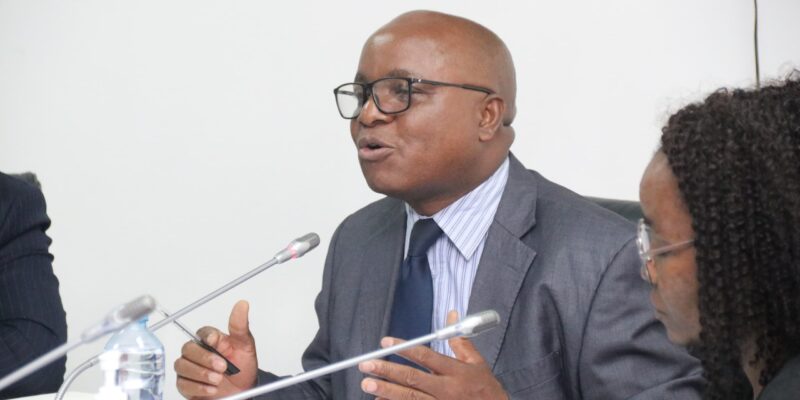
Government has announced that it will launch public consultations on the 2027–2031 Medium-Term Revenue Strategy (MTRS) on September 3, 2026, under the theme “Mobilising Domestic Resources for Sustainable Growth and National Development.”
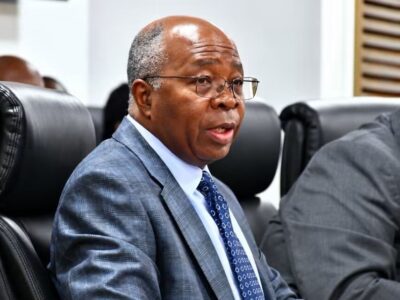
Secretary to the Treasury Felix Nkulukusa said the meeting would bring together the public sector, private sector, civil society and other stakeholders to deliberate on domestic resource mobilisation.
In a statement issued in Lusaka on Sunday, Nkulukusa said the consultations would take place at the Mulungushi International Conference Centre.
According to Nkulukusa, the launch marks a major step towards strengthening domestic resource mobilisation and fostering fiscal sustainability and financing for national development.
He said the MTRS wass designed to provide a coherent medium-term framework for revenue reforms and seeks to move away from fragmented annual measures and establish a more predictable and efficient approach to revenue administration.
“The MTRS is intended to provide a coherent medium-term framework for revenue reforms, moving beyond fragmented annual measures towards a more predictable and efficient approach,” Nkulukusa said.
He emphasized the core objective of building a tax system that was fair, transparent and supports investment, economic growth, and voluntary compliance.
“The consultations will address three interconnected questions: why Zambia needs stronger domestic revenues, what additional and predictable resources can enable Government to finance, and how improved tax administration and compliance can translate revenue potential into sustainable fiscal performance,” Nkulukusa stated.
He noted that Zambia’s long-term development could not rely excessively on borrowing or volatile revenue sources, emphasizing that increasing domestic resource mobilisation was critical to strengthening national ownership of development financing and creating fiscal space for priority programmes.
“Therefore, mobilising more resources domestically is critical to strengthening national ownership of development financing and creating fiscal space for priority developmental programmes,” he said.
Nkulukusa added that stronger revenue performance would be matched by emphasis on expenditure efficiency, accountability and value for money.
Read More: Debt restructuring reportedly frees funds for development, says Treasury Secretary
He said in the medium-term, additional reliable domestic revenues were expected to increase government capacity to finance public goods and services, infrastructure, social protection, energy, agriculture, livestock development, and climate resilience.
“By improving revenue predictability and strengthening the investment environment, the MTRS can support private-sector expansion and job creation,” Nkulukusa said.
He noted that efficient revenue mobilisation can also increase fiscal space for infrastructure, agriculture, energy and other productive sectors, helping unlock enterprise growth, strengthen economic participation and create sustainable employment opportunities, particularly for young people.
Nkulukusa said the Zambia Revenue Authority would present measures aimed at narrowing tax-compliance gaps and modernising revenue administration during the launch and these include greater use of data, digitalisation, risk-based compliance systems and improved taxpayer services.
He stated that the reforms were intended to simplify compliance for legitimate taxpayers and strengthen action against evasion and revenue leakage.
“We anticipate private-sector engagement to focus on tax-policy predictability, compliance costs, tax administration, investment, digital systems, and taxpayer service. While we look forward to civil society providing perspectives on equity, transparency, accountability, protection of vulnerable households, and relational matters on taxation and public value,” Nkulukusa said.
“Through the Thursday consultations, the Government intends to build broad national ownership of the MTRS, identify priority reforms, and establish a practical framework for implementation involving the Government, the Zambia Revenue Authority, businesses, civil society and other stakeholders,” Nkulukusa said.
WARNING! All rights reserved. This material, and other digital content on this website, may not be reproduced, published, broadcast, rewritten or redistributed in whole or in part without prior express permission from ZAMBIA MONITOR.




Comments