
 By
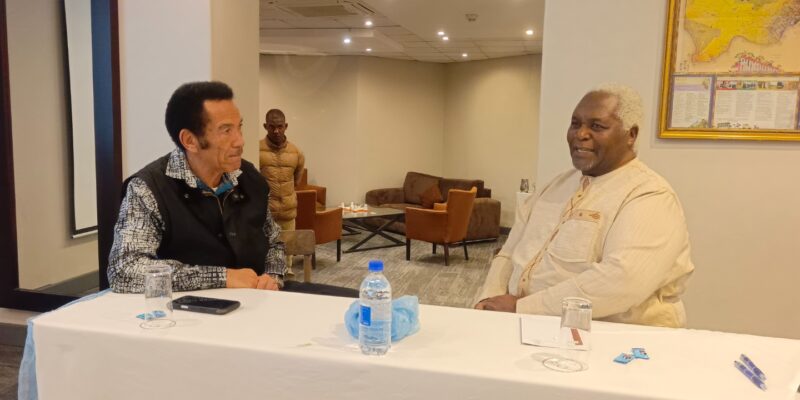
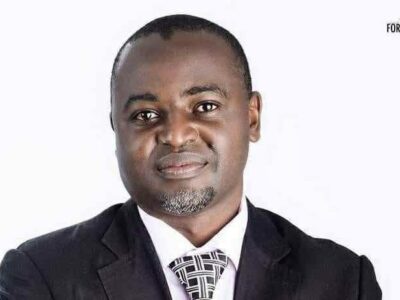
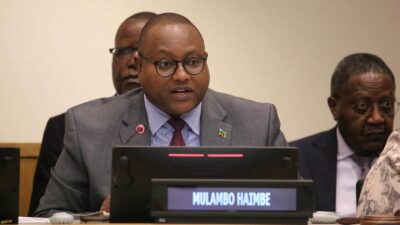
Council of Elders for Ethical Leadership, Democracy and Development (CEELDD) Chairperson Prince, Akashambatwa Mbikusita–Lewanika, has backed former Botswana President, Seretse Khama Ian Khama’s concerns over democracy and human rights in Zambia, saying national sovereignty should not be used to shield governments from accountability.
Lewanika said the principle of non-interference should also not be invoked to silence legitimate concerns about democracy, constitutionalism and human rights.
In a statement issued in Lusaka on Monday, he said interventions by African leaders on governance issues should be viewed within the broader Pan-African commitment to mutual accountability, democratic solidarity and adherence to agreed governance standards.
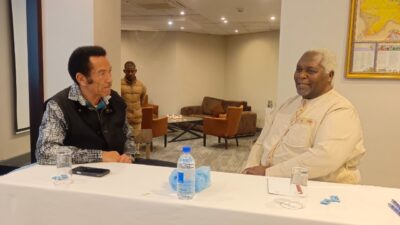
He was responding to Khama’s engagement with Botswana’s Foreign Minister over allegations of democratic regression, authoritarian tendencies and human rights violations under the Zambian Government.
Lewanika said Khama’s intervention was consistent with his longstanding record on promoting democracy and human rights in the region and deserved support.
He noted that the promotion of democracy and good governance through respect for constitutionalism, the rule of law, human rights and fundamental freedoms was among the key objectives of the African Peer Review Mechanism (APRM).
Lewanika recalled that Zambia voluntarily joined the APRM in 2003 under the second administration of the Movement for Multiparty Democracy (MMD), led by the late President Levy Mwanawasa, as part of efforts to promote democratic governance and accountability.
“No government should regard criticism as hostility, nor should it mistake public accountability for an attack on its authority or an assault on the person of the president. It should not be criminalised as hate speech,” he said.
He explained that the APRM provided a platform for African countries to assess governance systems through constructive dialogue, mutual assessment, exchange of experiences and implementation of reforms.
Lewanika said he supported Khama’s intervention in his capacity as a former President of Botswana and a regional advocate for democratic governance.
He cited Khama’s role in supporting SADC’s intervention in Zimbabwe, which culminated in the formation of a Government of National Unity.
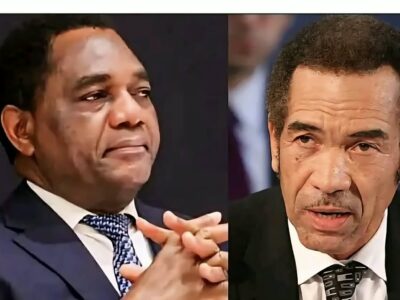
He also recalled that Khama was among African leaders who appealed for the release of then opposition leader Hakainde Hichilema when he was detained at Mukobeko Maximum Security Prison on treason charges.
WARNING! All rights reserved. This material, and other digital content on this website, may not be reproduced, published, broadcast, rewritten or redistributed in whole or in part without prior express permission from ZAMBIA MONITOR.




Comments