
 By
By 
Economic growth in Sub-Saharan Africa is projected to accelerate from 4.1% in 2025 to 4.3% in 2026, 0.3 percentage points higher than the World Bank’s April 2026 forecast, the bank said.
The projection is contained in the latest edition of the Africa Economic Update, the World Bank Group’s biannual economic report for the region.
The bank said the region’s economy remained resilient despite geopolitical tensions, climate shocks, declining development assistance and fiscal pressures.
Read more: World Bank Group mobilizes $112 billion in private capital in 2026
The outlook was supported by improved macroeconomic resilience, stronger domestic demand and investments linked to the global energy transition and digital technologies, it said.
“However, conflict in the Middle East, trade policy uncertainty, tighter financial conditions, natural disasters, disease outbreaks, and insecurity continue to affect economic activity across several countries,” the bank stated.
Despite the stronger growth outlook, the bank said economic expansion remained insufficient to substantially reduce extreme poverty or create enough jobs for the region’s rapidly growing labour force.
“Despite a challenging global environment, economic activity in Sub-Saharan Africa continues to demonstrate remarkable resilience, with growth forecasts upgraded for nearly three-quarters of countries in the region, including Angola, Ethiopia, Nigeria, and Zambia,” said Andrew Dabalen, World Bank Chief Economist for the Africa Region.
Dabalen said the gains reflected years of reforms and improved economic management, but added that the next challenge was turning growth into more jobs and better opportunities.
“By investing in the foundations of an AI-ready economy, African countries can unlock productivity gains, spur innovation, and accelerate the structural transformation needed to raise living standards and reduce poverty.”
The report projects that the median inflation rate in Sub-Saharan Africa will rise from 3.7% in 2025 to 5.5% in 2026, as higher global fuel, fertiliser and food prices reverse some recent gains.
Public debt has broadly stabilised at around 57% of gross domestic product, but high debt-servicing costs continue to constrain spending on health, education and infrastructure, the bank said.
With development assistance declining, countries face growing pressure to mobilise domestic resources, deepen local capital markets and secure more sustainable financing.
“Risks remain tilted to the downside. Further geopolitical tensions could trigger additional increases in commodity prices, intensify inflation, and weaken external and fiscal balances,” the bank stated.
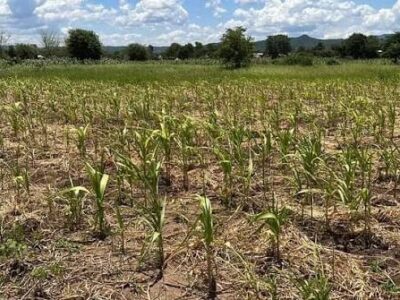
The bank also warned that climate-related shocks, including the effects of a potential El Niño event, could disrupt agricultural production and worsen food insecurity, while tighter financing conditions could further constrain fiscal space.
The report’s special focus examines how artificial intelligence can raise productivity, improve services and create jobs.
“Most countries are still at an early stage of AI adoption, with activity concentrated in a small number of economies, notably Kenya, Nigeria, and South Africa.”
The report said the region’s greatest opportunity lay in affordable, locally adapted small AI applications, including low-bandwidth tools for education, agriculture, health, finance, logistics and public administration, rather than frontier AI systems.
Realising these benefits will require investment in reliable electricity, affordable connectivity, digital skills, quality data, computing infrastructure and effective governance, it said.
Strong institutions, technical capacity, effective implementation and regional cooperation, including through the African Union’s Continental AI Strategy and the African Continental Free Trade Area, can help scale AI-enabled solutions and support the creation of more and better jobs, the report said.
WARNING! All rights reserved. This material, and other digital content on this website, may not be reproduced, published, broadcast, rewritten or redistributed in whole or in part without prior express permission from ZAMBIA MONITOR.









Comments