
 By
By 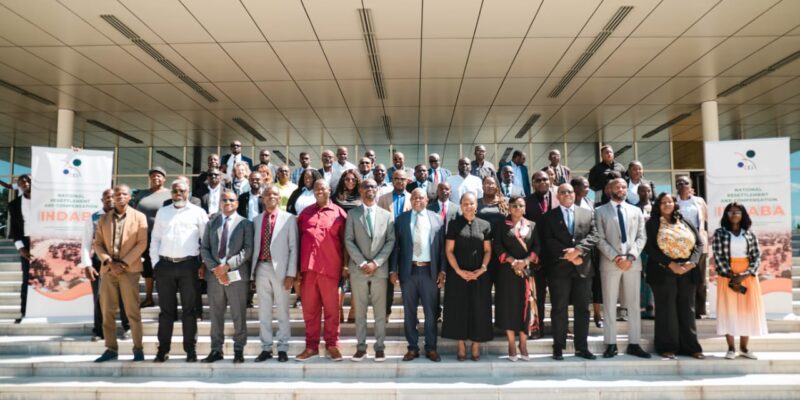
The Office of the Vice President has raised concern over inconsistencies in compensation standards, saying the gaps were fuelling conflicts, leaving resettlement cases unresolved and preventing investors from breaking ground in several parts of the country.
Permanent Secretary for Resettlement in the Office of the Vice President, Marvis Nkomeshya, said the government had moved to address the problem through the proposed Resettlement Management Bill of 2026.
Speaking at the National Resettlement and Compensation Indaba held at the Mulungushi International Conference Centre, Nkomeshya said the Bill established a comprehensive legal framework governing how development projects treat displaced people.
“The bill enforces constitutional rights to fair compensation before displacement, restores livelihoods to a standard at least equal to what existed before, and places the cost of resettlement squarely on the developer,” she said.
Against a backdrop of 6.4 percent GDP growth and single-digit inflation, Nkomeshya warned that unresolved resettlement matters were creating economic liabilities, blocking investment and tying up development in costly litigation.
She urged civil society to engage constructively, emphasising that communities were not obstacles but intended beneficiaries, and said the Bill would ensure no Zambian is made poorer by development.
During the indaba, Centre for Environment Justice Executive Director Maggie Mwape commended the government, including the Office of the Vice President and relevant ministries, for progress through the Revised National Resettlement Policy of 2024 and the Cabinet-approved Resettlement Management Bill of 2026.
“These demonstrate a clear commitment to transforming resettlement from a source of conflict into a pathway for inclusive and sustainable growth,” Mwape said.
Read More: WWF pledges continued support for Zambia’s shift to nature-positive economy
She also recognised mining companies for investing heavily in Zambia’s future and for their role in community engagement, compensation and corporate responsibility.
Mwape called on mining partners to deepen collaboration by supporting and co-hosting future platforms such as the indaba.
“Rapid development brings complex challenges, especially amid climate change. Floods and droughts have displaced communities across the country, underscoring the urgent need for adaptation measures that build resilience,” she said.
She said effective resettlement must go beyond compensation to restore and improve livelihoods, incorporate climate-resilient infrastructure, sustainable agriculture and alternative income opportunities.
“The proposed Resettlement Management Bill offers exactly that: a comprehensive and standalone legal framework,” Mwape said.
She added that strengthening the Bill with human rights, social, livelihood restoration and environmental safeguards would reduce project delays, minimise disputes, protect ancestral lands and cultural heritage, and ensure no Zambian is left behind.
Earlier, Ministry of Mines Director of Large-Scale Mining and Mineral Investment Promotion, Fred Banda, commended CEJ for organising the National Resettlement Conference, calling it timely and significant.
Banda said the mining sector drove job creation and national development but warned that resettlement issues touched on justice, dignity and sustainability.
“The proposed Resettlement Management Bill 2026, which has received Cabinet approval in principle, brings clarity, coordination and accountability to resettlement processes across all sectors,” he said.
Banda said well-managed resettlement improved living standards and builds trust between investors and citizens, while poorly managed resettlement destroys livelihoods and creates long-term grievances.
WARNING! All rights reserved. This material, and other digital content on this website, may not be reproduced, published, broadcast, rewritten or redistributed in whole or in part without prior express permission from ZAMBIA MONITOR.










Comments