
 By
By 
Zambia has promising geological indicators for petroleum reserves, but unlocking the sector’s potential will require strategic reforms and enhanced regional cooperation, says Mines and Minerals Development Minister, Paul Kabuswe.
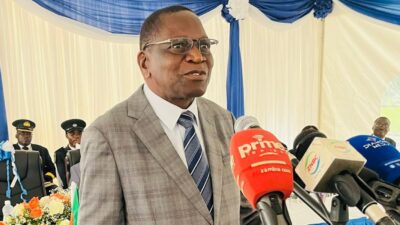
Speaking during a meeting with the Democratic Republic of Congo (DRC)’s Minister of Hydrocarbons, Aime Sakombi Molendo, Kabuswe stressed the importance of a coordinated approach involving policy formulation, fiscal restructuring, and targeted promotion to attract investment into the nascent petroleum sub-sector.
The meeting, held on Wednesday, focused on the possibility of signing a cooperation agreement between Zambia and the DRC for the joint development of hydrocarbon potential in the Lake Tanganyika and Lake Mweru regions.
“The signing of a memorandum of understanding (MoU) between Zambia and the DRC would mark a transformative opportunity to reposition the economies of both countries,” Kabuswe said.
“From the Zambian side, the Ministry of Mines and Minerals Development is strategically positioned to lead and support this initiative through policy guidance, technical expertise, and investment facilitation.”
While mining has been the bedrock of Zambia’s economy for over a century—dominated by copper—Kabuswe noted the growing emphasis on the country’s untapped hydrocarbon resources.
“Exploration efforts for petroleum date as far back as the 1970s, with renewed momentum in the early 2000s. Soil samples analysed in European laboratories have shown encouraging evidence of crude oil, attracting interest from frontier exploration firms,” he said.
He recalled that in 2005, the government intensified its focus on petroleum exploration in response to rising oil import costs and a global surge in crude oil prices, which had increased by more than 40 percent.
These economic pressures, combined with geological data, spurred renewed attention to Zambia’s potential in the petroleum sector.
Although Zambia does not currently produce oil, Kabuswe said strong indicators continue to draw interest, and the government is determined to create an enabling environment for investment.
He underscored the importance of Zambia-DRC collaboration, citing the two countries’ existing Cooperation Agreement on developing a regional value chain for electric vehicle (EV) batteries, which supports the global shift toward clean energy and sustainable industrialisation.
To advance the petroleum agenda, Kabuswe recommended initiating inter-ministerial consultations, conducting joint geological surveys, creating shared incentives, and forming a bilateral task force to track progress and promote transparency.
“This kind of collaboration has the potential to deliver long-term socio-economic benefits for both countries and contribute to energy security in the region,” he said.
WARNING! All rights reserved. This material, and other digital content on this website, may not be reproduced, published, broadcast, rewritten or redistributed in whole or in part without prior express permission from ZAMBIA MONITOR.











Comments