
 By
By 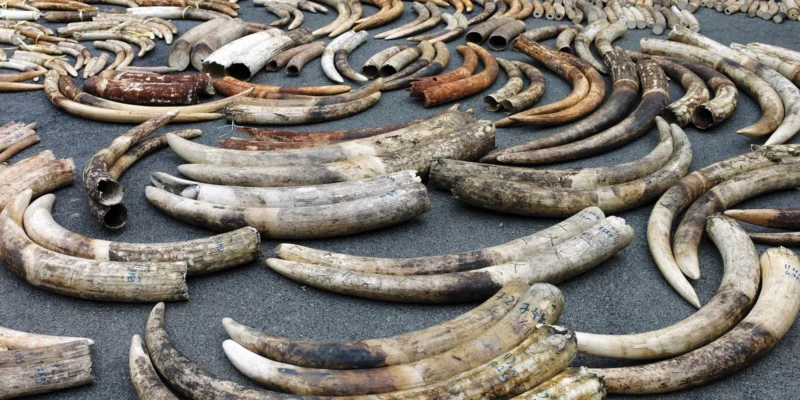
The government says the Department of National Parks and Wildlife (DNPW) is working with Thai authorities to establish the origin and circumstances surrounding the reported seizure of 446 elephant tusks concealed in timber logs.
Ministry of Tourism Permanent Secretary, Evans Muhanga, said the tusks were reportedly seized by authorities in Thailand and a second country yet to be named, alongside 56,000 kilogrammes of timber.
In a statement issued in Lusaka on Thursday, Muhanga said preliminary information suggested that the consignment may have originated from Zambia, but stressed that this had not been established.
“The DNPW is working with the Department of Forestry, Zambia Revenue Authority (ZRA) and other relevant agencies to review permits, authorisations and customs declarations associated with the consignment,” he said.
Muhanga said particular attention was being given to reports that the ivory had been concealed inside hollow timber logs, with investigators examining how the timber was sourced, processed and exported.
He said Zambia was also conducting internal checks of its national ivory stockpiles and associated records.
“Investigations will establish the nature and quantity of the declared cargo, identify the parties involved and determine whether any documentation was falsified, misused or obtained through improper means,” Muhanga said.
He said a preliminary inspection of the government’s ivory strongroom had so far revealed no indication that ivory was stolen or unlawfully removed from the facility.
Read More: Court hears how 471kg of suspected elephant ivory was seized in Lilayi raid
Muhanga said available information on elephant poaching in Zambia did not currently indicate poaching on a scale that would readily account for the quantity of ivory reportedly seized.
“No possibility is being ruled out as investigations continue. Zambia’s position as a land-linked country also requires consideration of the possibility that it may have been used as a transit route for wildlife trafficking,” he said.
Muhanga said establishing the source and origin of the ivory would require examination of the seized tusks, tracing of markings, forensic analysis and a review of timber export records, customs declarations, container movements and transit routes.
“The investigation will also examine individuals and entities associated with the consignment,” he said.
Muhanga commended the Thai Customs Department and wildlife authorities for intercepting the consignment, adding that Zambia remained committed to combating wildlife trafficking and strengthening international cooperation against the illegal trade in wildlife products.
WARNING! All rights reserved. This material, and other digital content on this website, may not be reproduced, published, broadcast, rewritten or redistributed in whole or in part without prior express permission from ZAMBIA MONITOR.









Comments