
 By
Zambia has secured a sovereign credit rating upgrade from S&P Global Ratings, with the agency citing improving economic prospects, progress in debt restructuring and sustained fiscal reforms.
S&P upgraded Zambia’s long-term and short-term sovereign credit ratings from CCC+/C to B-/B, with a stable outlook, in a development Government says reflects growing confidence in the country’s economic recovery.
The agency projects Zambia’s economy to grow by 4.9 percent in 2026, supported by stronger agricultural production, improved electricity generation, favourable copper prices and continued investment in the mining sector.
Finance and National Planning Minister, Situmbeko Musokotwane, welcomed the upgrade, describing it as an important milestone in Zambia’s economic recovery and a positive signal to investors, financial institutions and international development partners.
He said the latest assessment reinforces Moody’s recent upgrade of Zambia’s sovereign credit rating, reflecting improving debt sustainability and strengthening macroeconomic fundamentals.
“The latest S&P Global Ratings upgrade, following Moody’s recent rating action, is no accident. It reflects dedicated leadership under President Hakainde Hichilema, collective Cabinet responsibility and sustained reforms by our economic management institutions,” Musokotwane said.
He said the assessments showed that Government’s reforms were yielding results, but cautioned that a credit rating was not an end in itself.
Musokotwane said Government must consolidate the gains through fiscal discipline, productive investment, export growth and sustainable job creation.
He attributed the upgrade partly to progress in Zambia’s sovereign debt restructuring, saying agreements in principle had been reached with creditors representing approximately 96 percent of the debt within the restructuring perimeter.
“More than 60 percent has been fully executed, while negotiations with remaining creditors are expected to conclude in 2027,” Musokotwane said.
S&P projects average annual economic growth of 5.5 percent between 2026 and 2029, compared with 3.6 percent over the preceding decade, citing improved prospects in agriculture, mining, construction, trade, transport and services.
The agency also estimates that general government debt declined from approximately 130 percent of gross domestic product in 2020 to 83.8 percent in 2025.
The fiscal deficit is projected to narrow from 5.9 percent of GDP in 2026 to 3.5 percent by 2029.
Zambia’s external position is also expected to improve, with the current account projected to return to surplus in 2026.
Copper production is forecast to reach 930,000 metric tonnes, while usable foreign currency reserves are expected to rise from approximately US$5.9 billion in 2026 to US$6.7 billion by 2029.
The assessment further recognises improvements in the country’s external debt maturity profile following the 2026 Eurobond liability-management operation.
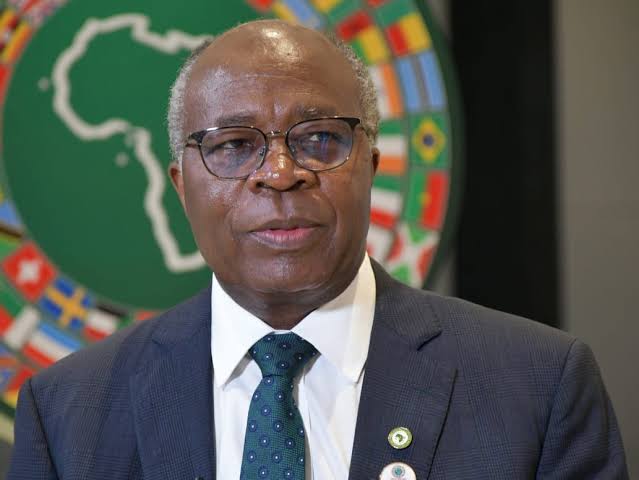
Musokotwane said improved sovereign creditworthiness should encourage greater private-sector participation in the economy.
“I call upon businesses, investors, financial institutions, farmers, manufacturers and all economic players to respond to this positive development by increasing productive investment, expanding enterprises, strengthening exports, and creating sustainable jobs,” he said.
He urged public institutions to maintain fiscal discipline, policy consistency and accountability, adding that sustained economic progress required coordinated action between the public and private sectors.
The minister also highlighted the anticipated new International Monetary Fund-supported programme, which remains subject to the necessary approvals, saying it would help consolidate macroeconomic stability, strengthen policy credibility and preserve debt sustainability.
Read More: Rating agency, S&P, assigns Afreximbank BBB+, cites growing role in African trade
“The anticipated programme will be important in supporting implementation of the 2027 National Budget, the Ninth National Development Plan, and the Grow Zambia Agenda, particularly our priorities of increasing production, attracting private investment, diversifying the economy, creating employment, and improving livelihoods,” Musokotwane said.
He acknowledged risks identified by S&P, including elevated government financing requirements, commodity-price volatility, adverse weather conditions and possible delays in concluding outstanding debt restructuring negotiations.
S&P indicated that further rating improvements could materialise over the next 12 to 18 months if Zambia achieves stronger debt reduction, faster reserve accumulation and higher-than-expected economic growth.
Musokotwane said Government remained committed to safeguarding the gains through prudent public financial management, structural reforms, investment promotion and effective implementation of development priorities.
“Our challenge is to translate improving sovereign creditworthiness into tangible economic opportunities for our people. Let us therefore treat this upgrade not as a destination, but as a renewed responsibility to sustain and accelerate Zambia’s positive economic trajectory,” he said.
He said the ultimate measure of economic success would be stronger production, increased investor confidence, expanded employment and higher household incomes, in line with the 2027 Budget theme, “Grow Zambia: From Stabilisation to Unlocking Opportunities, Creating Jobs and Improving Livelihoods for All.”
WARNING! All rights reserved. This material, and other digital content on this website, may not be reproduced, published, broadcast, rewritten or redistributed in whole or in part without prior express permission from ZAMBIA MONITOR.





Comments