
 By
By 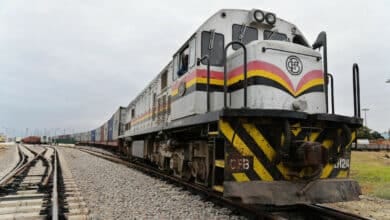
Zambia has reaffirmed its commitment to expanding railway and road infrastructure under the Lobito Corridor, calling it a central pillar for economic transformation, industrial growth and strengthened regional connectivity.
Acting Permanent Secretary in the Ministry of Transport and Logistics, Stephen Mbewe, said the infrastructure component of the Corridor was not simply a transport initiative but a strategic economic backbone.
He was speaking during the Land-Linked Zambia Webinar which drew participants and panelists from Angola, the Democratic Republic of the Congo, Zambia and the European Union.
“The corridor is capable of reshaping Zambia’s productive capacity, particularly in the Copperbelt and North-Western provinces and the southern parts of the DRC and eastern parts of Angola,” Mbewe said.
Mbewe noted that the rail system linking Zambia to the Port of Lobito through Angola and the DRC provided a cost-effective and environmentally sustainable long-term solution for moving bulk cargo, including minerals, agricultural produce and industrial inputs.
He said rail transport significantly lowered the cost per tonne, reduced carbon emissions and enhanced Zambia’s competitiveness in regional and global markets.
Mbewe said the Lobito Corridor offered Zambia an alternative and reliable route to the Atlantic Ocean, easing congestion on traditional southern corridors while diversifying the country’s export pathways.
“This diversification strengthens Zambia’s economic resilience and bargaining position within global supply chains, particularly for strategic minerals such as copper, cobalt and manganese,” he said.
He added that government efforts extended beyond the railway and included developing feeder roads, intermodal logistics hubs, border infrastructure, power systems and digital connectivity to ensure the network delivers tangible benefits to citizens.
The Corridor, he said, was designed to catalyse local economic development by stimulating value addition, mineral beneficiation, agro-processing and the clustering of industries along the route.
“Well-planned rail and road-linked industrial zones will create employment opportunities, support local enterprises and enable communities to participate meaningfully in the Corridor economy,” he said.
Mbewe noted continued international interest in the development, with support from partners such as the African Development Bank, the World Bank, Italy and the European Union.
He stressed, however, that while global partnerships remained vital, African ownership and leadership were essential for ensuring sustainable and inclusive development.
Mbewe said Zambia was working closely with Angola and the DRC to harmonise railway and road standards, transit systems and operational frameworks to facilitate seamless cross-border movement.
Read More: Zambia, EU to host Lobito corridor business forum to unlock investment opportunities
He added that coordinated implementation and clear infrastructure planning were necessary to avoid fragmented investments and maximise long-term impact.
On environmental and social concerns, Mbewe said Corridor development was guided by strong safeguards aimed at protecting communities, minimising displacement and ensuring equitable distribution of benefits.
“Public-Private Partnership models are also being structured to promote local participation, skills transfer and long-term national capacity,” he said.
Mbewe stated that the Lobito Corridor represented a shift from Zambia being merely a transit economy to becoming a productive and industrialised one.
He said the success of the programme would not be measured solely by how fast minerals moved but by how effectively the infrastructure improved livelihoods, created sustainable communities and drove inclusive economic growth.
WARNING! All rights reserved. This material, and other digital content on this website, may not be reproduced, published, broadcast, rewritten or redistributed in whole or in part without prior express permission from ZAMBIA MONITOR.











Comments