
 By
By 
The Zambia Compulsory Standards Agency (ZCSA) and the National Institute for Scientific and Industrial Research (NISIR) have emphasized the need to strengthen laboratory testing capacity in Zambia to meet growing demand for testing services.
Officials from both institutions noted that the increasing diversity of products on the market, ranging from food and beverages to industrial and consumer goods, had created a surge in demand for reliable and timely testing.
ZCSA Executive Director, Gerald Chizinga, made the remarks on February 12, 2026, during a courtesy call with NISIR acting Director, Dr. Alick Muvundika in Lusaka.
He highlighted that enhanced laboratory infrastructure, modern equipment, and expanded technical expertise were critical to ensuring that products meet compulsory standards and safeguard public health and safety.
“By scaling up testing capacity, Zambia will be better positioned to enforce compliance, support local industries, and increase market access for Zambian products,” Chizinga said.
He further noted that efficient testing services were necessary for the agency to make quicker decisions, particularly as the number of products falling under compulsory standards increased from 61 in early 2025 to 102 currently.
“As ZCSA, we need efficient testing services for us to make quicker decisions. With efficient testing services, the Agency will serve its clients more efficiently,” he said.
Chizinga added that ZCSA had proposed a Memorandum of Understanding (MOU) to work closely with NISIR in order to formalize collaboration and clearly define responsibilities, expectations, and timelines.
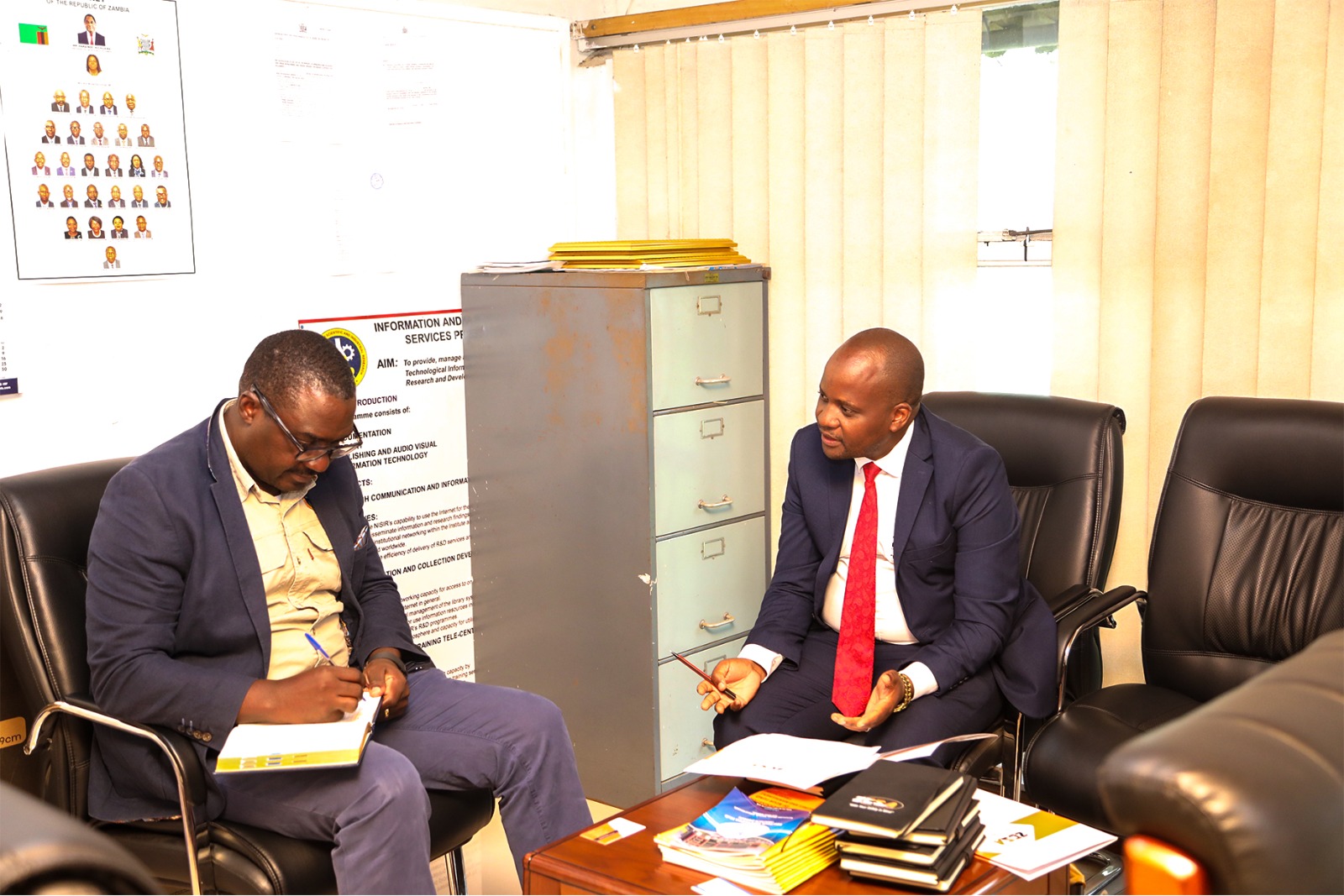
Speaking at the same meeting, Dr. Muvundika said the government had provided resources to rehabilitate NISIR’s testing facilities to improve service delivery.
“We are working to elevate our laboratories and research facilities to a level that gives confidence to clients, including ZCSA. At the moment, our active laboratories are primarily for testing water and food products. The more services demanded by the industry, the more staff will be required,” he said.
Muvundika agreed with Chizinga on the importance of a formal agreement between the two institutions to outline areas of collaboration and ensure clear expectations.
Both officials stressed that strengthening laboratory capacity would not only improve compliance with standards but also support industrial growth and consumer protection in Zambia.
WARNING! All rights reserved. This material, and other digital content on this website, may not be reproduced, published, broadcast, rewritten or redistributed in whole or in part without prior express permission from ZAMBIA MONITOR.











Comments