
 By
By 
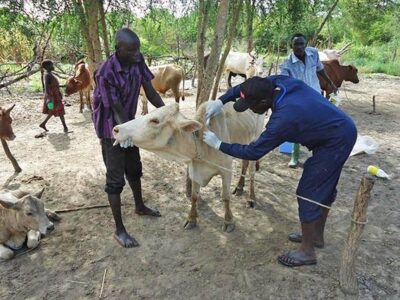
Government has emphasized the need to scale up investment in the artificial insemination programme in order to improve the calving rate and reach the targeted 7.4 million herd by 2027.
Fisheries and Livestock Minister, Peter Kapala, also noted the need to increase investments in private laboratories for enhanced disease control and management.
Kapala said this during the closure of the Invest in Zambia Conference at Mulungushi International Conference Centre in Lusaka on Friday.
He stressed the need for investments to be made in ultra modern abattoirs and cold chain storage facilities to support exports and reduce post production losses.
“Investments in aquaculture parks focusing on hacheries, feed plants and research to improve local indigenous breeds such as the green headed bream and the very delicious imbowa,” Kapala said, were key to achieving set goals.
He added that these and other opportunities across the different priority value chain would be shared by the government to possible investors.
Kapala claimed that the government was alive to the importance of ensuring that climate resilience was embedded in every investment that it promoted.
“The unpredictable rainfall patterns, rising temperatures and increasing frequency of droughts are not future scenarios, but are today’s reality,” he said.
Kapala stated that as part of the transformation agenda, integrating climate risk assessments into sectoral planning, promoting climate smart feed and breeding system, and expanding sustainable water harvesting for aquaculture and Livestock production were now central to everything being done.
He emphasized that the government needed visionary investors who were not only driven by profit but by purpose and believe in the power of regenerative agriculture, circular economy principles and green innovation.
“The government wants investors who see rural communities as partners, not just markets. Investors ready to partner with government in actualising the envisioned transformation,” Kapala said.
He noted that this was the moment to align capital with impact and transform the food systems from vulnerable to resilient, from extractive to regenerative, from exclusionary to inclusive and equitable.
WARNING! All rights reserved. This material, and other digital content on this website, may not be reproduced, published, broadcast, rewritten or redistributed in whole or in part without prior express permission from ZAMBIA MONITOR.








Comments